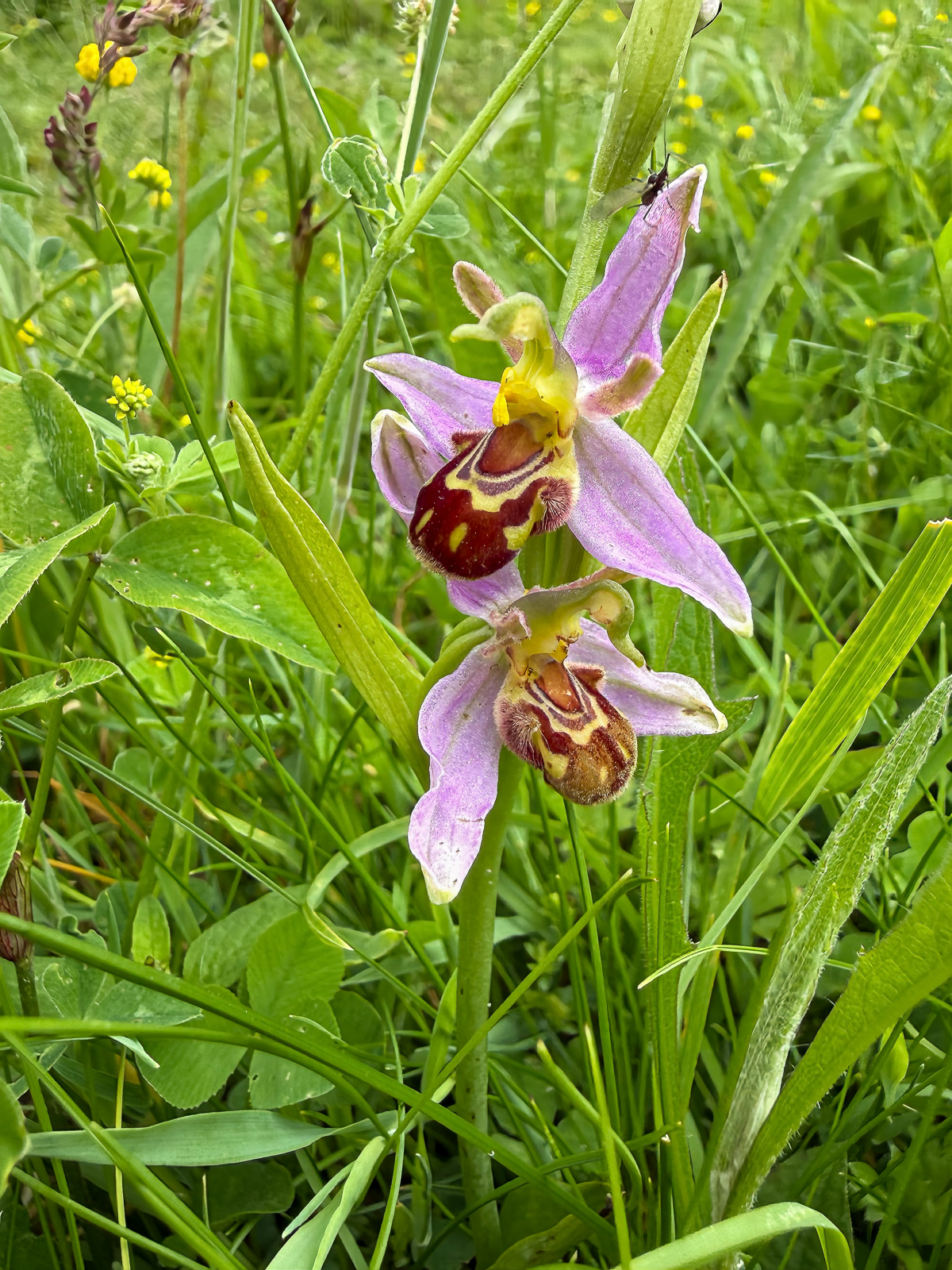
Mike’s Birding Group Walk — 16 June 2026 Six of us met for this walk, parking along the grass verge where Noar Hill Road meets Copse Hill before heading up into the nature reserve. The weather was lovely, albeit a little windy. We began in the old quarry to see what was about. There were … Continue reading "A Walks at Noar Hill, Selbourne"
Kingdom: Animalia > Phylum: Arthropoda > Class: Insecta > Order: Hymenoptera Ants, Bees, Wasps, Sawflies & Horntails This is a large order of insects that have existed since the Triassic period. the name derives from the ancient Greek word hymen, meaning membrane, and pteron, wing. They are often thought of as the stinging insects and … Continue reading "Order Hymenoptera"
Kingdom: Animalia > Phylum: Arthropoda > Class: Insecta > Order: Hemiptera True bugs, hoppers, aphids & allies This is a large group of insects with more than 75,000 species, nearly 2,000 of which can be found in the UK. They include shieldbugs, plant bugs, bed bugs, pondskaters, cicadas, water bugs, aphids, and scale insects. They … Continue reading "Order Hemiptera"
Kingdom: Animalia > Phylum: Arthropoda > Class: Insecta > Order: Lepidoptera > Superfamily: Papilionoidea Skippers(Hesperiidae) Gossamer-winged(Lycaenidae) Brush-footed(Nymphalidae) Swallowtails(Papilionidae) Whites & Sulphurs(Pieridae) Metalmarks(Riodinidae) Papilionoidea are the true butterflies. The skippers used to be in their own superfamily but are now usually included here. Many of the families have been further subdivided into subfamilies. Click the button … Continue reading "Superfamily Papilionoidea"
Flying beasties often fly around quite fast and never sit still for long so I don’t find it easy to photograph them either. They also frequently fly off just as I am ready to take the photo. I have managed to capture some of the more obliging ones. I have also come across some interesting … Continue reading "Beasties"
Kingdom: Animalia > Phylum: Arthropoda > Class: Insecta > Order: Lepidoptera This is the second-largest order of insects with over 180,000 species comprising around 10% of all described species of living organisms. The name Lepidoptera comes from Greek and means ‘scale wing’ due to their wings being covered with microscopic scales, which are iridescent and … Continue reading "Order Lepidoptera"
Arthropods are bilaterally symmetrical invertebrates with segmented bodies, jointed appendages, and a rigid external skeleton made primarily of chitin, often strengthened with calcium salts. This exoskeleton must be shed periodically through moulting to allow growth. They are the most diverse and abundant animals on Earth, representing over 80% of all known species and occupying almost … Continue reading "Phylum Arthropoda — Arthropods"