Phylum Mycetozoa (Slime Moulds)
Introduction
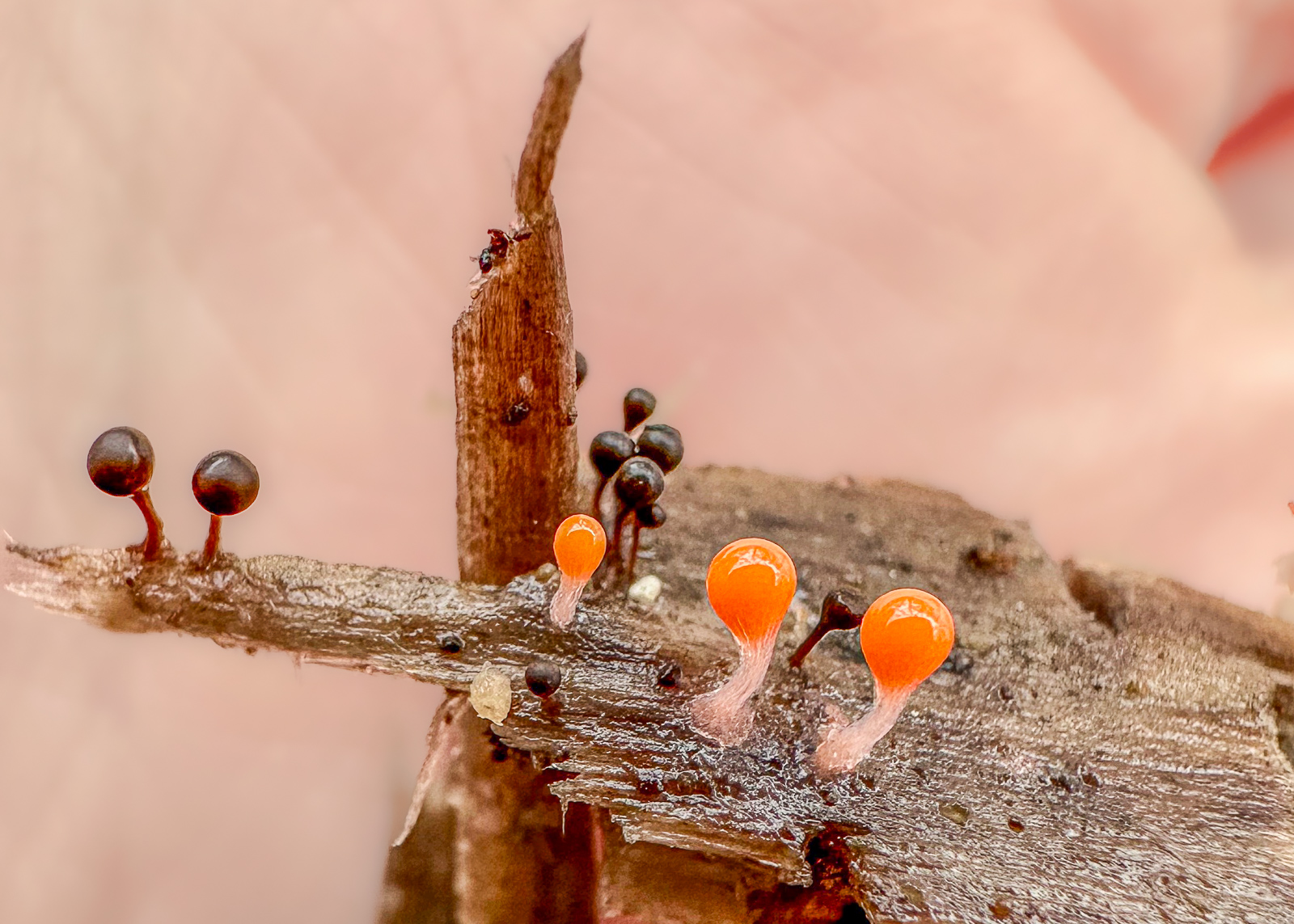
Slime moulds belong to the phylum Mycetozoa and are placed here within the Kingdom Protozoa. They are remarkable eukaryotic organisms with a life cycle that combines features of both amoebae and fungi. Modern classifications place them within the Amoebozoa, although their exact Linnaean rank varies between classification systems.
The phylum Mycetozoa is traditionally divided into three classes:
- Ceratiomyxomycetes — delicate, coral‑like slime moulds that form spore‑bearing structures externally on upright, crystalline branches.
- Dictyosteliomycetes — the cellular slime moulds, whose individual amoebae aggregate into multicellular structures when food is scarce.
- Myxomycetes — the true slime moulds, forming visible fruiting bodies from a mobile, multinucleate plasmodium.
Many species can only be identified with certainty by microscopic examination, so a number of my records remain at genus or higher levels.
A life Unlike Fungi
Although slime moulds are often found growing alongside fungi on decaying wood, they are not fungi. The resemblance is largely superficial. Their spore-bearing fruiting bodies evolved independently and are an example of convergent evolution—unrelated organisms developing similar structures to perform the same function.
For most of their lives, slime moulds exist as microscopic amoeboid cells or as a remarkable plasmodium: a giant multinucleate cell that creeps slowly over wood and leaf litter, engulfing bacteria, fungal spores and other microscopic organisms. Only when conditions change does the plasmodium transform into the fruiting bodies that are most familiar to naturalists.
Life Cycle
The fruiting bodies that we usually notice are only the final stage in the life of a slime mould. For most of its existence it is a microscopic organism.
When a spore germinates it produces a tiny amoeba-like cell (a myxamoeba) that feeds on bacteria and other microorganisms. Under very wet conditions this may develop into a flagellated swarm cell, capable of swimming through films of water.
When compatible myxamoebae meet, they fuse to form a plasmodium—a remarkable giant cell containing many thousands of nuclei. The plasmodium creeps slowly across decaying wood or leaf litter, engulfing bacteria, fungal spores and other microorganisms.
When conditions become less favourable, or food begins to run out, the plasmodium transforms into fruiting bodies (sporangia). These produce spores which are dispersed by wind, allowing the cycle to begin again.
In dry conditions the plasmodium may instead form a dormant sclerotium, remaining inactive until moisture returns.
Life Cycle of Plasmodial Slime Moulds


My Observations
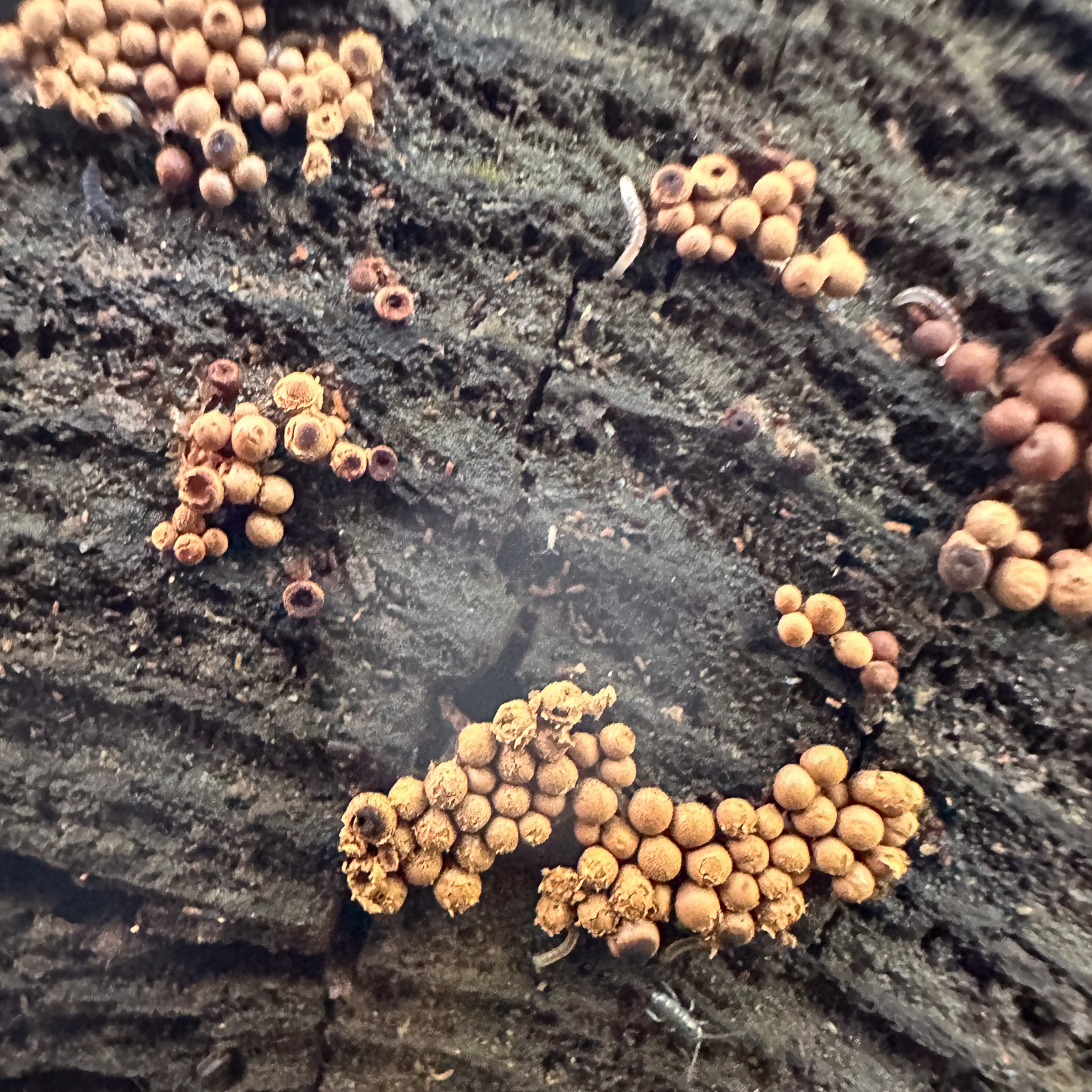
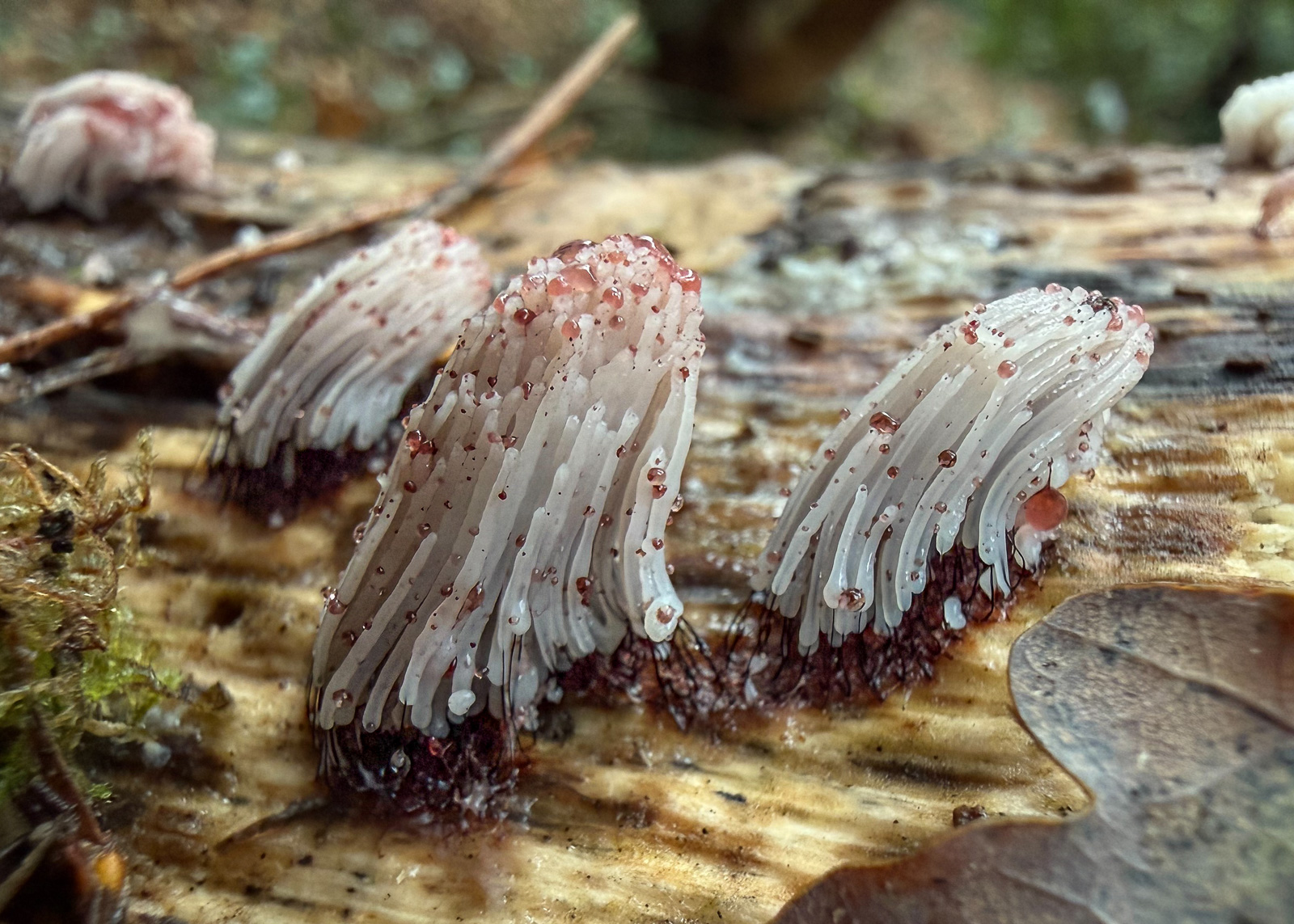
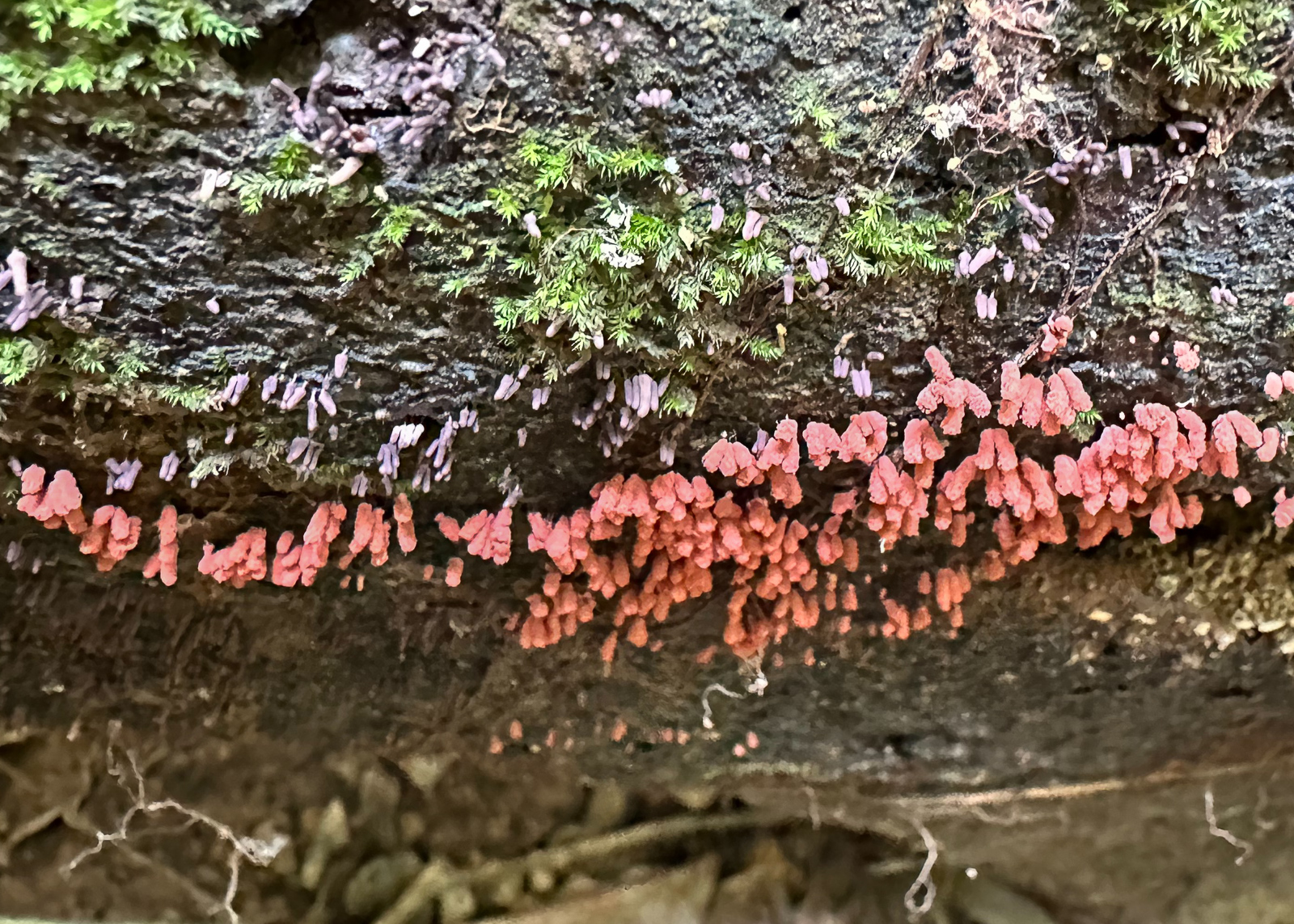
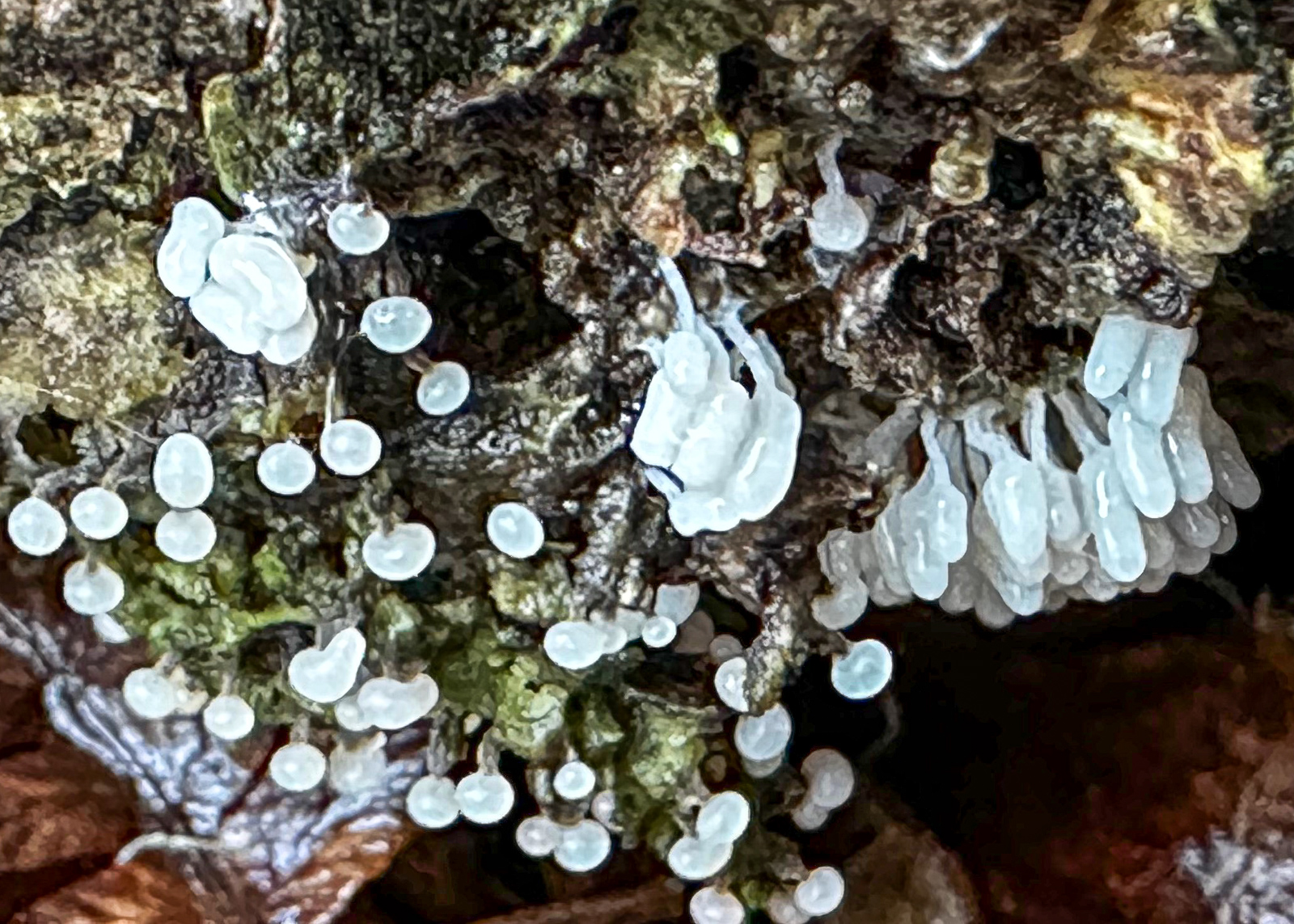
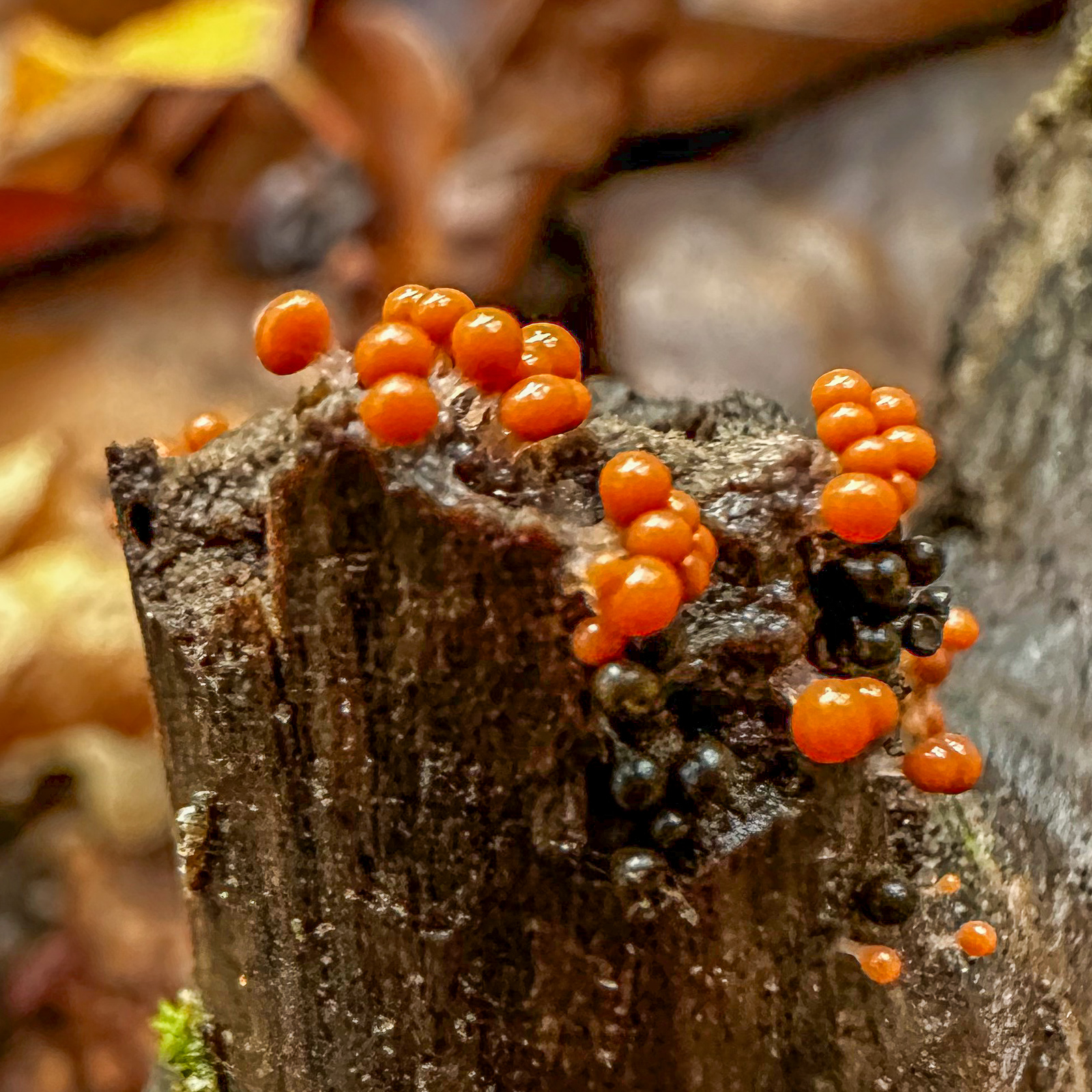
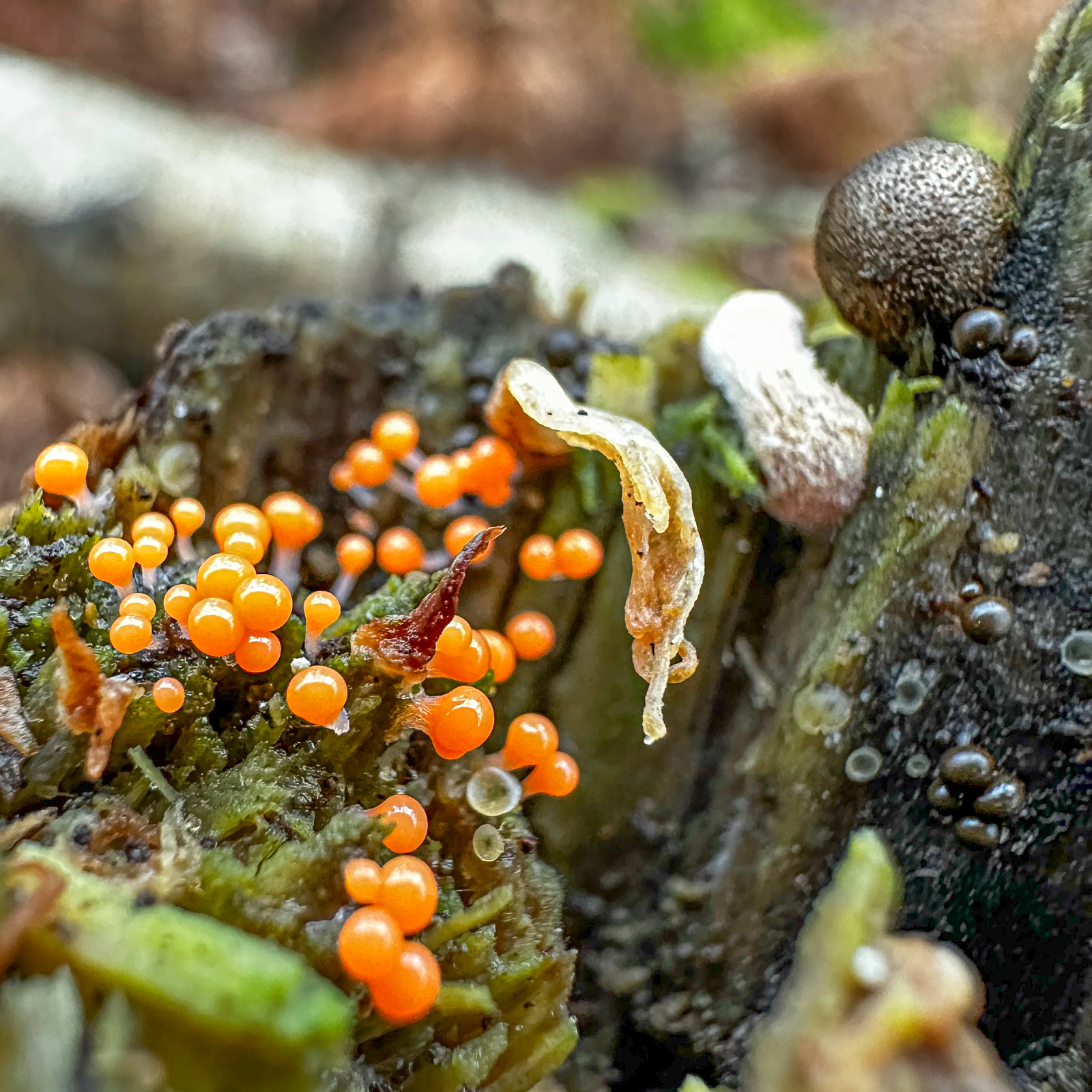
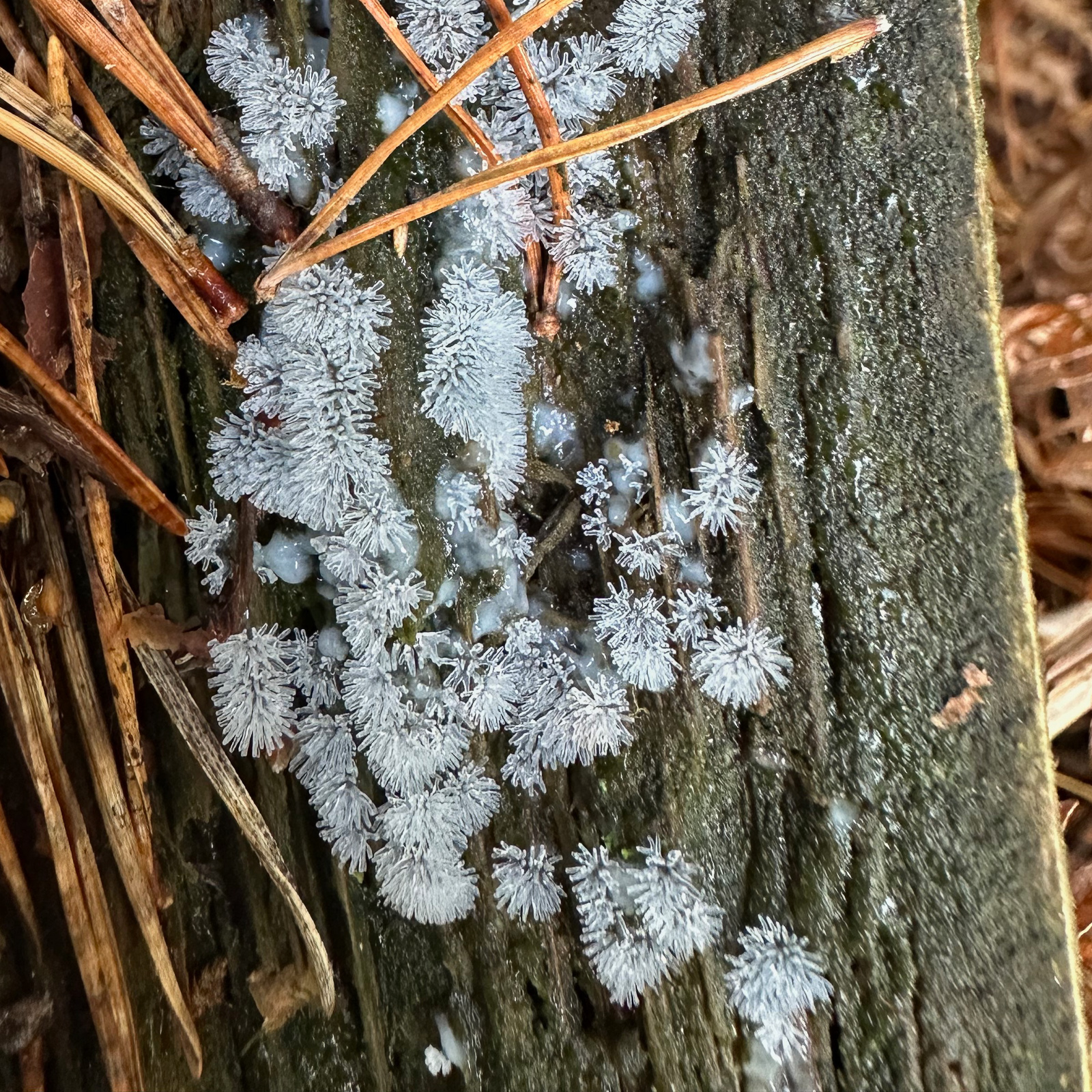
Over the past few years I have recorded a small but varied selection of slime moulds. Almost all of these were true slime moulds (Class Myxomycetes), which produce the familiar fruiting bodies found on decaying wood. I have also encountered the striking coral slime (Ceratiomyxa fruticulosa), representing the Class Ceratiomyxomycetes, whose delicate crystalline branches look quite unlike the true slime moulds
Identification notes
Slime moulds can be surprisingly difficult to identify, and many species look very similar during their early stages. Many can only be identified with certainty by microscopic examination.
All identifications on this page are based on photographs and comparison with published descriptions and images, together with habitat, season and known distribution. No specimens have been examined microscopically and the species listed and names given represent my best interpretations based on the available evidence. The level of confidence varies between species, but all should be regarded as photographic identifications rather than confirmed determinations.
Class Ceratiomyxomycetes
Order Ceratiomyxales
Family Ceratiomyxaceae
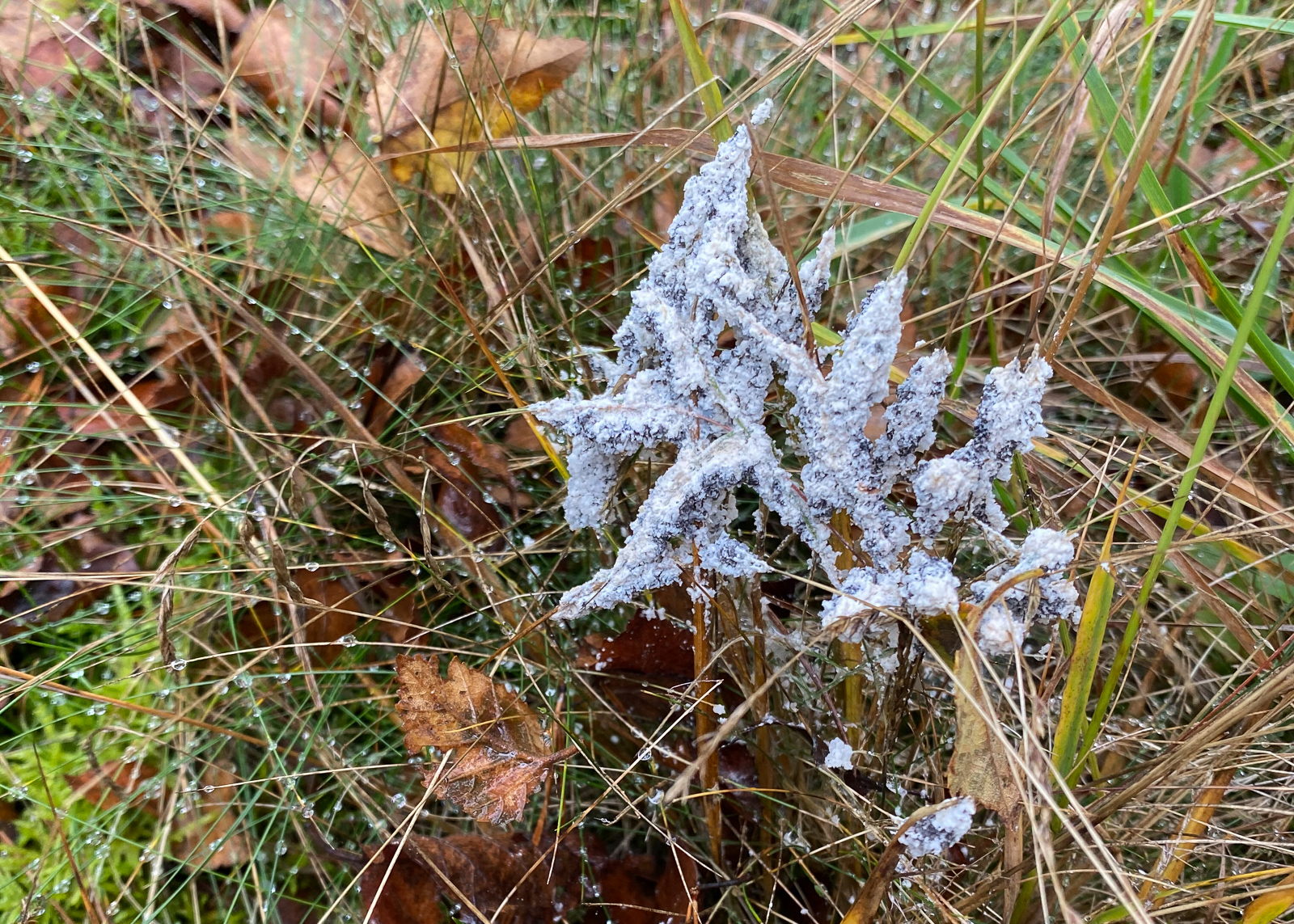
Ceratiomyxa cf. fruticulosa — Common Coral Slime @ Frensham Common, Oct 2023
Class Myxomycetes — True Slime Moulds
Species I have seen
Order Cribrariales
- Family Cribrariaceae
- Cribraria argillacea
Order Physarales
- Family Didymiaceae
- Didymium spongiosum — Dog Sick Slime Mould
- Family Physaraceae
- Badhamia utricularis — Hanging Slime Mould or Grapes of the Woods
- Fuligo septica —Flowers of Tan aka Dog Vomit Slime Mould
- Leocarpus fragilis — Egg-shell Slime Mould aka Insect-egg Slime
Order Reticulariales
- Family Reticulariaceae — Reticulate Slime Mould Family
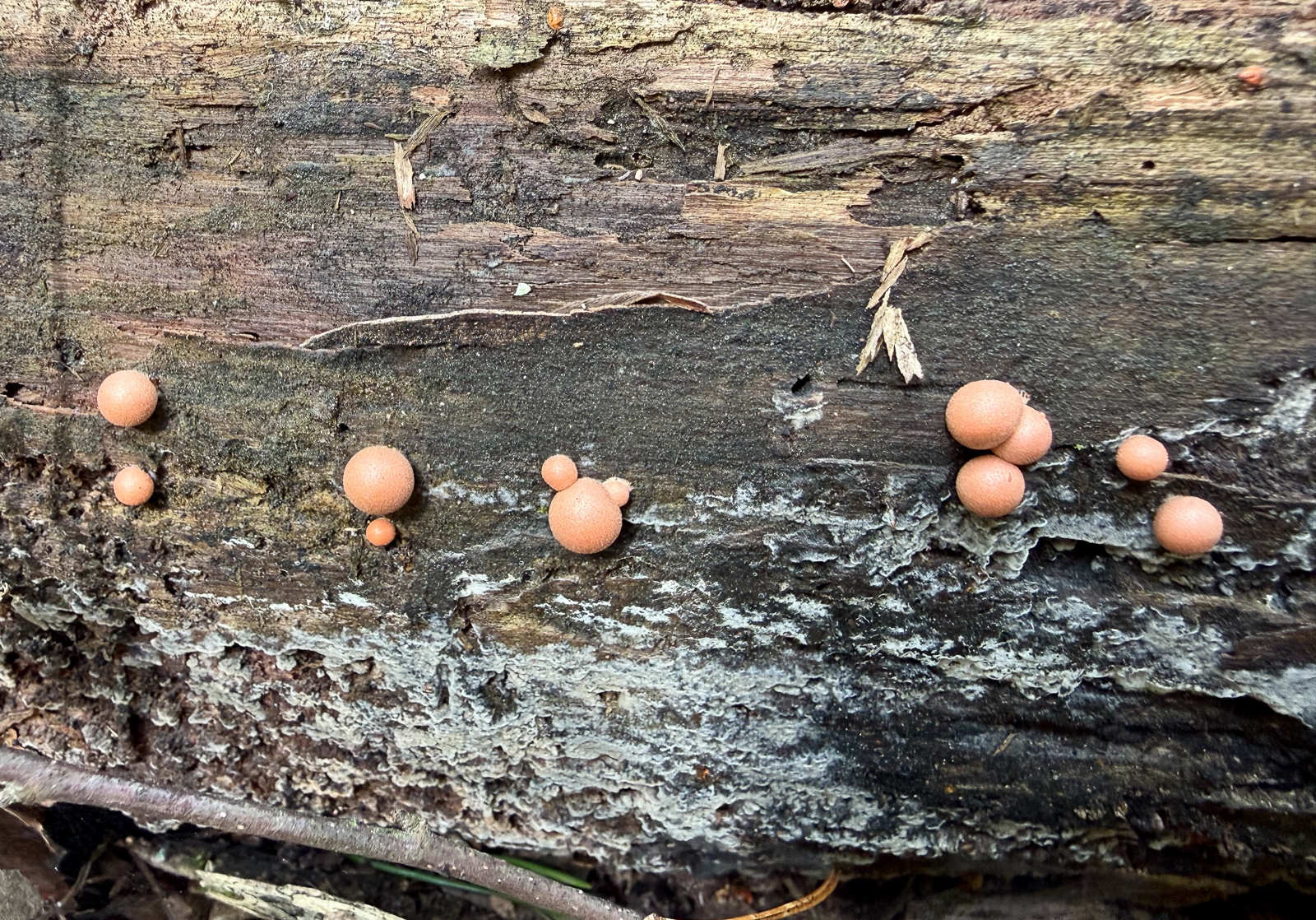
- Lycogala epidendrum — Wolfs Milk
- Reticularia lycoperdon — False Puffball aka Moon Poo
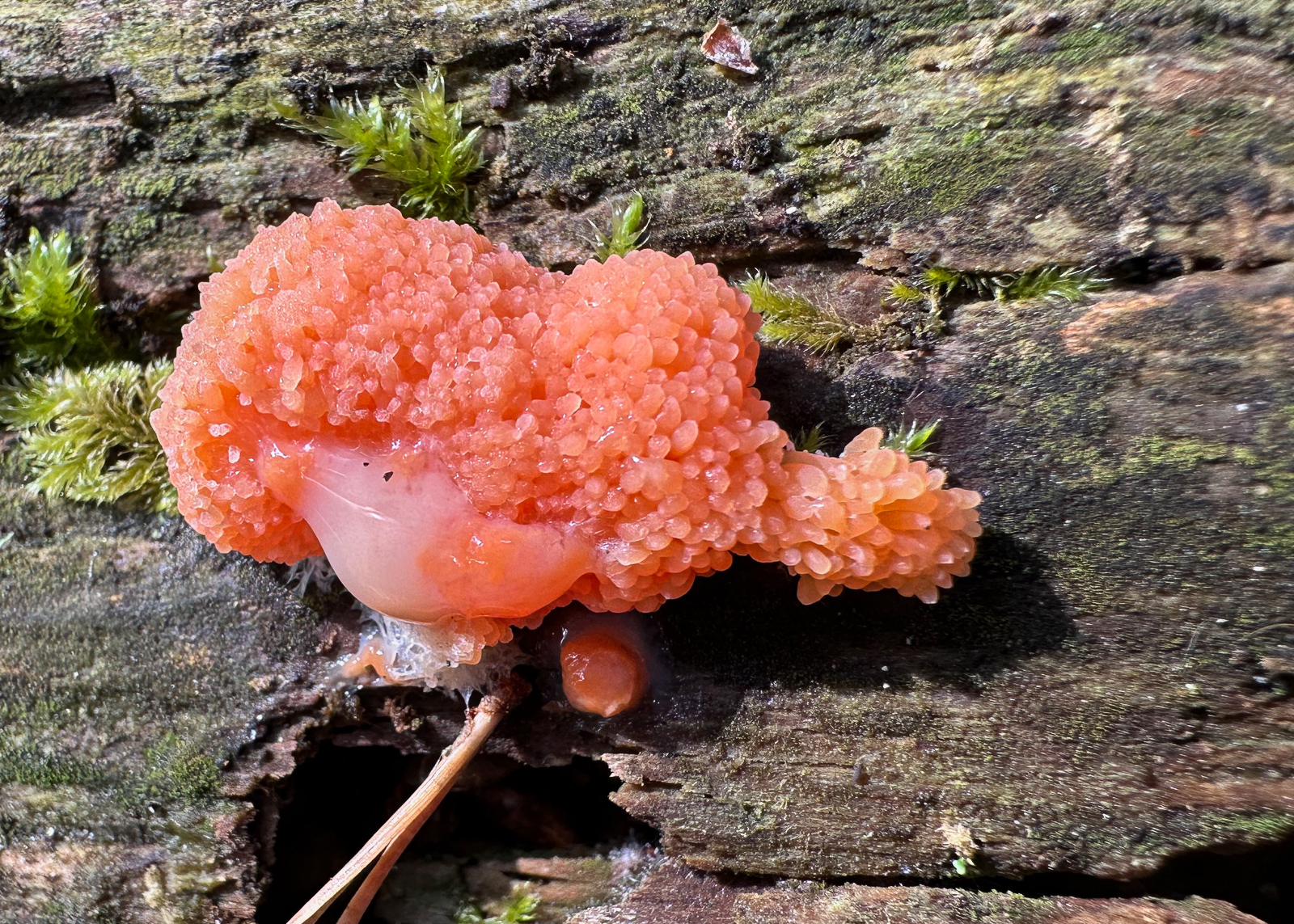
- Tubifera ferruginosa — Red Raspberry Slime Mould
Order Stemonitidales
- Family Amaurochaetaceae
- Comatricha nigra
- Family Stemonitidaceae
- Stemonitis fusca — Dark-brown Wood-Hair
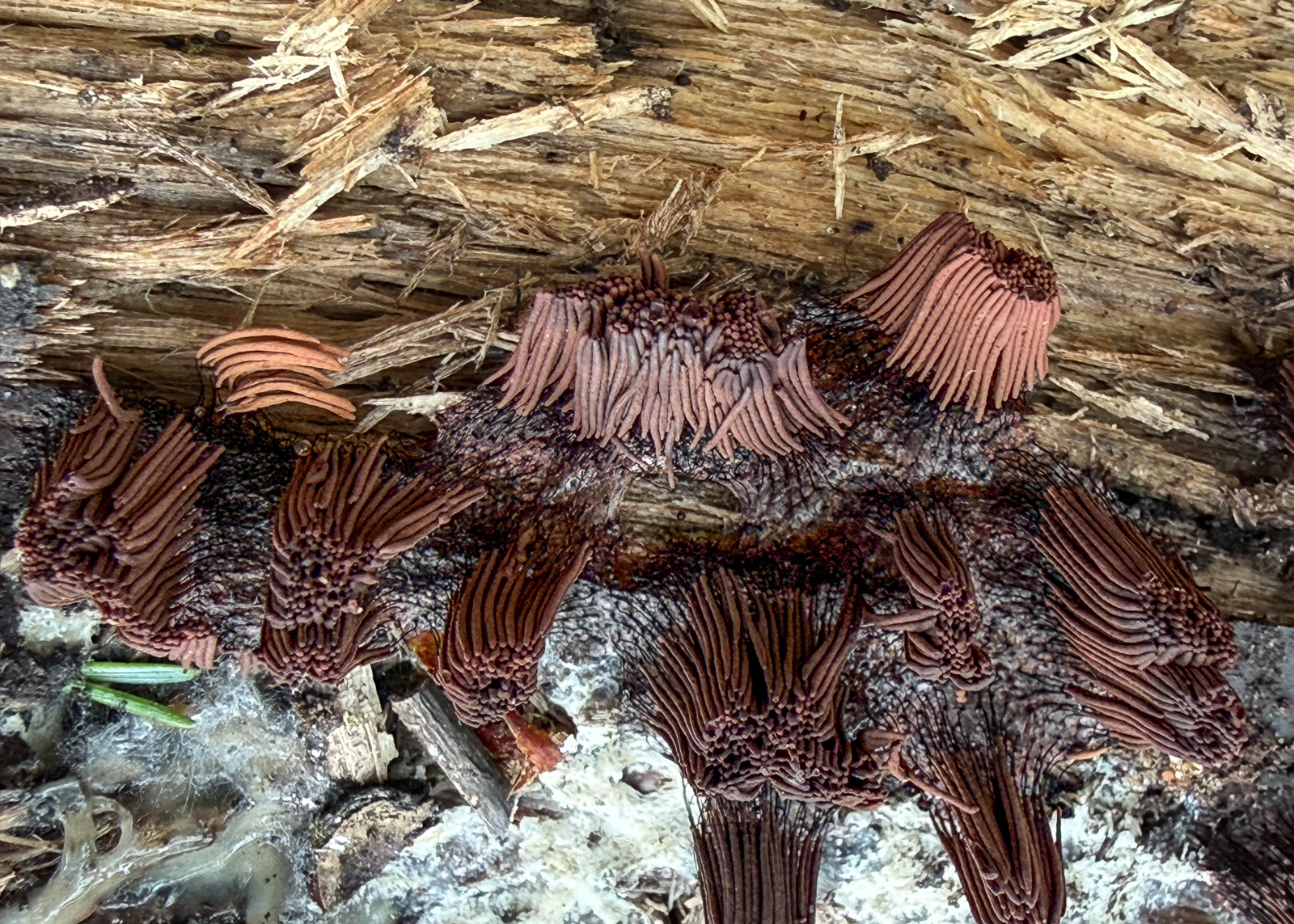
- Stemonitis splendens — Chocolate Tube Slime
Order Trichiales
- Family Arcyriaceae
- Arcyria denudata — Carnival Candy Slime Mould
- Arcyria cinerea — White Carnival Candy Slime Mould
- Family Hemitrichiaceae
- Hemitrichia decipiens — Salmon-Eggs
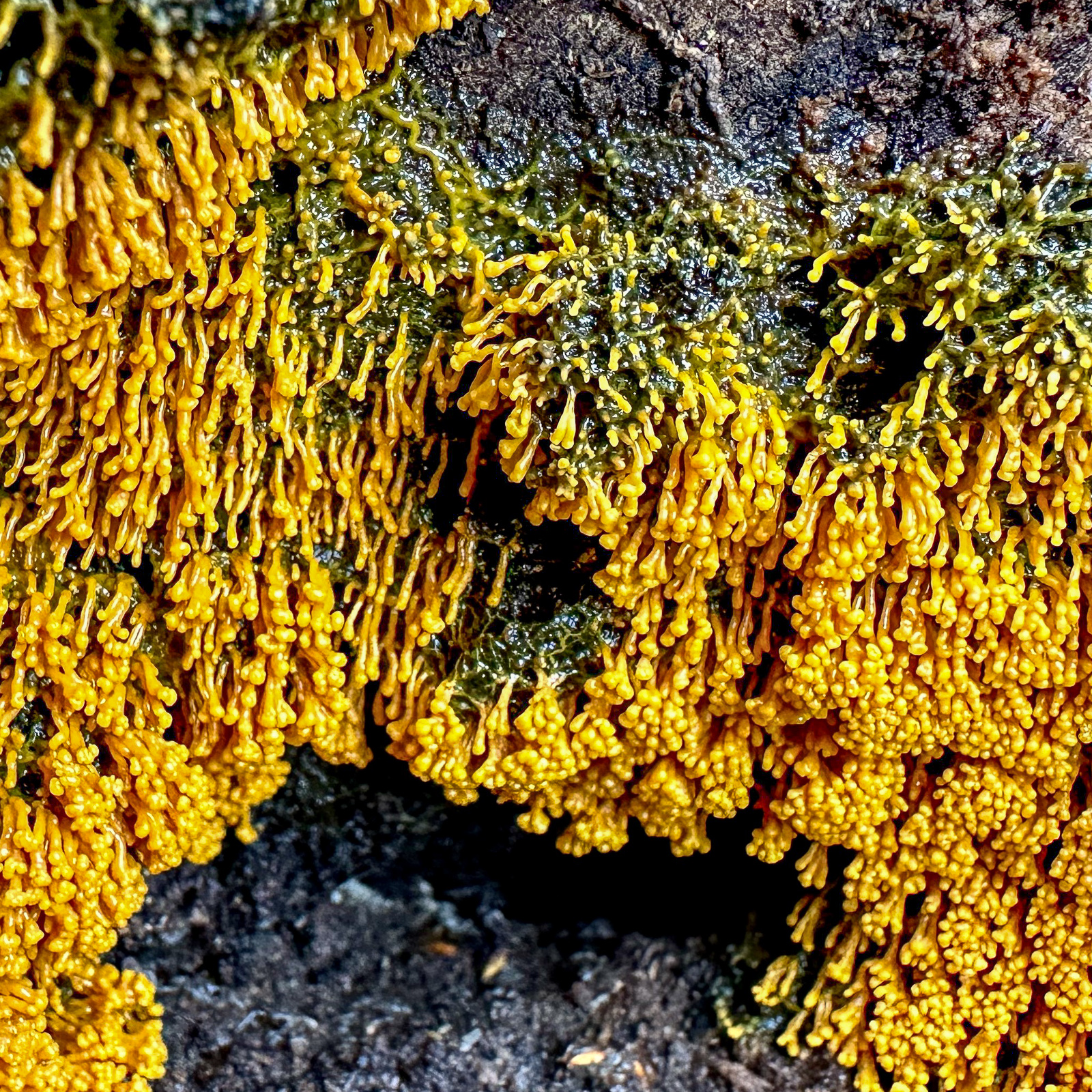
- Heterotrichia obvelata — Yellow Carnival Candy Slime
- Family Trichiaceae
- Trichia crateriformis
Gallery