Slime Moulds Sharing a Log
Sometimes the most remarkable wildlife is found on the smallest scale.
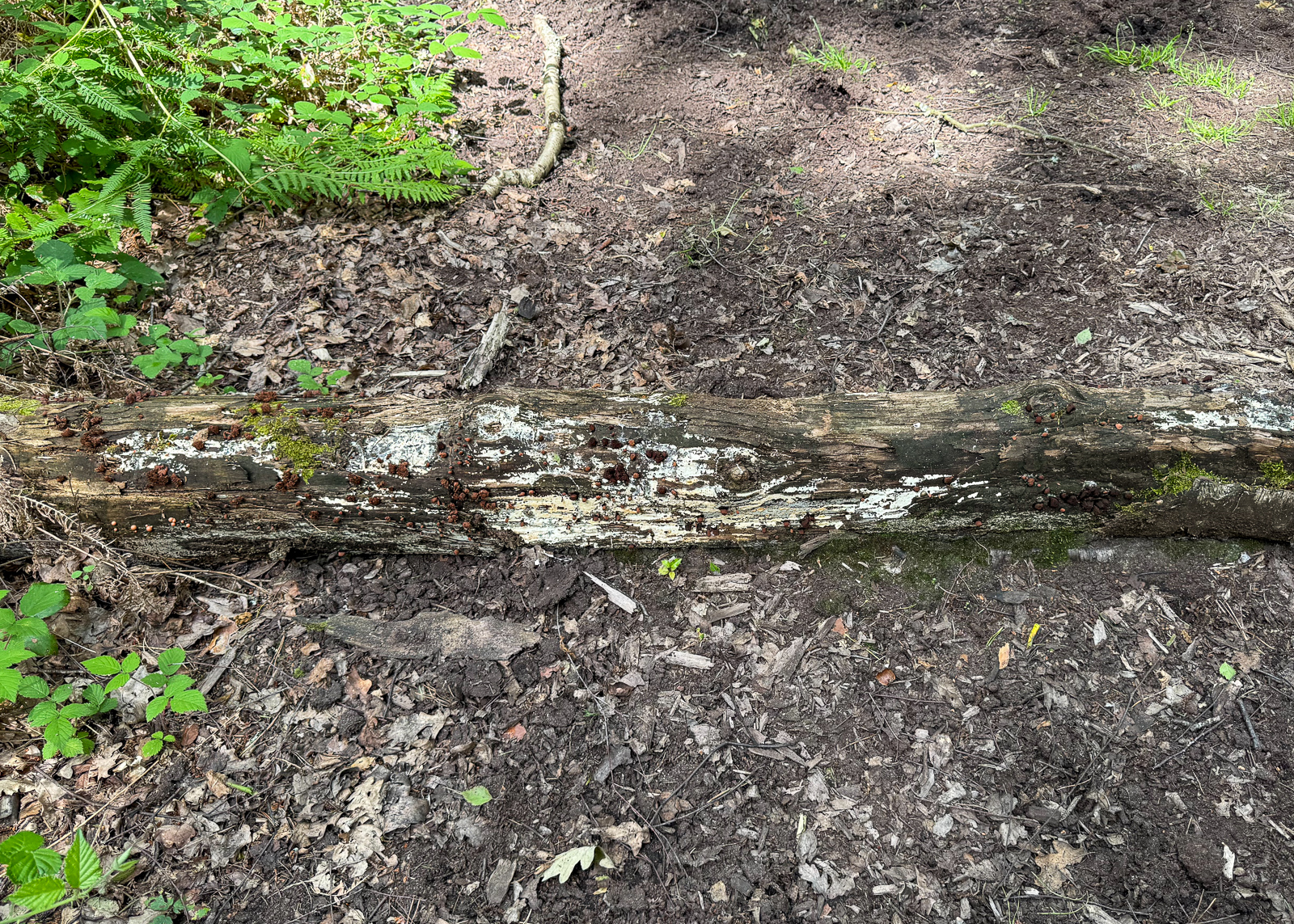
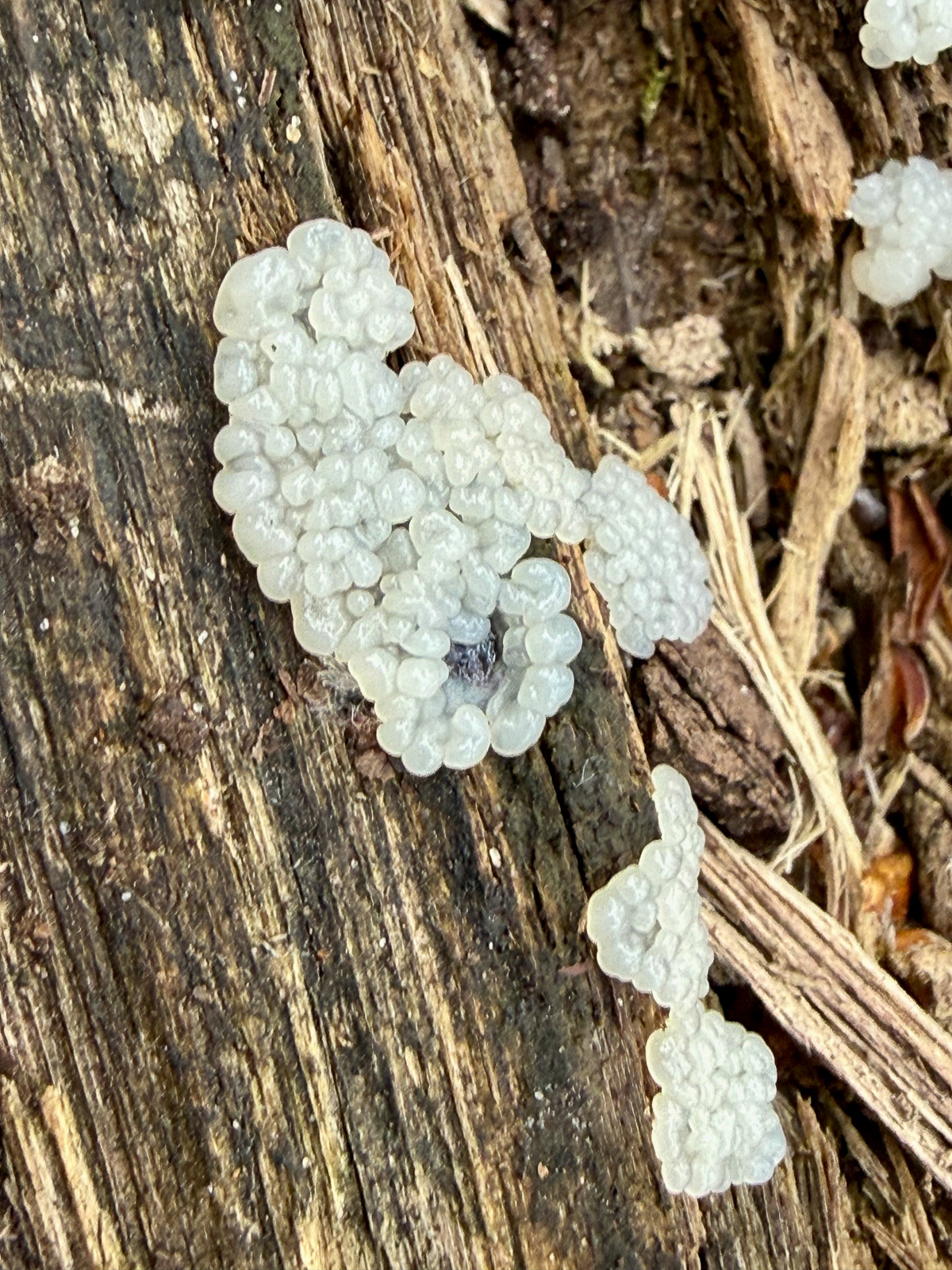
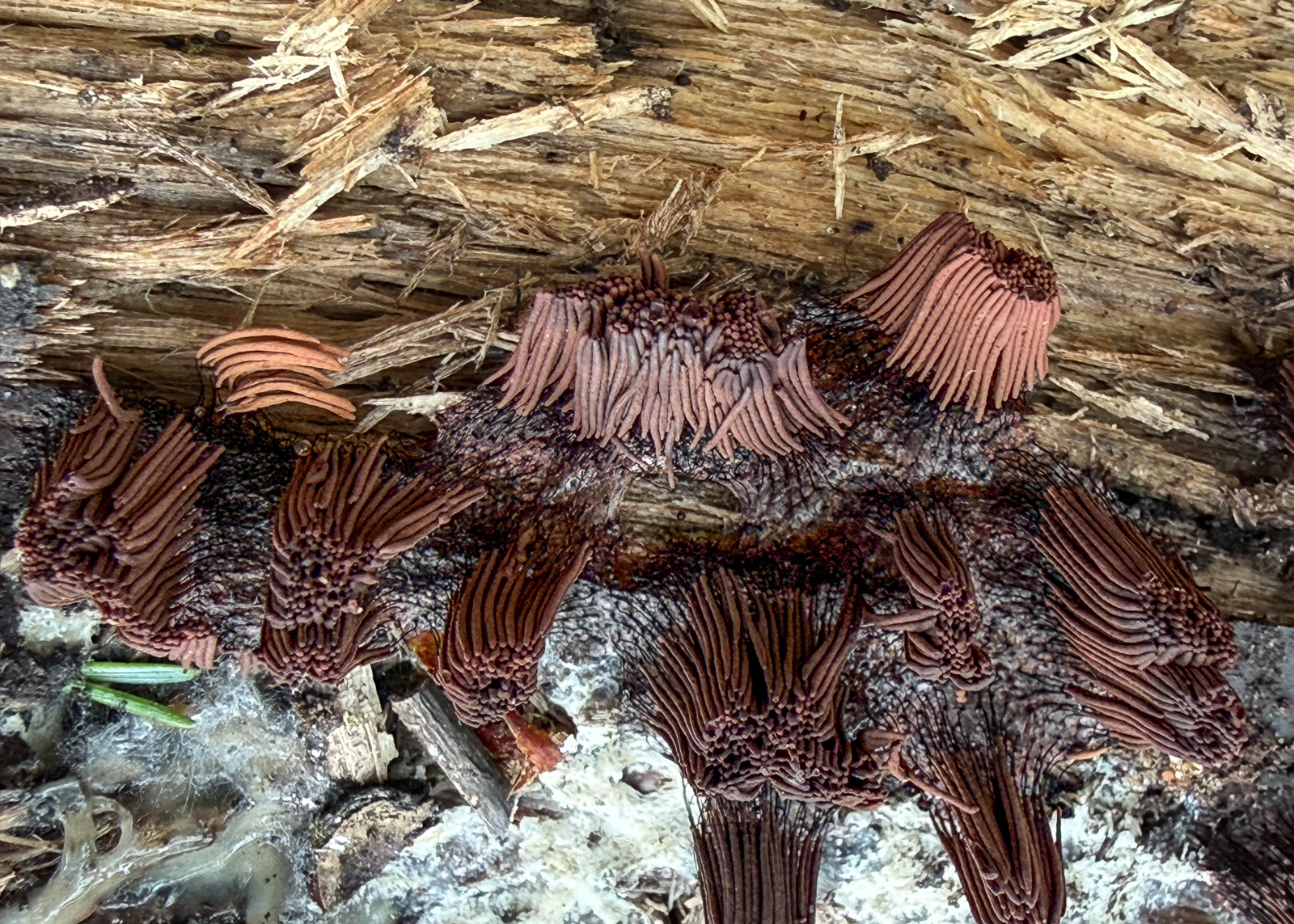
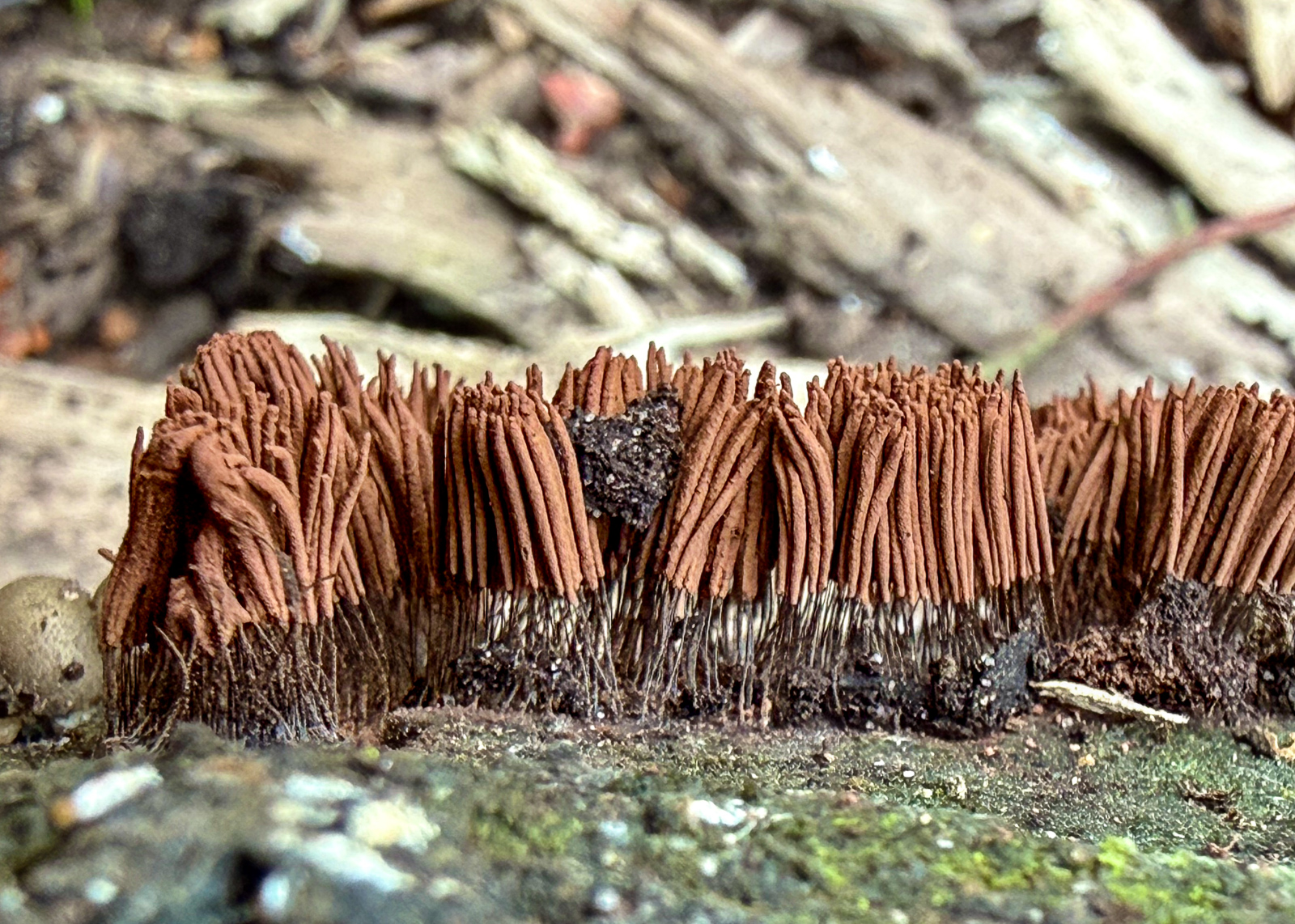
A message from my daughter saying she had found Chocolate Tube Slime (Stemonitis spp.) on a fallen log on Elstead Common was too good to ignore. A short while later we were examining a log covered with slime moulds at several different stages of their life cycle. There were numerous clusters of upright fruiting bodies, together with patches of pale, glistening plasmodium and some newly developing fruiting bodies that resembled frog eggs.
One of the most remarkable stages in the life cycle of a slime mould is the mobile plasmodium, a white, multinucleate mass that creeps slowly over the surface of the wood, feeding on bacteria and other microorganisms. Eventually it comes to rest and develops into clusters of upright fruiting bodies.
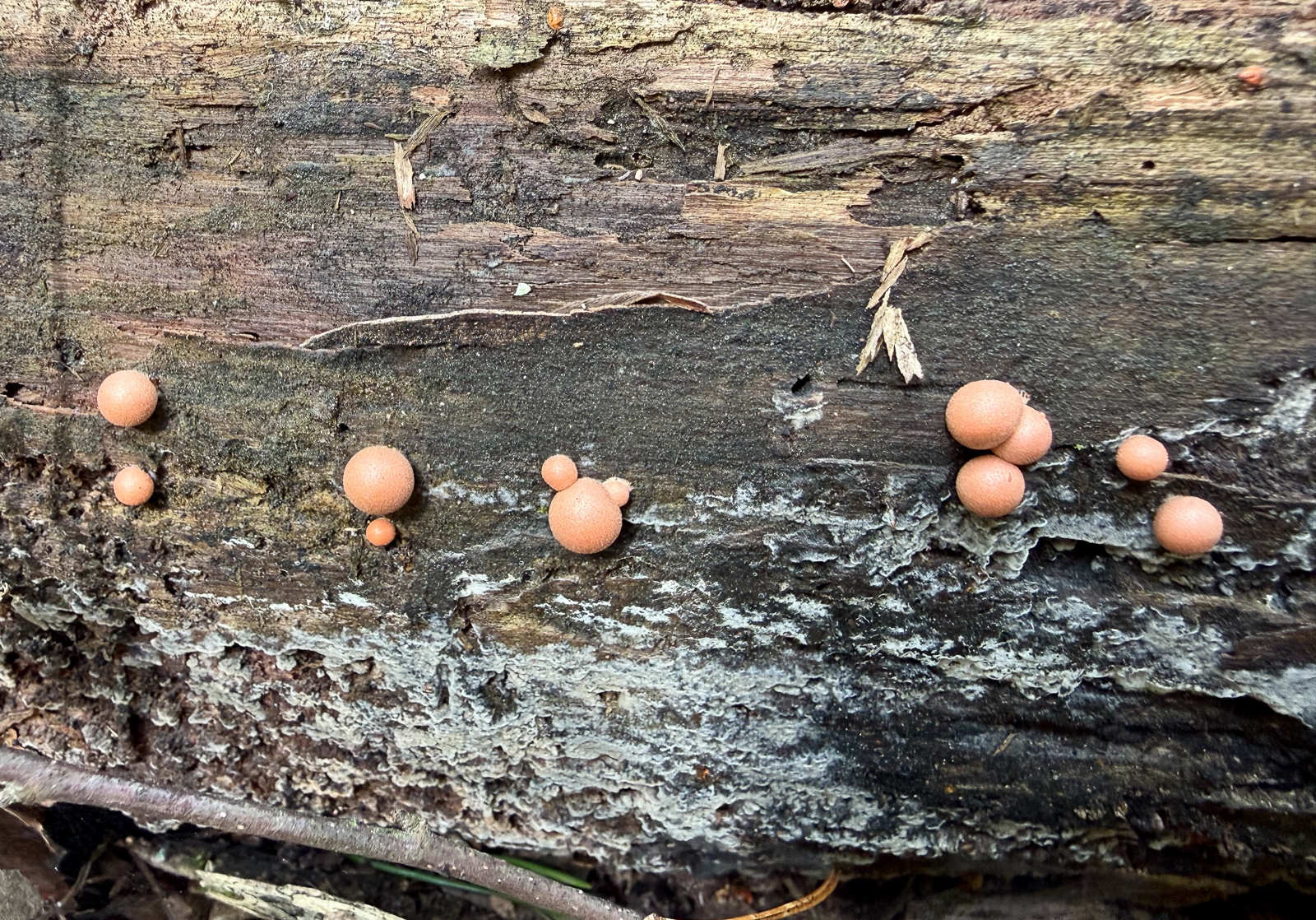
Growing nearby were also several patches of Wolf’s Milk (Lycogala epidendrum), another slime mould that often shares the same habitat. This made for an interesting comparison between two very different-looking slime moulds sharing the same piece of decaying wood.
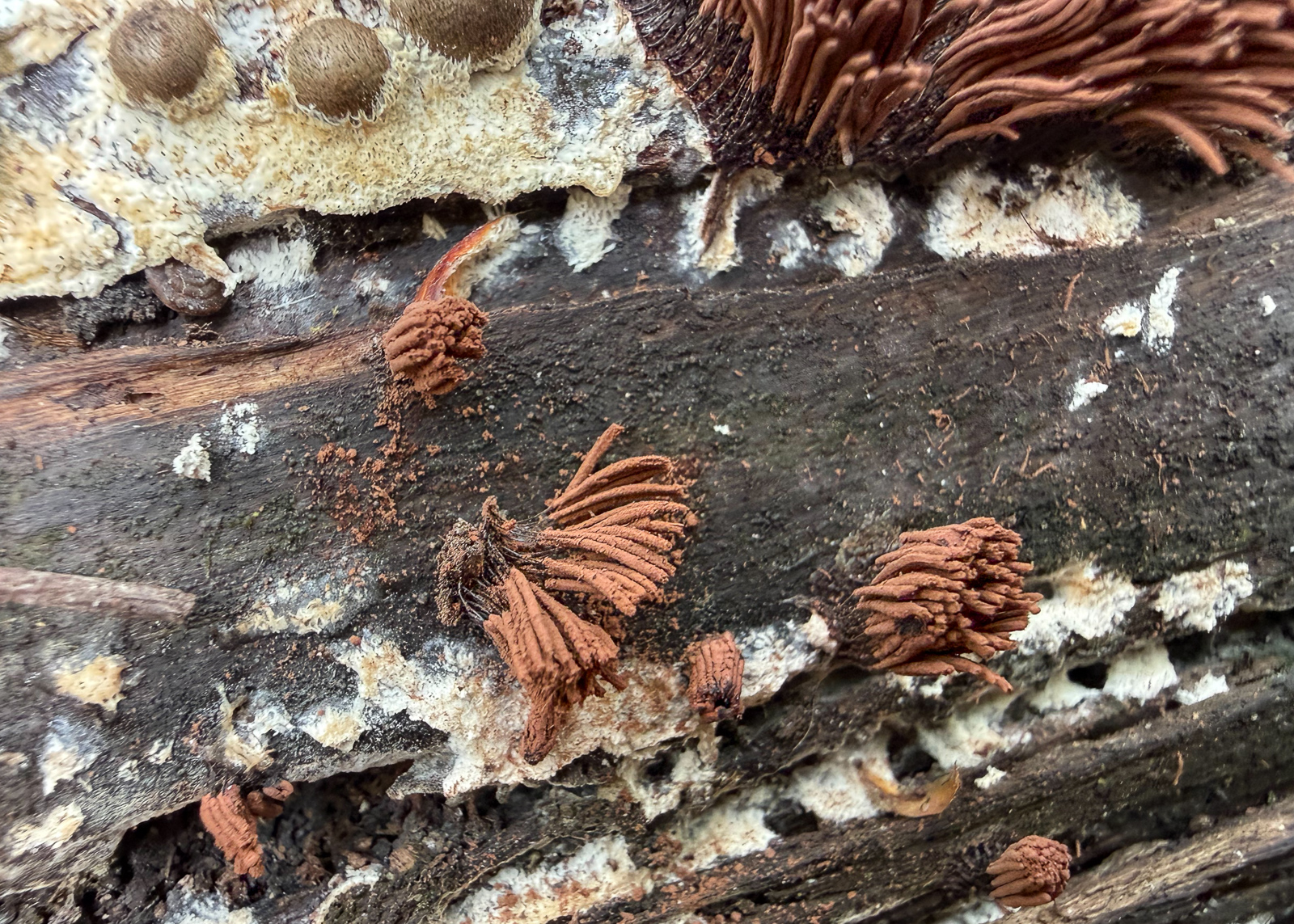
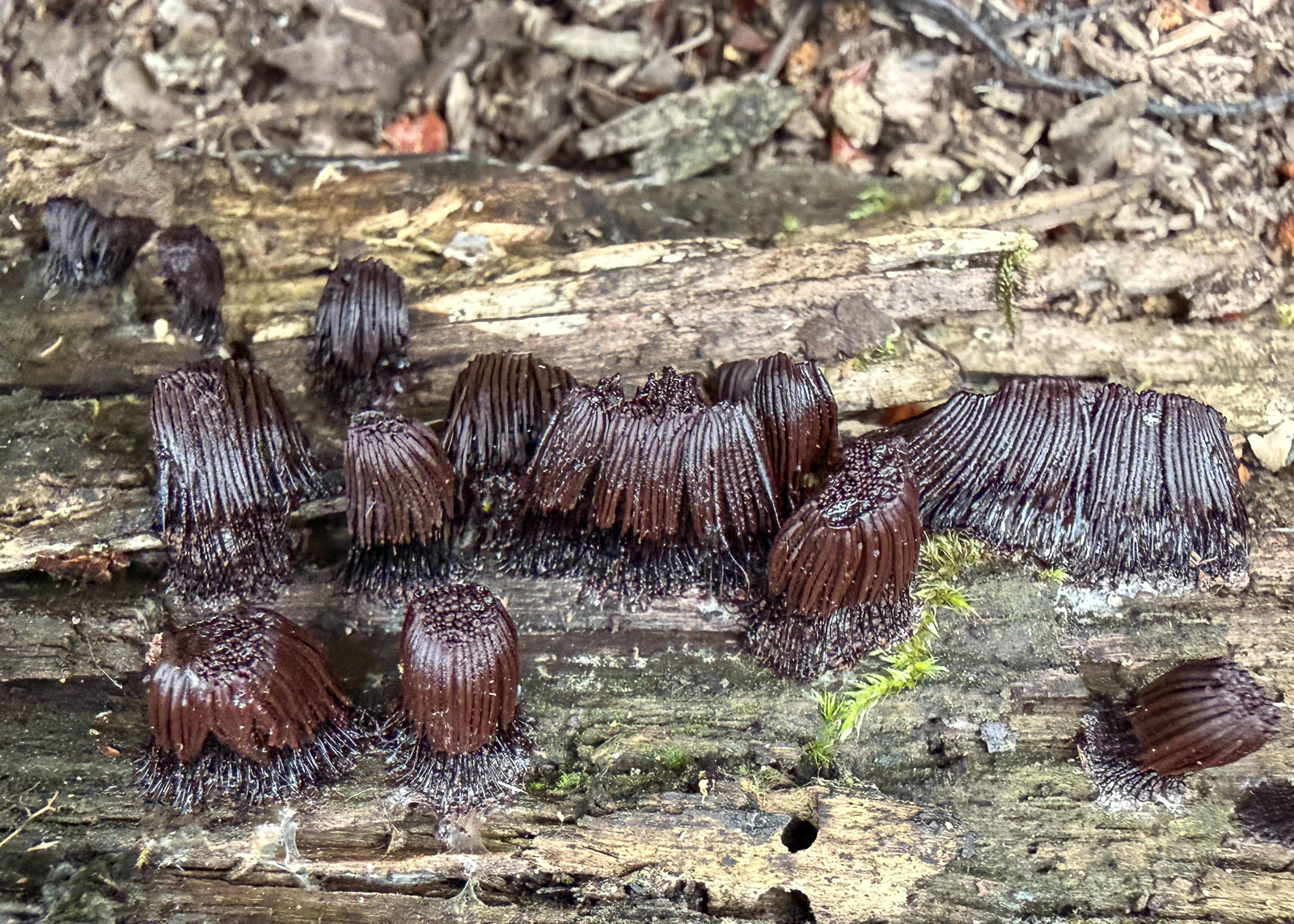
A few days later I returned to the log. The transformation was striking. The pale plasmodium had almost disappeared and the Stemonitis had matured into much darker fruiting bodies.
Which Chocolate Tube Slime?
The Elstead Common specimens were dark brown, typical of the group commonly known as Chocolate Tube Slimes (Stemonitis species). Identifying individual species is difficult from photographs alone because many require microscopic examination of the spores and capillitium (the network of fine threads inside the fruiting bodies). However, the colour, height and structure of this collection are most consistent with Stemonitis cf. splendens.
Back in November 2025 my daughter and I found another Stemonitis that looked rather different. Instead of dark brown columns, these fruiting bodies were pale white to pink with reddish droplets decorating the tips.
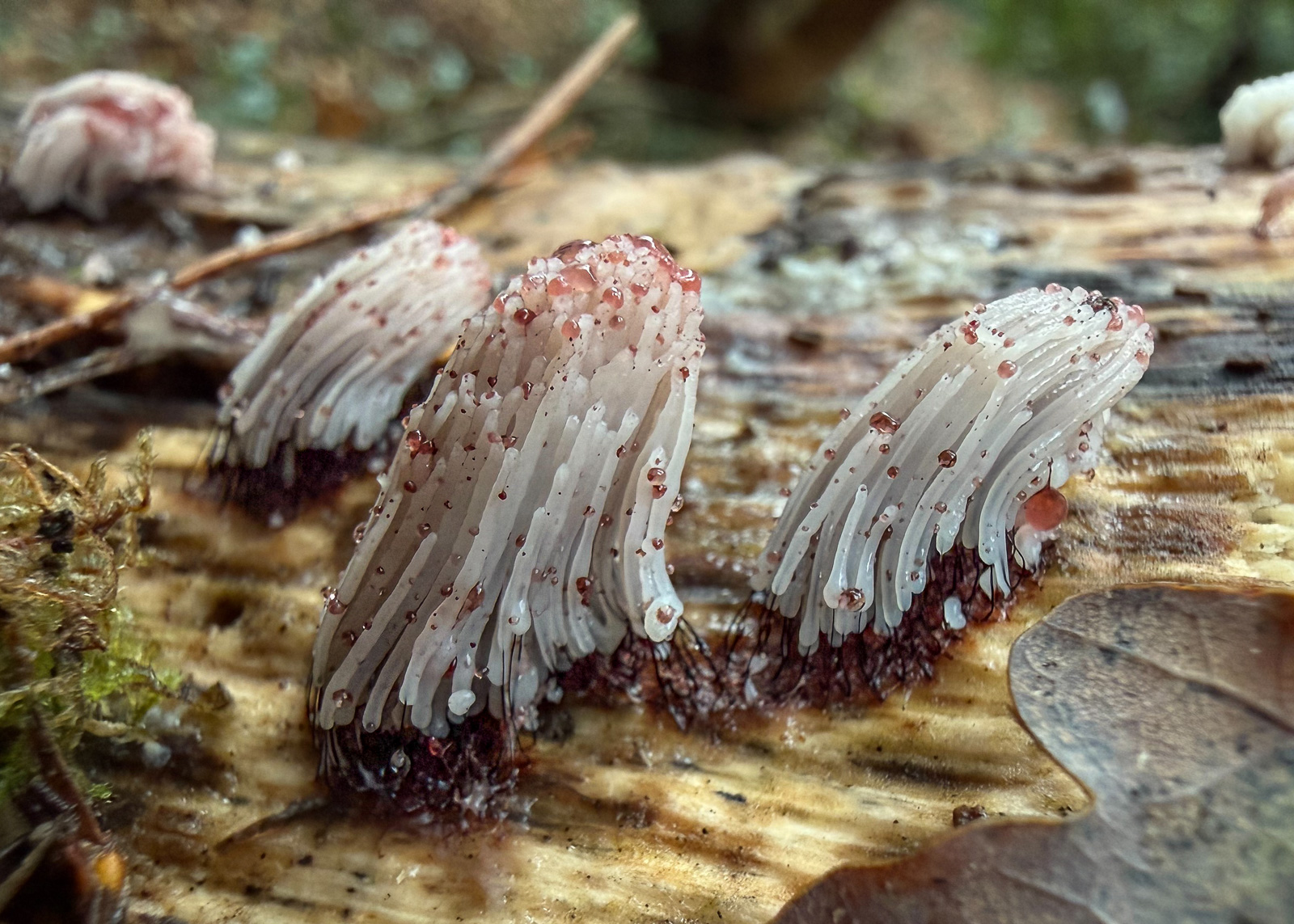
This collection may represent a different species, perhaps Stemonitis fusca, although again I would not be confident assigning it to species without microscopic examination. Many Stemonitis species change colour considerably as they mature, progressing from pale or silvery-white when young to reddish-brown and finally dark chocolate brown as the spores ripen.
Stemonitis is a true slime mould (Class Myxomycetes). Unlike fungi, slime moulds spend much of their lives as a mobile, amoeba-like plasmodium before producing the familiar fruiting bodies. More about their biology and life cycle can be found on my Slime Mould page.
Looking more closely
Slime moulds are easily overlooked because most fruiting bodies stand only a few millimetres tall and may persist for only a short time. Yet a single decaying log can support several species at once, each appearing and disappearing as conditions change.
The next time you come across a fallen log in a damp woodland, it is worth taking a closer look. You may discover an entire miniature world that most people walk straight past.