A Walks at Noar Hill, Selbourne
Mike’s Birding Group Walk — 16 June 2026
Six of us met for this walk, parking along the grass verge where Noar Hill Road meets Copse Hill before heading up into the nature reserve. The weather was lovely, albeit a little windy.
We began in the old quarry to see what was about. There were plenty of Pyramidal Orchids and a few Common Spotted as well. From there we walked up through the middle of the site, keeping to the main paths and avoiding the steeper slopes. Although this is a birding group, we weren’t expecting many birds and were concentrating on the plants instead. We weren’t disappointed, the range of flowers was excellent. We found six orchid species in total, along with many other chalk‑grassland plants.
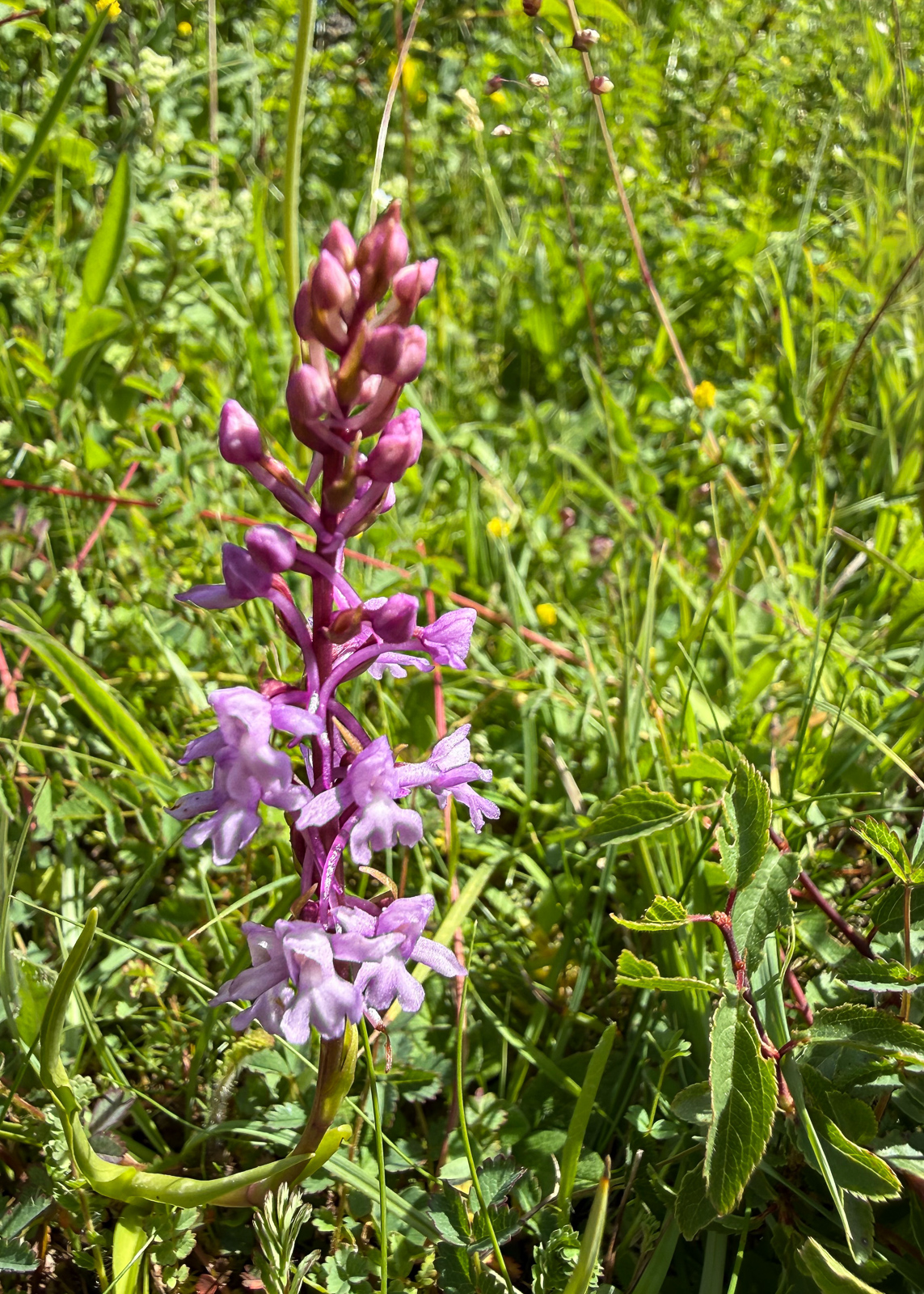
(Gymnadenia conopsea)
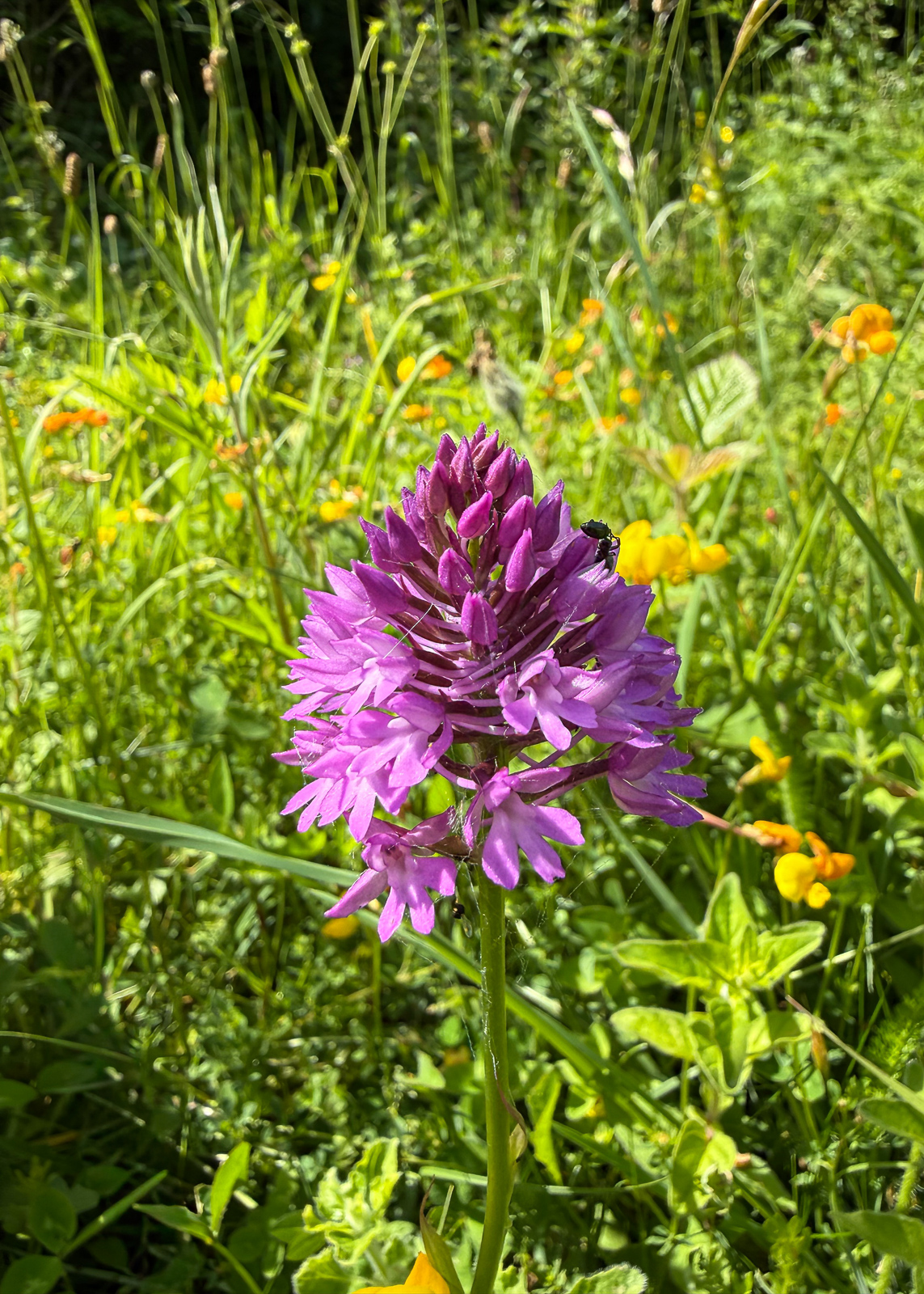
(Anacamptis pyramidalis)
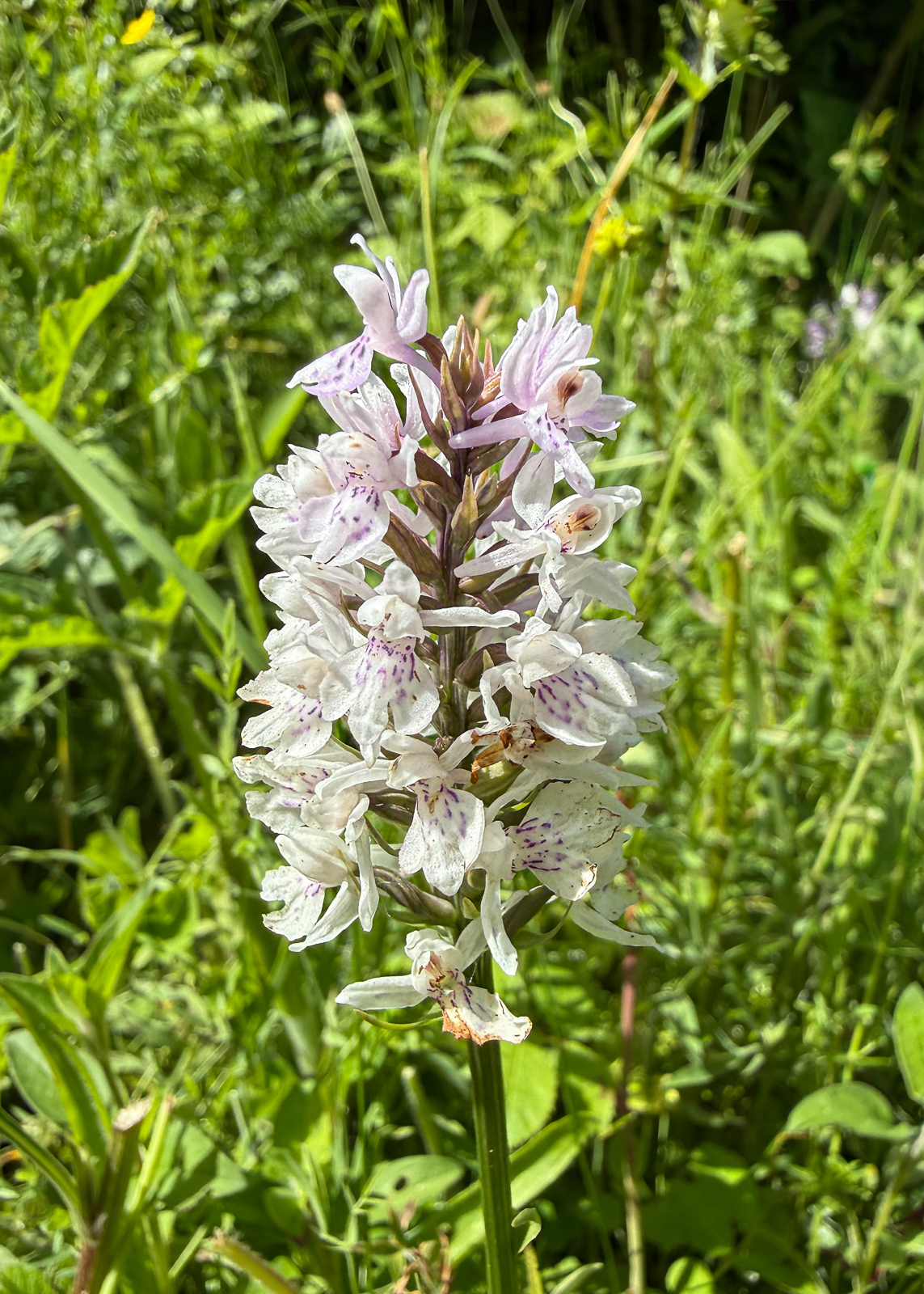
(Dactylorhiza fuchsii) – pale variant
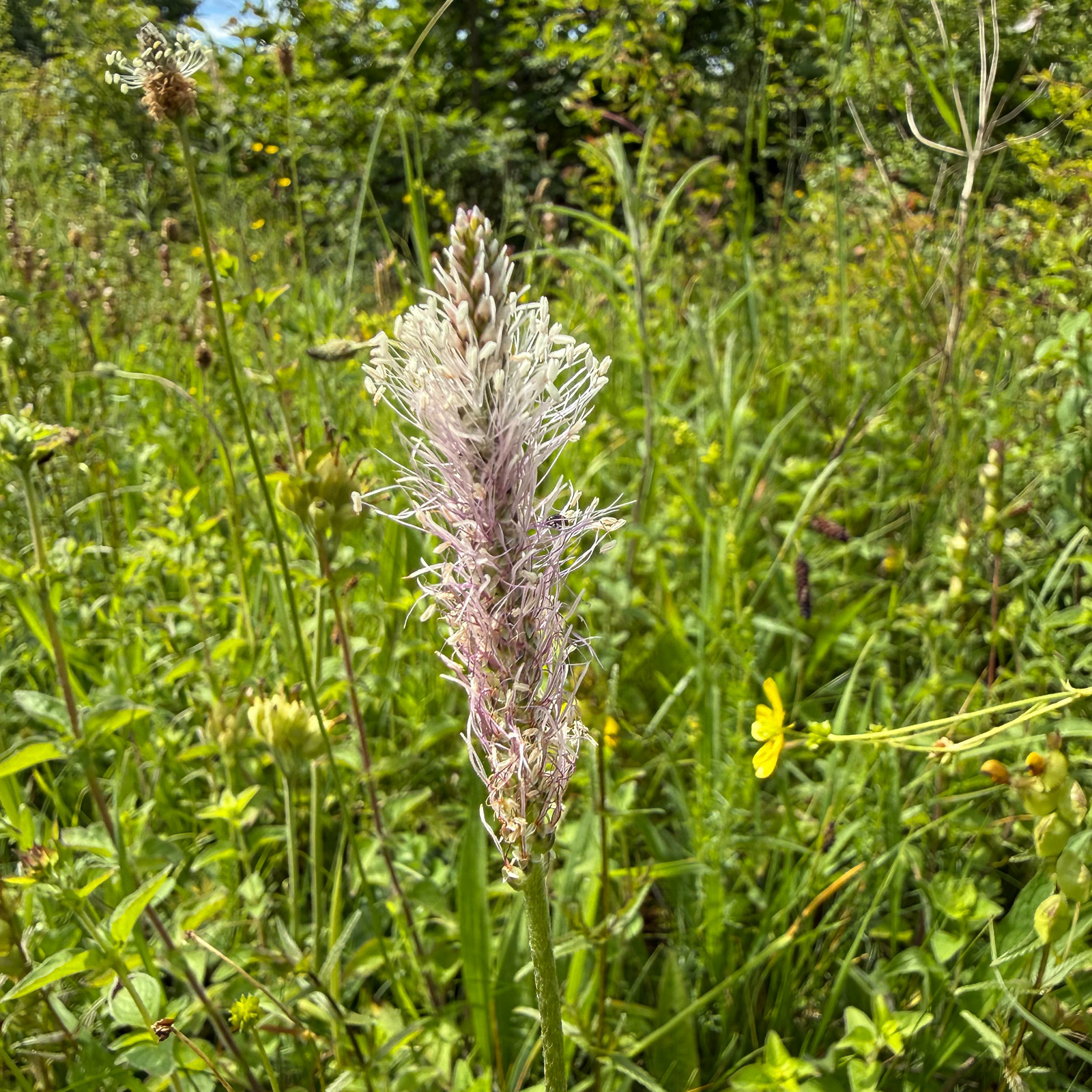
(Plantago media)
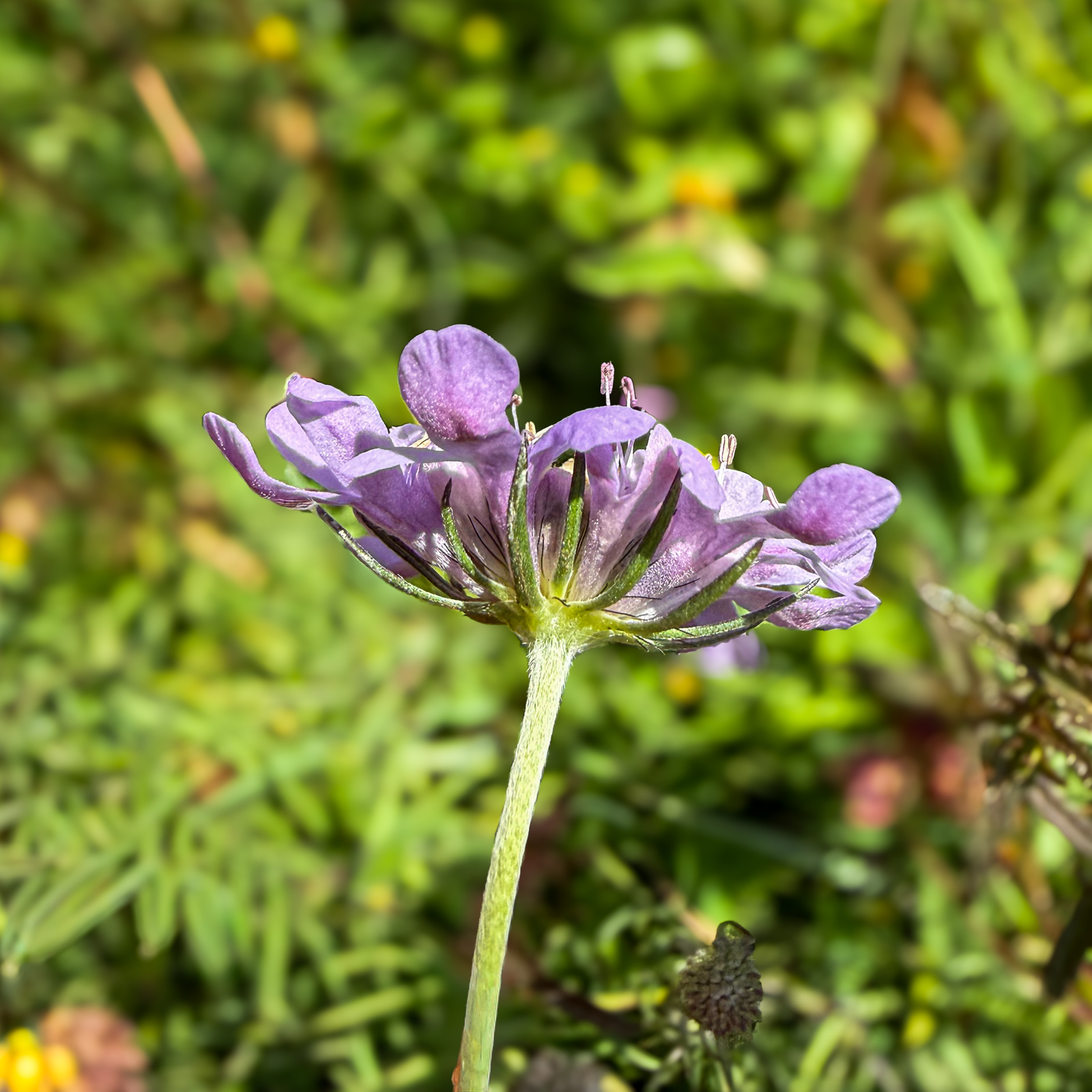
(Scabiosa columbaria)
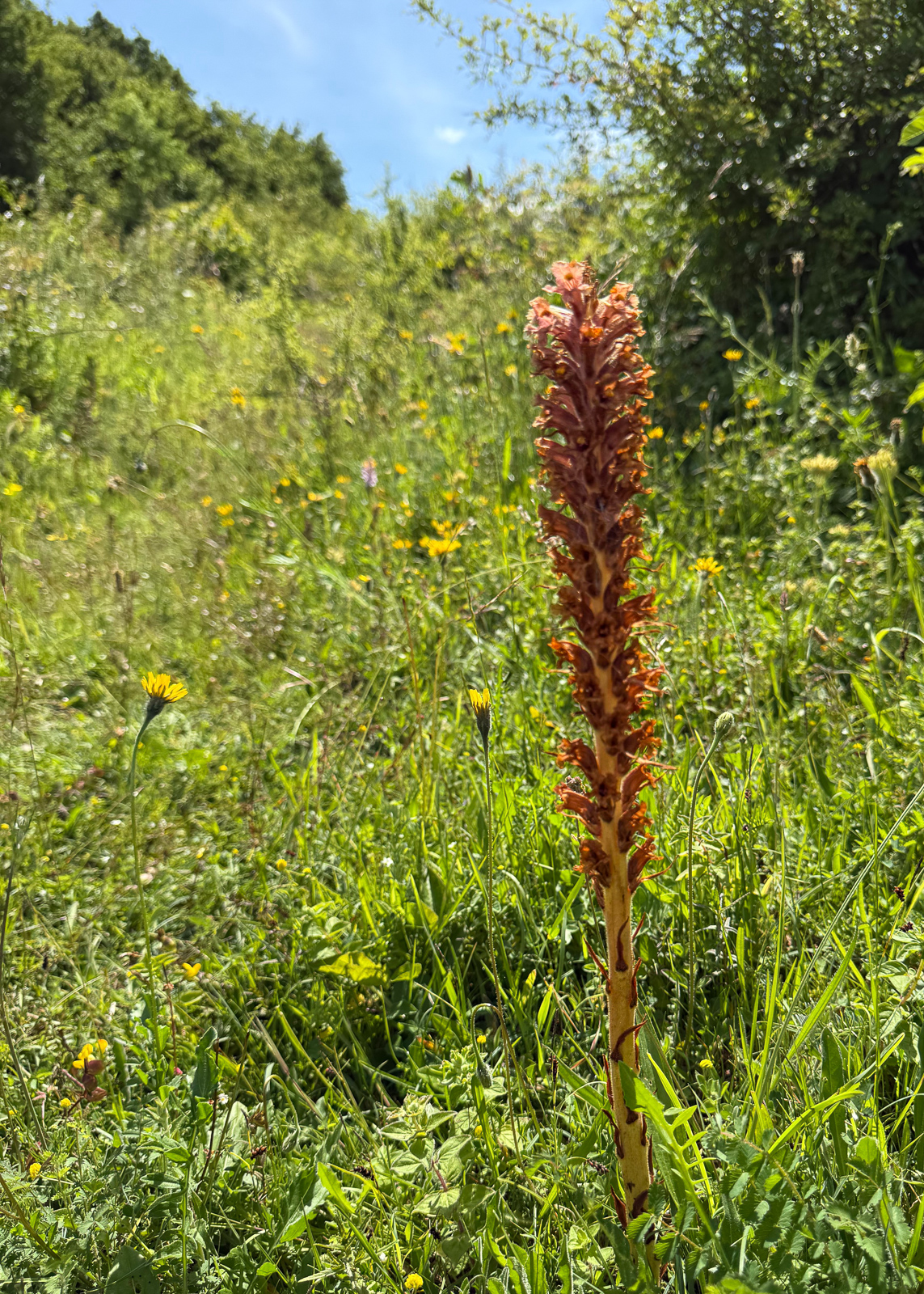
(Orobanche elatior)
The full list of everything I photographed is at the end.
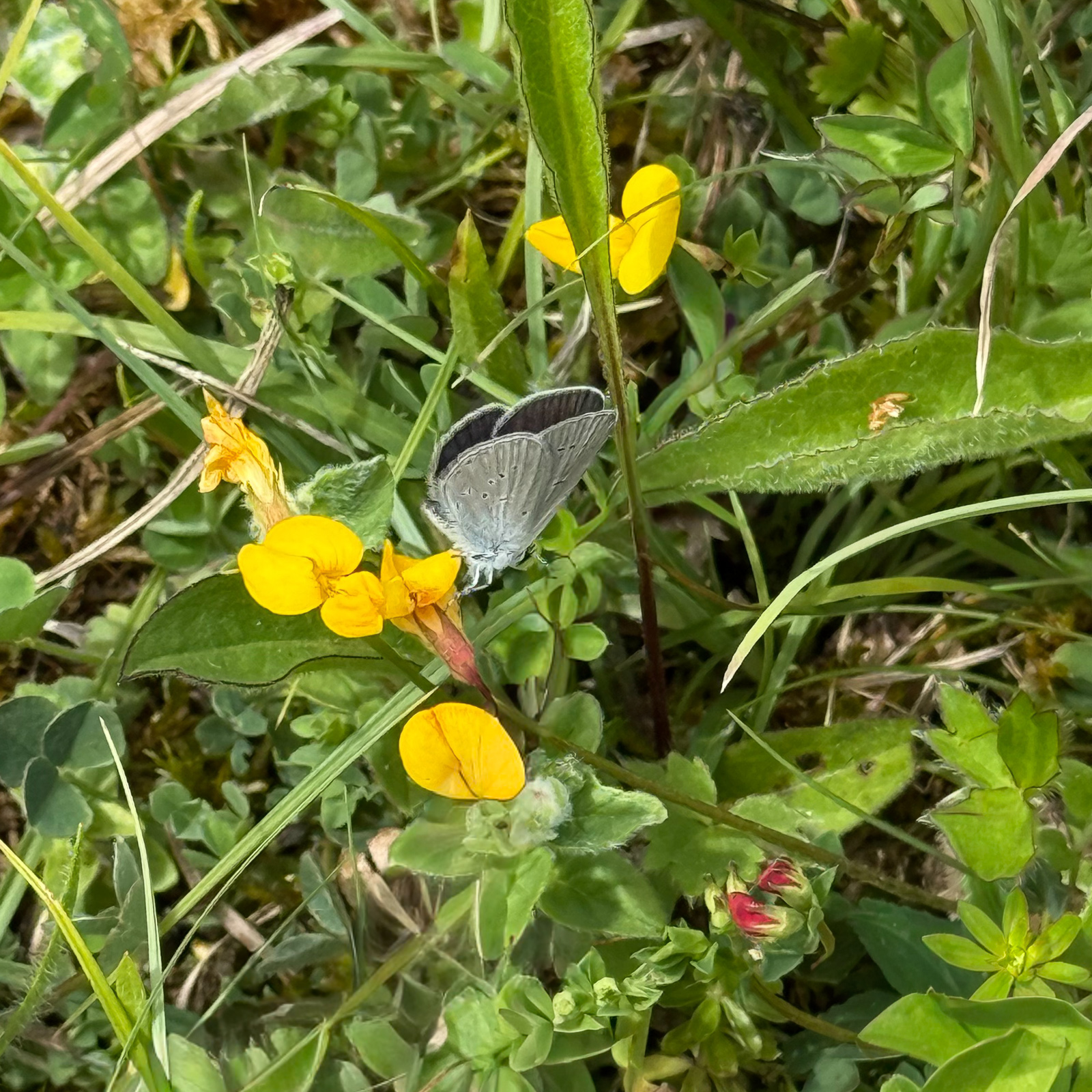
There were also quite a few butterflies about, including Marbled White (Melanargia galathea), Common Blue (Polyommatus icarus) and even a Small Blue (Cupido minimus) feeding on Bird’s‑foot Trefoil rather than its usual food plant, Kidney Vetch, which was also growing plentifully nearby.
We also glimpsed what were probably a Scarlet Tiger moth (Callimorpha dominula) and a Spotted Longhorn beetle (Rutpela maculata), both typical for Noar Hill at this time of year.
Small Blue (Cupido minimus)
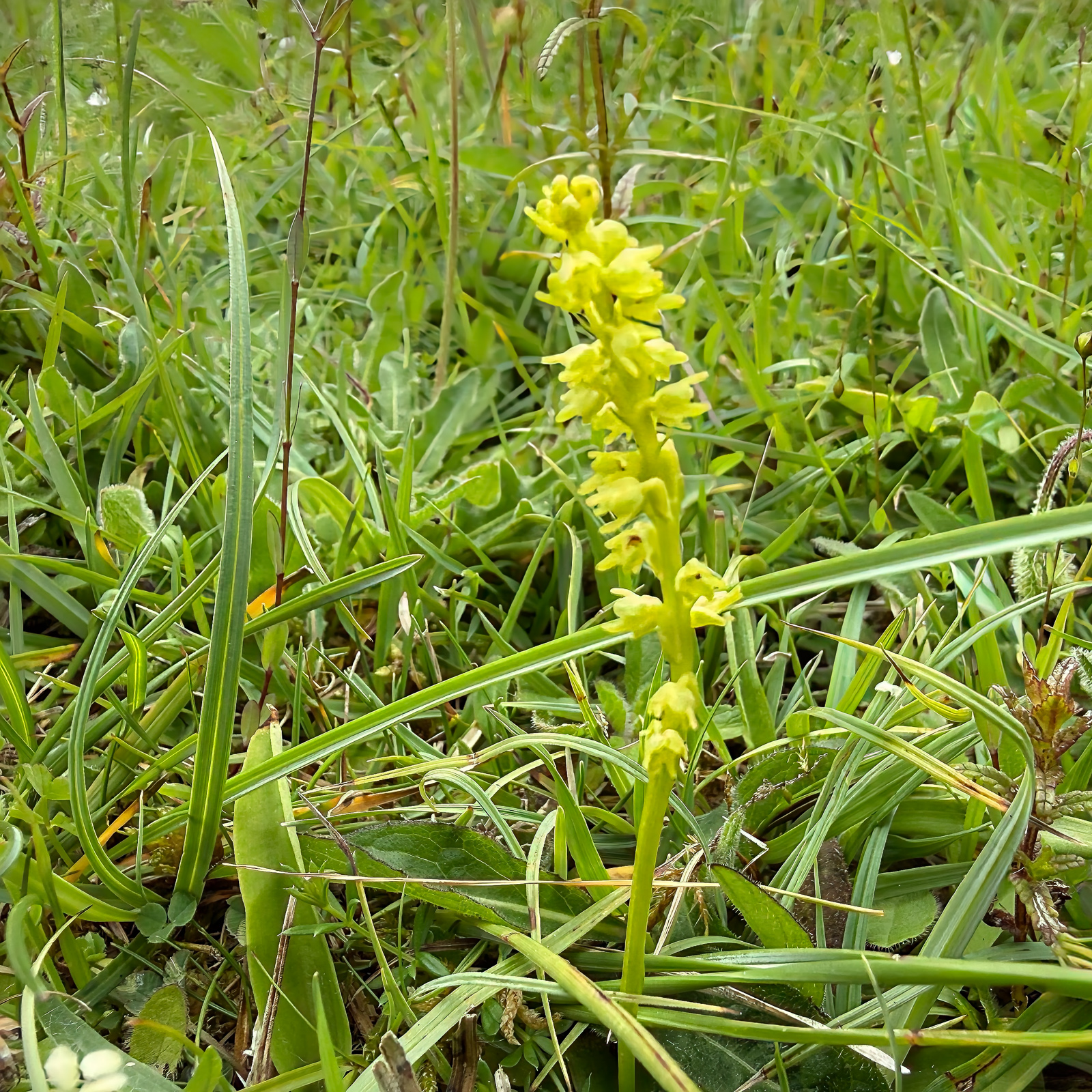
With so much to look at, time slipped away and we didn’t get very far. I was keen to show the group the tiny Musk Orchids, so we made a quick detour to the area where I’ve seen them before. They are rather small and easy to miss. Eventually I gave up and we turned back, only to spot one a short way down the path, then another. Once our eyes adjusted, we found quite a few.
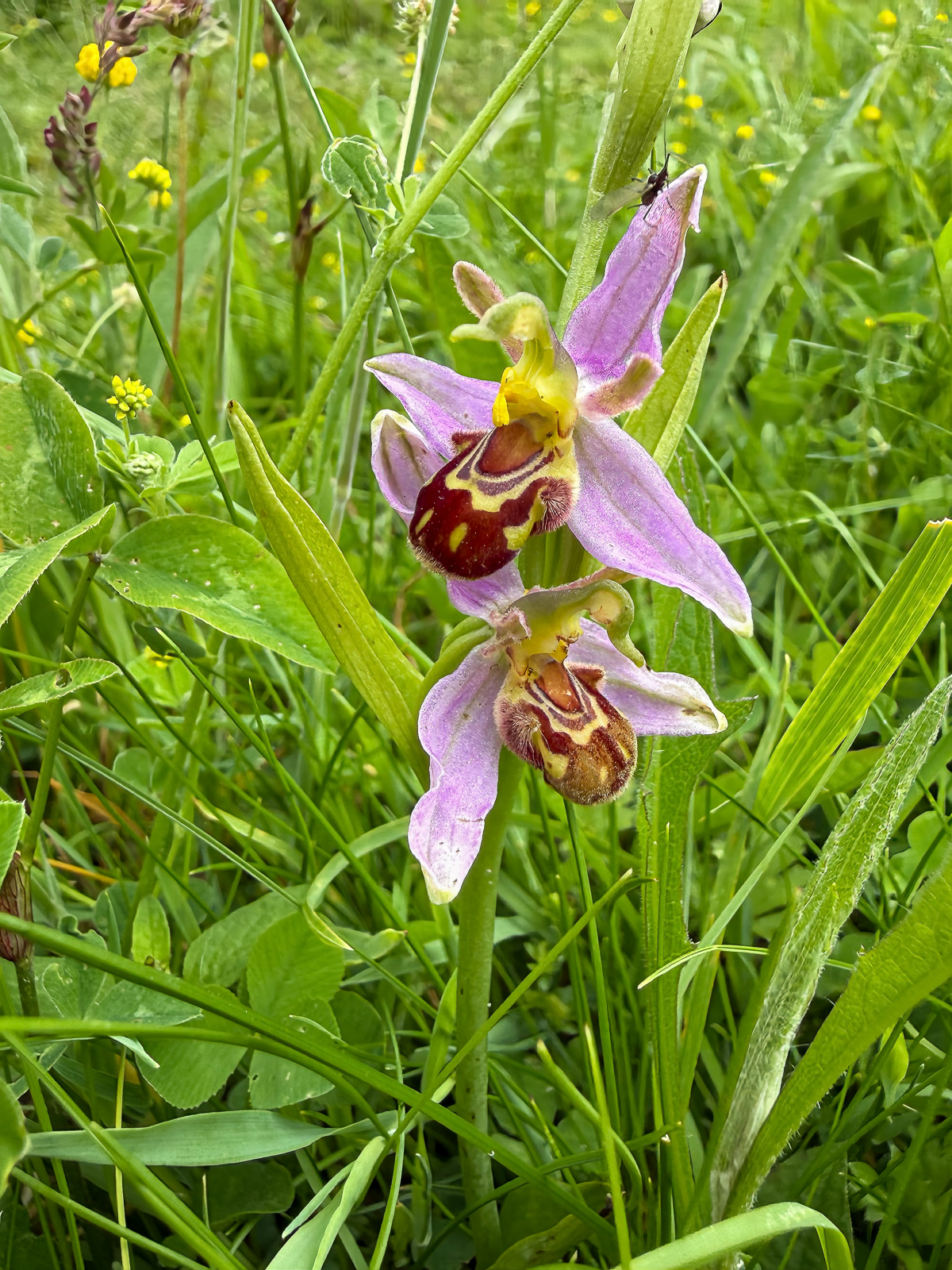
Back by the old quarry we found Mike waiting for us. He had met a couple who showed him a Bee Orchid growing right beside the path on the right. We had walked straight past it earlier, being too absorbed by the plants on the left of the path to notice. It made a very nice final addition to the list.
Musk Orchid (Herminium monorchis)
Plant List
Here is the list of plants in the order I photographed them, a selection rather than everything we saw.
- Hedge Woundwort (Stachys sylvatica)
- Common Spotted Orchid (Dactylorhiza fuchsii)
- Pyramidal Orchid (Anacamptis pyramidalis)
- Fairy Flax (Linum catharticum)
- Black Medick (Medicago lupulina)
- Chalk Fragrant-Orchid (Gymnadenia conopsea)
- Knapweed Broomrape (Orobanche elatior)
- Wild Thyme (Thymus praecox)
- Small Scabious (Scabiosa columbaria) — from bracts underneath flowerhead
- Lesser Trefoil (Trifolium dubium) — probably
- Lady’s Bedstraw (Galium verum)
- Greater Knapweed (Centaurea scabiosa)
- Hop Trefoil (Trifolium campestre)
- Common Selfheal (Prunella vulgaris)
- Hoary Plantain (Plantago media)
- Glaucous Sedge (Carex flacca)
- Hemp Agrimony (Eupatorium cannabinum)
- Red Bartsia (Odontites vernus)
- Lesser Burdock (Arctium minus) probably
- Common Bird’s-foot Trefoil (Lotus corniculatus) – with Small Blue (Cupido minimus)
- Common Kidney-Vetch (Anthyllis vulneraria) — which is the preferred food source for the Small Blue
- Eyebright (Euphrasia officinalis)
- Common Rock-Rose (Helianthemum nummularium)
- Large Thyme (Thymus pulegioides) — possibly
- Musk Orchid (Herminium monorchis)
- Bee Orchid (Ophrys apifera)
- Ground-Ivy (Glechoma hederacea)
- Wild Marjoram (Origanum vulgare) – no individual photo but included with other plants
- Yellow Rattle (Rhinanthus minor) – no individual photo but included with other plants
- Common Twayblade (Neottia ovata) – no photo this time