Subphylum Myriapoda — Centipedes & Millipedes
Myriapods are terrestrial arthropods with elongated, segmented bodies bearing numerous legs. This group includes centipedes and millipedes, which are commonly found in soil, leaf litter, and under stones or logs. Most myriapods play an important role in ecosystems as predators or decomposers.
Classes of Myriapods
Myriapods are divided into four main classes:
- Class Chilopoda — Centipedes
- Class Diplopoda — Millipedes
- Class Pauropoda — Small soil-dwelling myriapods
- Class Symphyla — Garden centipedes
Class Diplopoda — Millipedes
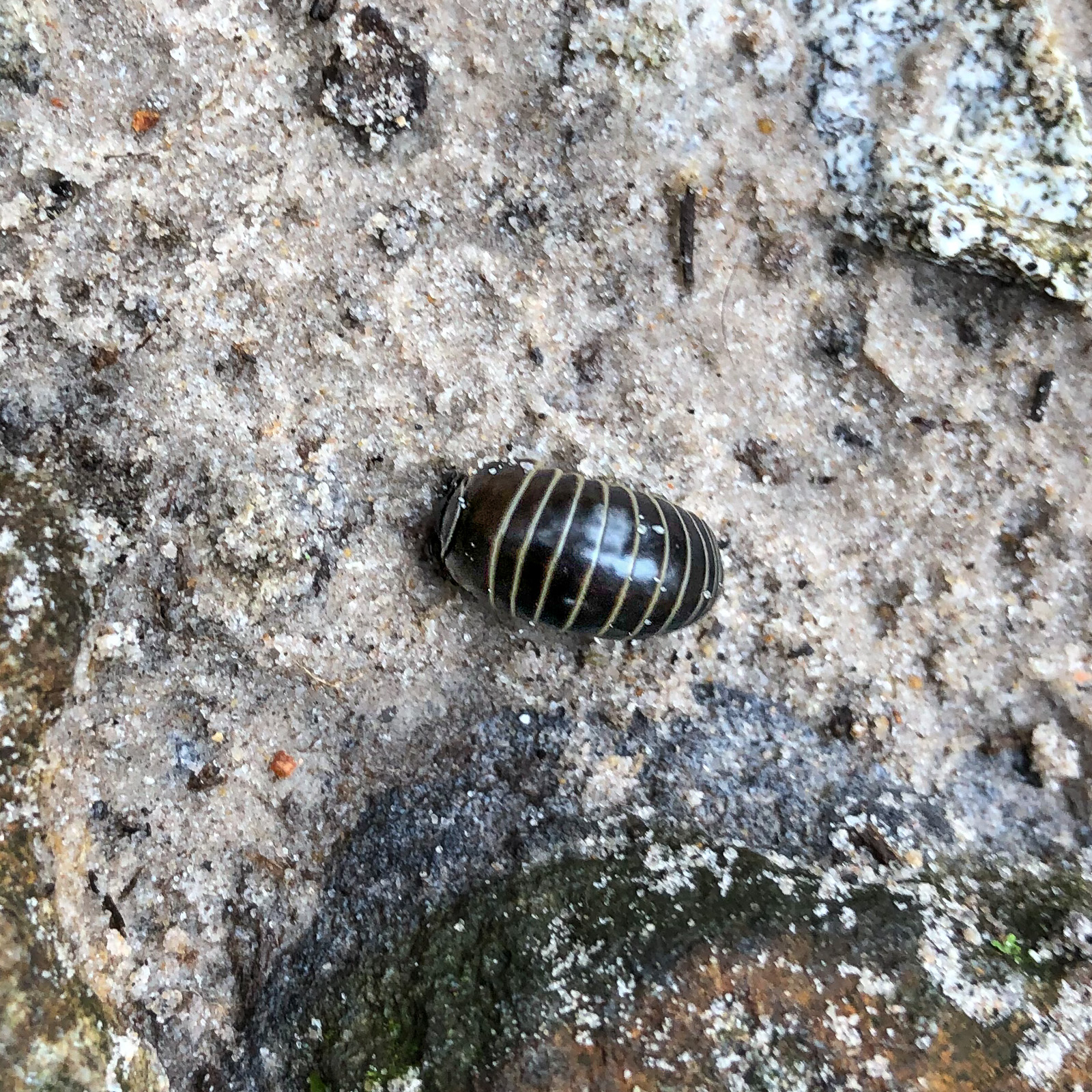
Millipedes are slow‑moving arthropods with long, segmented bodies. Most segments bear two pairs of legs, and they are primarily detritivores, feeding on decaying plant material. When disturbed, many species curl into a tight coil for protection.
My Observations
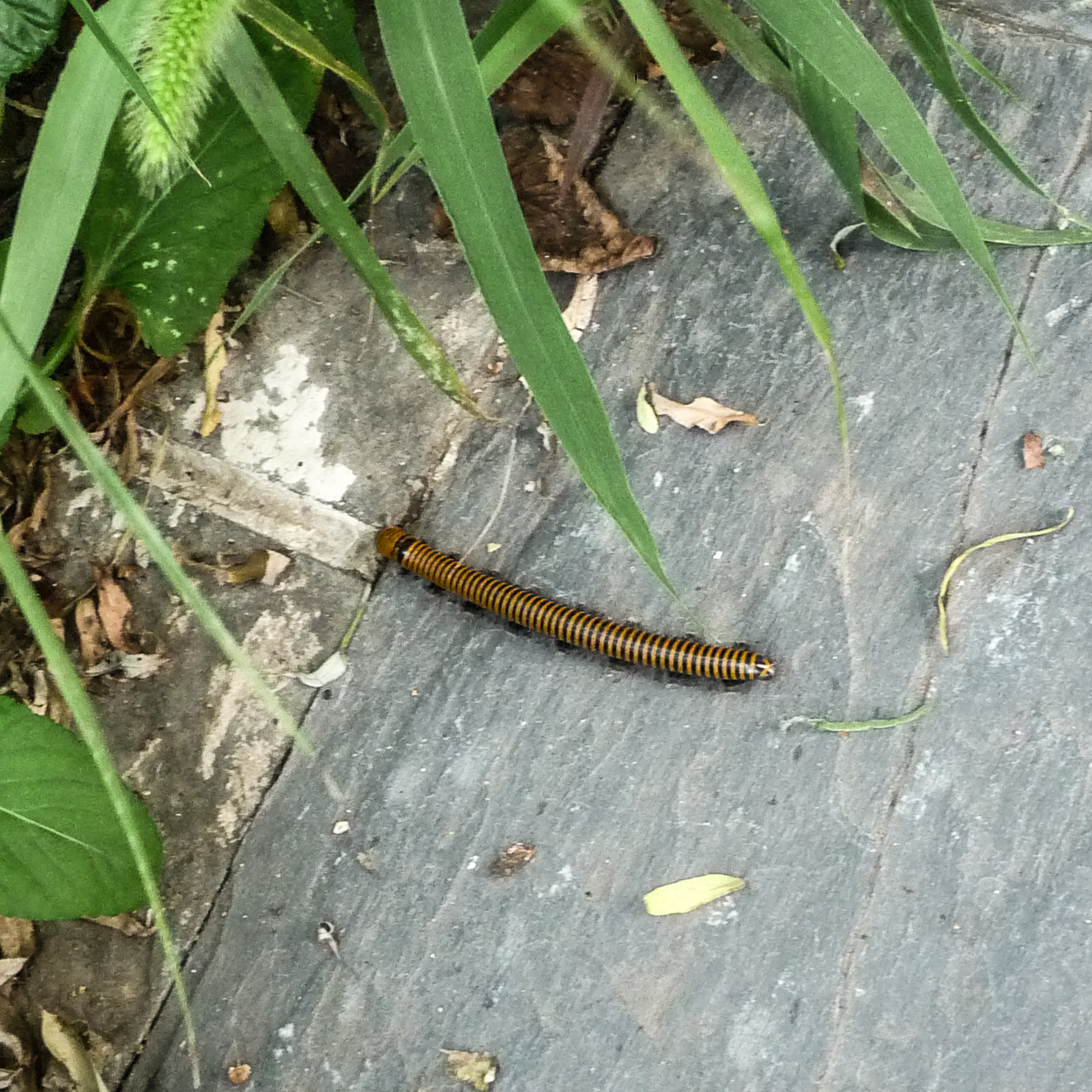
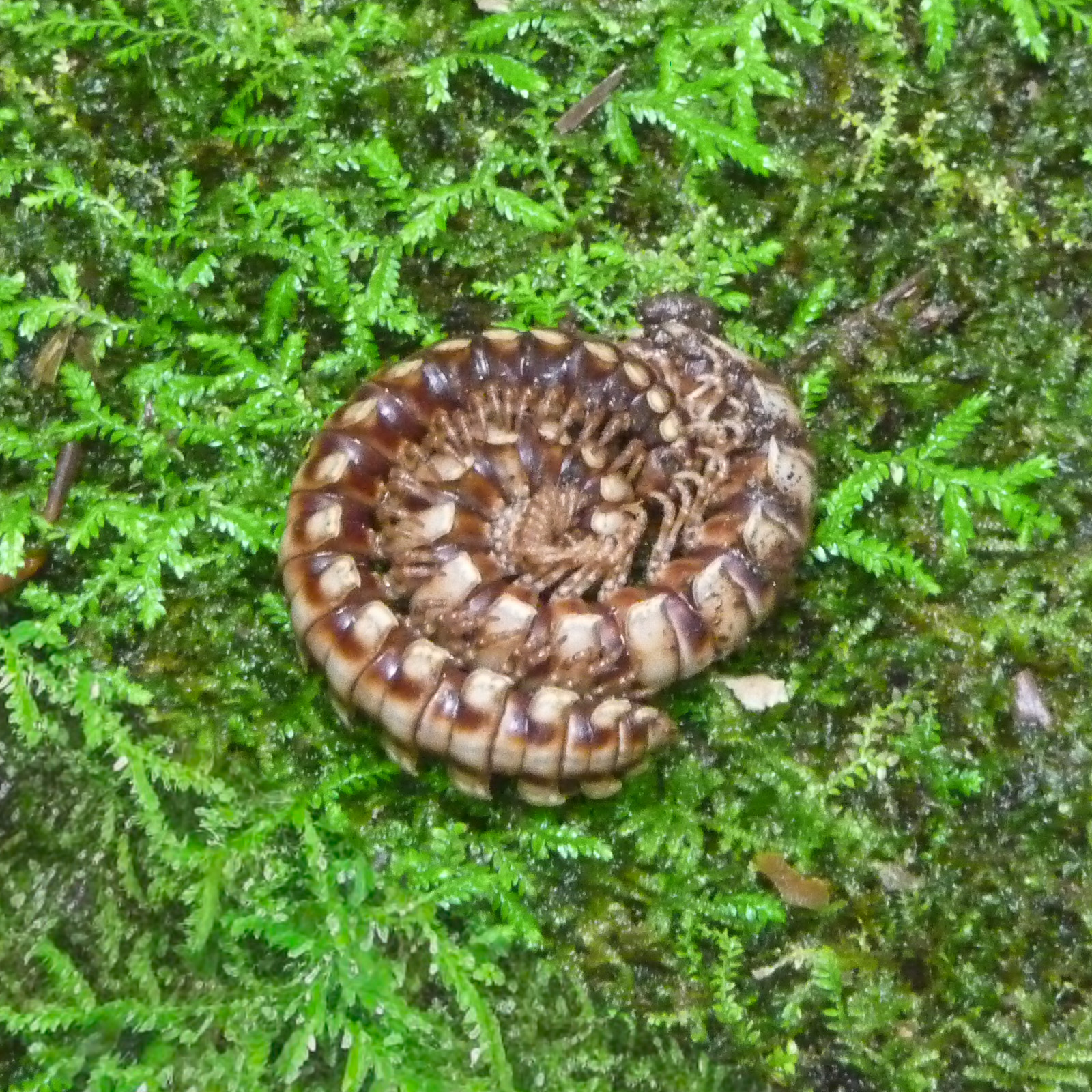
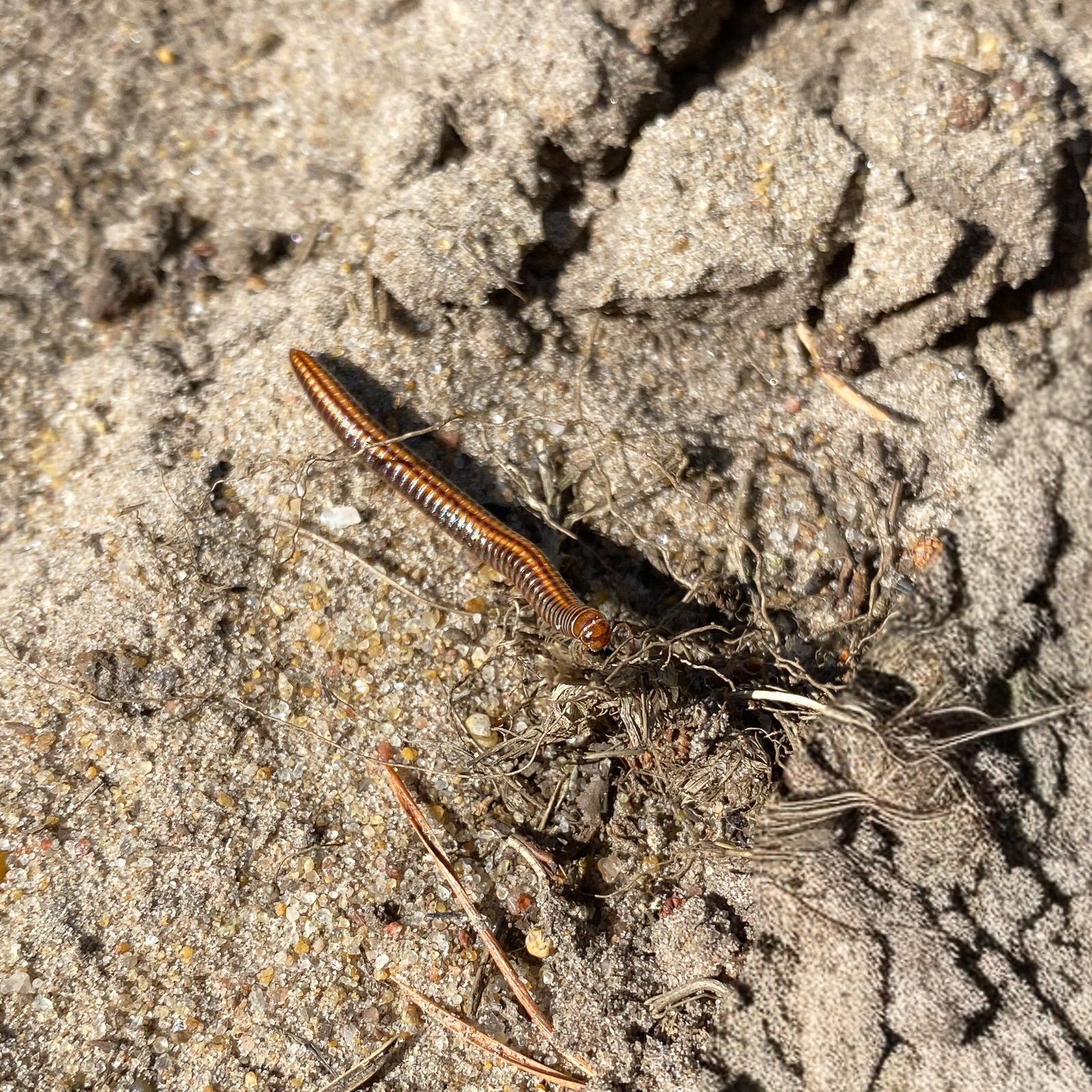
I have encountered a small but varied selection of millipedes in different parts of the world. Locally, I’ve seen the familiar Common Pill Millipede at Waggoners Wells and the Striped Millipede on Crooksbury Common. Further afield, I came across a large yellow‑banded Spirobolus species while descending from the Great Wall at Jinshanling, and a beige cylindrical spirobolid in the rainforest at La Selva, Costa Rica.
Although these species belong to very different orders and families, they all share the characteristic slow, deliberate movement and curled defensive posture typical of millipedes.
Species I have seen
- Order Glomerida — Pill Millipedes
- Family Glomeridae
- Common Pill Millipede (Glomeris marginata) — Waggoners Wells, UK 2019
- Family Glomeridae
- Order Julida — Snake Millipedes
- Family Julidae
- Striped Millipede (Ommatoiulus sabulosus) — Crooksbury Common, UK 2020
- Family Julidae
- Order Spirobolida — Iron Millipedes
- Family Spirobolidae — Spirobolid Millipedes
- Large Beige Cylindrical Millipede — La Selva, Costa Rica 2015
- Large Yellow‑banded Millipede (Spirobolus sp., likely S. walkeri or S. bungii) — Jinshanling, China 2013
- Family Spirobolidae — Spirobolid Millipedes
Class Chilopoda — Centipedes
Centipedes are fast‑moving, predatory myriapods with elongated, flattened bodies and one pair of legs per segment. They use venomous front limbs (forcipules) to subdue prey and are typically found in damp environments such as soil, leaf litter, and under stones or logs.
My observations
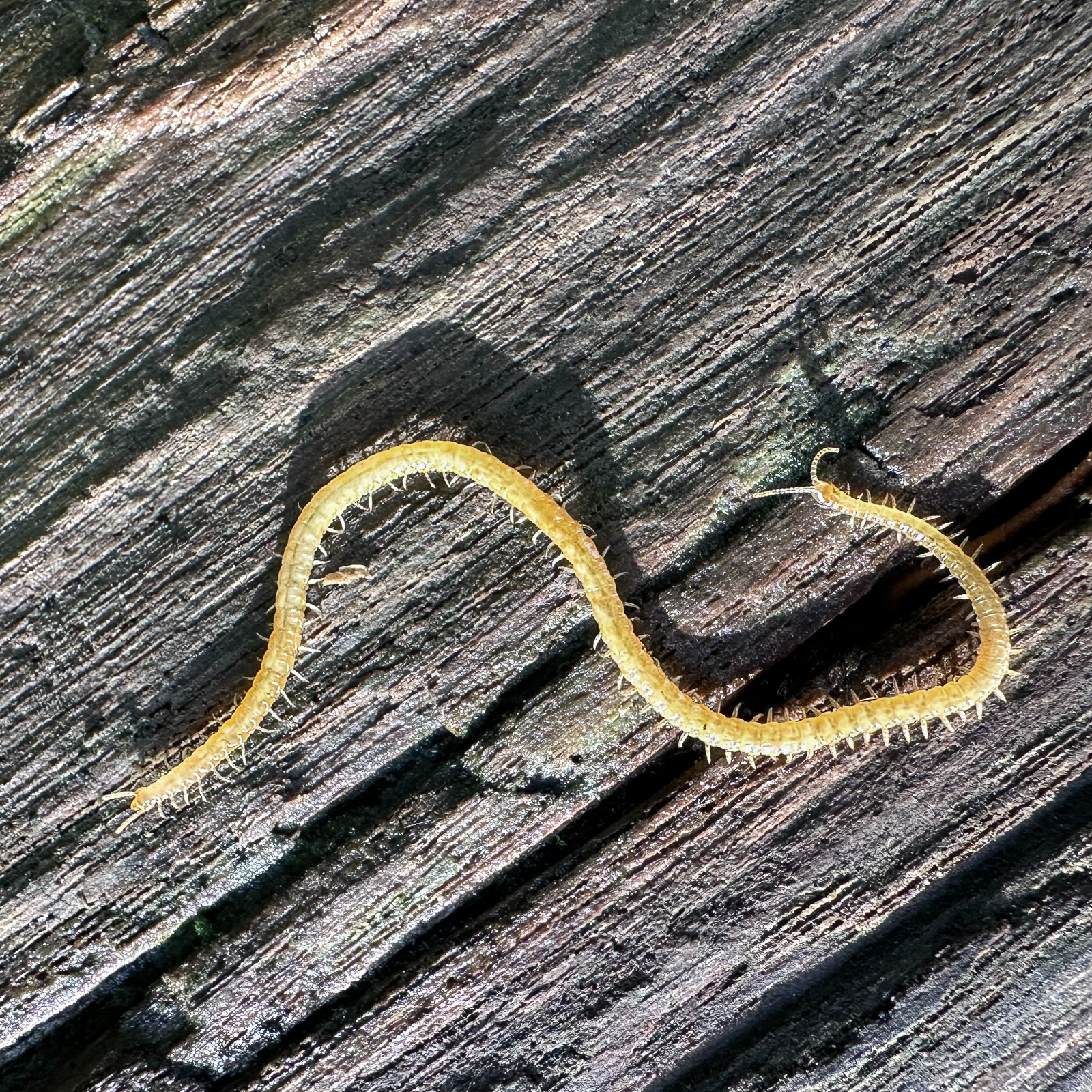
Although I’ve seen many centipedes over the years, this is the only one I’ve managed to photograph clearly enough to identify. I found it locally on a walk in Surrey and was surprised by how long and pale it was — much larger than the small stone centipedes I usually see under logs.
Order Geophilomorpha
→ Family Himantariidae
Western Yellow Centipede (Stigmatogaster subterranea)
— Compton, Surrey, Nov 2023