Multicrustacea is a major group of crustaceans that includes many of the most familiar forms such as crabs, lobsters, shrimp, woodlice, barnacles, and copepods. Members of this group occupy a wide range of habitats, from oceans and freshwater to land. It is divided into two main classes: Malacostraca, which contains the larger and more recognisable crustaceans, and Hexanauplia, which includes barnacles and copepods.
Malacostracans are the largest and most familiar group of crustaceans, including crabs, lobsters, shrimp, and woodlice. They occur in marine, freshwater, and terrestrial environments and show a wide range of lifestyles from active predators to scavengers and detritivores.
Order Amphipoda — Amphipods (sandhoppers, scuds)
Order Decapoda — Crabs, lobsters, shrimp 🇬🇧
Order Isopoda — Woodlice and relatives 🇬🇧
Order Euphausiacea — Krill
Order Mysida — Opossum shrimps
Order Stomatopoda — Mantis shrimps
Order Cumacea — Hooded shrimps
Order Tanaidacea — Tanaid crustaceans
Order Lophogastrida — Lophogastrids
Order Thermosbaenacea — Thermosbaenaceans
Order Spelaeogriphacea — Cave crustaceans
Order Mictacea — Mictaceans
Order Decapoda — Crabs, Lobsters & Shrimp
Decapods are characterised by having ten legs. Many are marine, though some live in freshwater or on land.
True Crabs (Brachyura)
Portunidae — Swimming crabs 🇬🇧
Carcinidae — Shore crabs 🇬🇧
Grapsidae — Shore and marsh crabs
Ocypodidae — Ghost and fiddler crabs
Sesarmidae — Mangrove crabs
Majidae — Spider crabs 🇬🇧
Xanthidae — Mud crabs
Pinnotheridae — Pea crabs 🇬🇧
Cancridae — Cancer crabs
Atelecyclidae — Circular crabs 🇬🇧
Corystidae — Masked crabs 🇬🇧
Dorippidae — Carrier crabs
Leucosiidae — Pebble crabs
Parthenopidae — Elbow crabs
Anomura (Hermit crabs & relatives)
Paguridae — Hermit crabs 🇬🇧
Diogenidae — Left-handed hermit crabs
Lithodidae — King crabs
Porcellanidae — Porcelain crabs
Galatheidae — Squat lobsters
Chirostylidae — Squat lobsters
Kiwaidae — Yeti crabs
Lobsters & relatives
Nephropidae — True lobsters 🇬🇧
Palinuridae — Spiny lobsters
Scyllaridae — Slipper lobsters
Astacidae — Freshwater crayfish 🇬🇧
Cambaridae — Crayfish
Parastacidae — Southern crayfish
Shrimp & prawns
Palaemonidae — Prawn shrimps 🇬🇧
Crangonidae — Sand shrimps 🇬🇧
Alpheidae — Snapping shrimps
Hippolytidae — Cleaner shrimps
Atyidae — Freshwater shrimps
Penaeidae — Penaeid shrimps
Sergestidae — Planktonic shrimps
My Observations
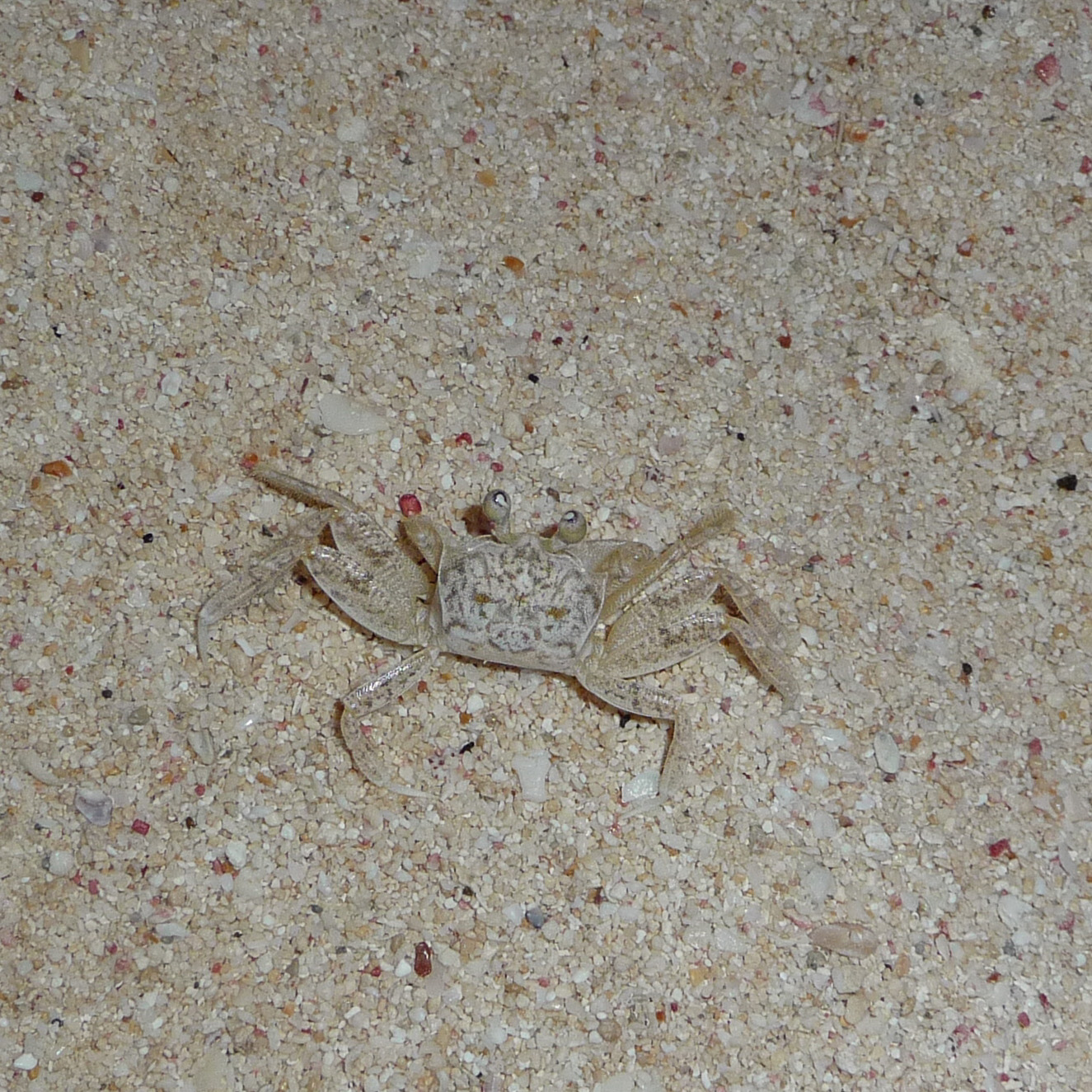
Although I have come across many decapods, including prawns, crayfish, lobsters, and crabs, I have not taken photographs of many so far. Some of the most interesting encounters have been with crabs, including the well-camouflaged Atlantic Ghost Crab and the surprising sight of land crabs living some distance from the sea.
My Species List
Family Carcinidae
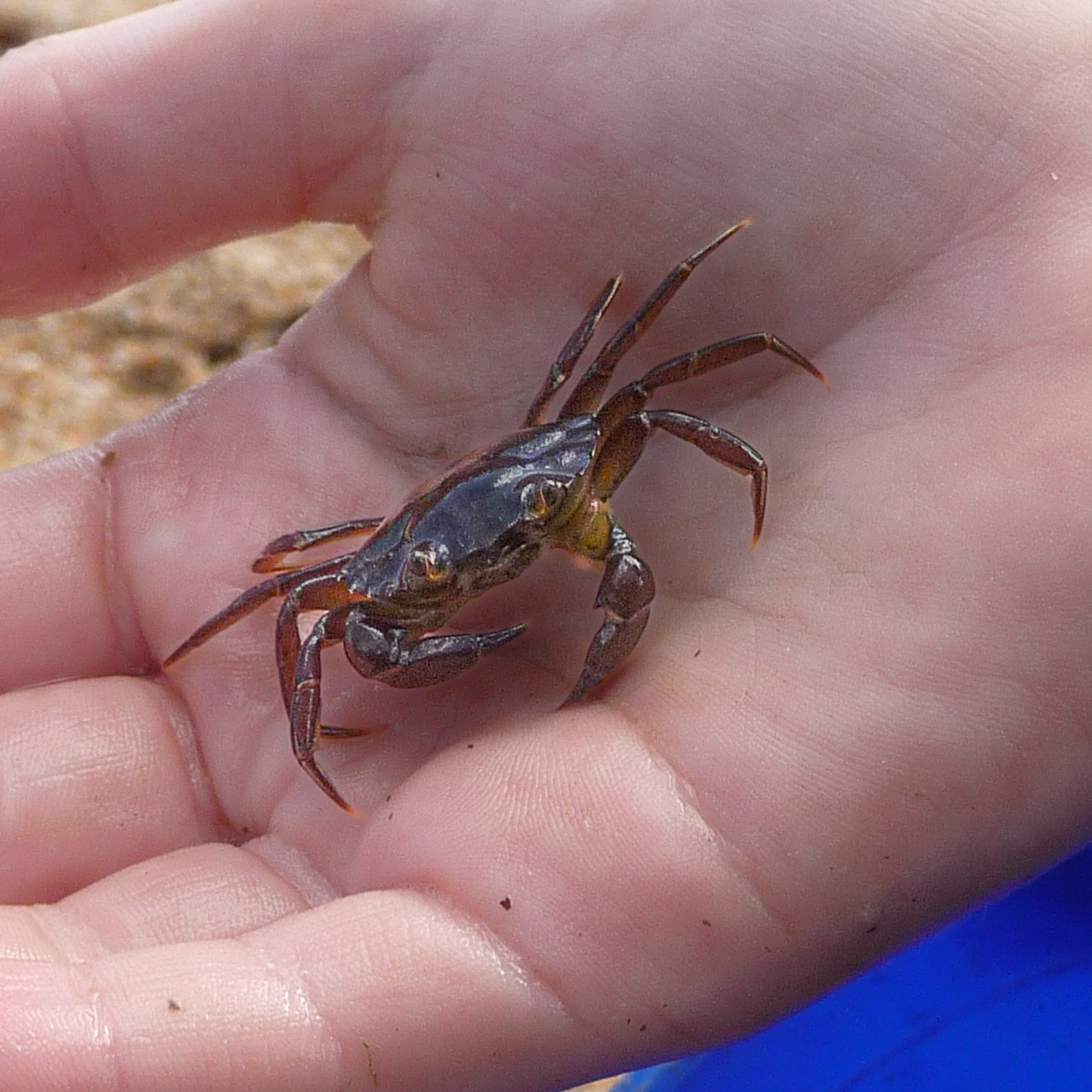
European Green Crab (Carcinus maenas) — Rocky beach near Weymouth, Dorset, 2019
Family Paguridae — Hermit Crabs
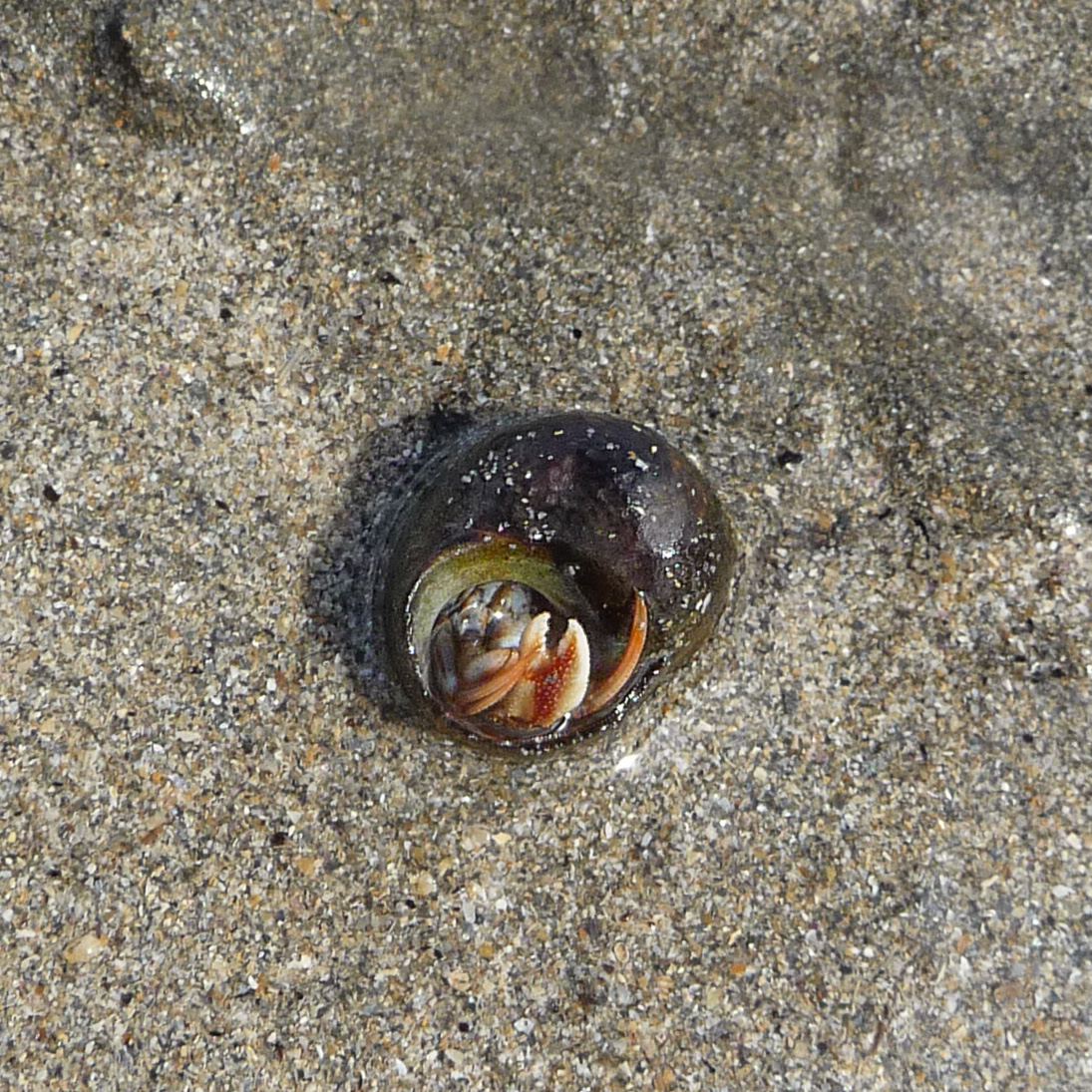
Common Hermit Crab (Pagurus bernhardus) — Rocky beach, Cornwall, 2014 (Juvenile in gastropod shell)
Family Gecarcinidae — Land Crabs
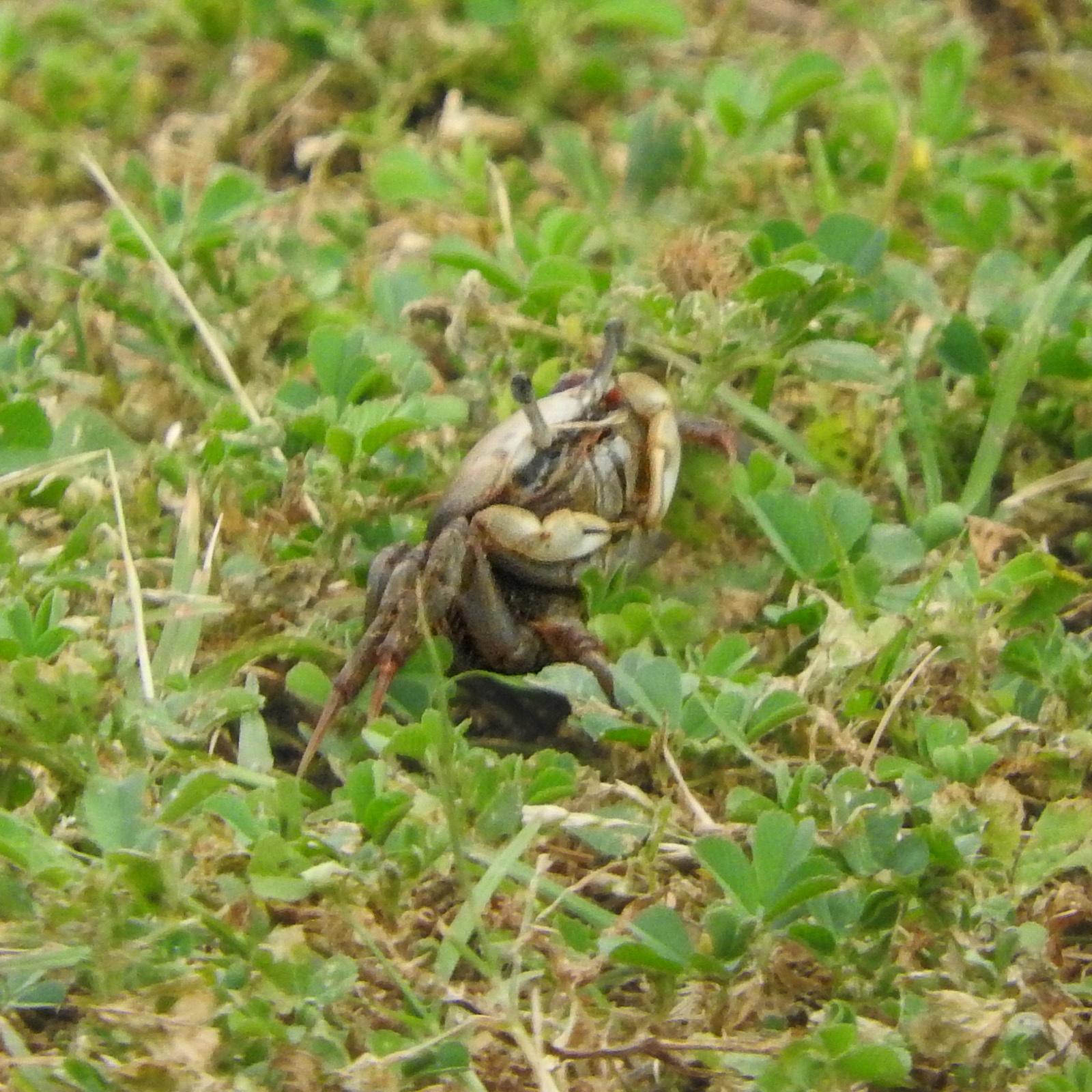
Blue Land Crab (Cardisoma guanhumi) — High Island, Texas 2024
Family Ocypodidae — Ghost and Fiddler Crabs
Atlantic Ghost Crab (Ocypode quadrata) — Grand Cayman 2013
European Green Crab (Carcinus maenas)
— Rocky beach near Weymouth, Dorset, 2019 (Juvenile)
Common Hermit Crab (Pagurus bernhardus)
— Rocky beach, Cornwall 2014 (Juvenile in gastropod shell)
Blue Land Crab (Cardisoma guanhumi)
— High Island, Texas 2024
Atlantic Ghost Crab (Ocypode quadrata)
— Grand Cayman, January 2009
Order Isopoda — Woodlice & Relatives
A diverse group, including woodlice and marine forms, with flattened bodies and many species adapted to life on land.
Terrestrial isopods (Woodlice)
Armadillidiidae — Pill woodlice 🇬🇧
Armadillidae — Pill woodlice
Oniscidae — Common woodlice 🇬🇧
Porcellionidae — Rough woodlice 🇬🇧
Philosciidae — Slender woodlice 🇬🇧
Trachelipodidae — Rough woodlice 🇬🇧
Platyarthridae — Ant-associated woodlice 🇬🇧
Cylisticidae — Woodlice 🇬🇧
Aquatic and marine isopods
Asellidae — Freshwater isopods 🇬🇧
Idoteidae — Marine isopods 🇬🇧
Sphaeromatidae — Marine pill isopods
Cirolanidae — Marine scavenger isopods
Gnathiidae — Parasitic isopods (fish parasites)
Cymothoidae — Fish parasitic isopods
Bopyridae — Parasitic isopods (on crustaceans)
Valvifera (various families) — Marine isopods
My Observations
They are very common, and I have lots hiding in pots in the garden. I have also come across a few different species, including the lovely Clown Isopod in Herzegovina and a fascinating marine isopod we found in South Georgia.
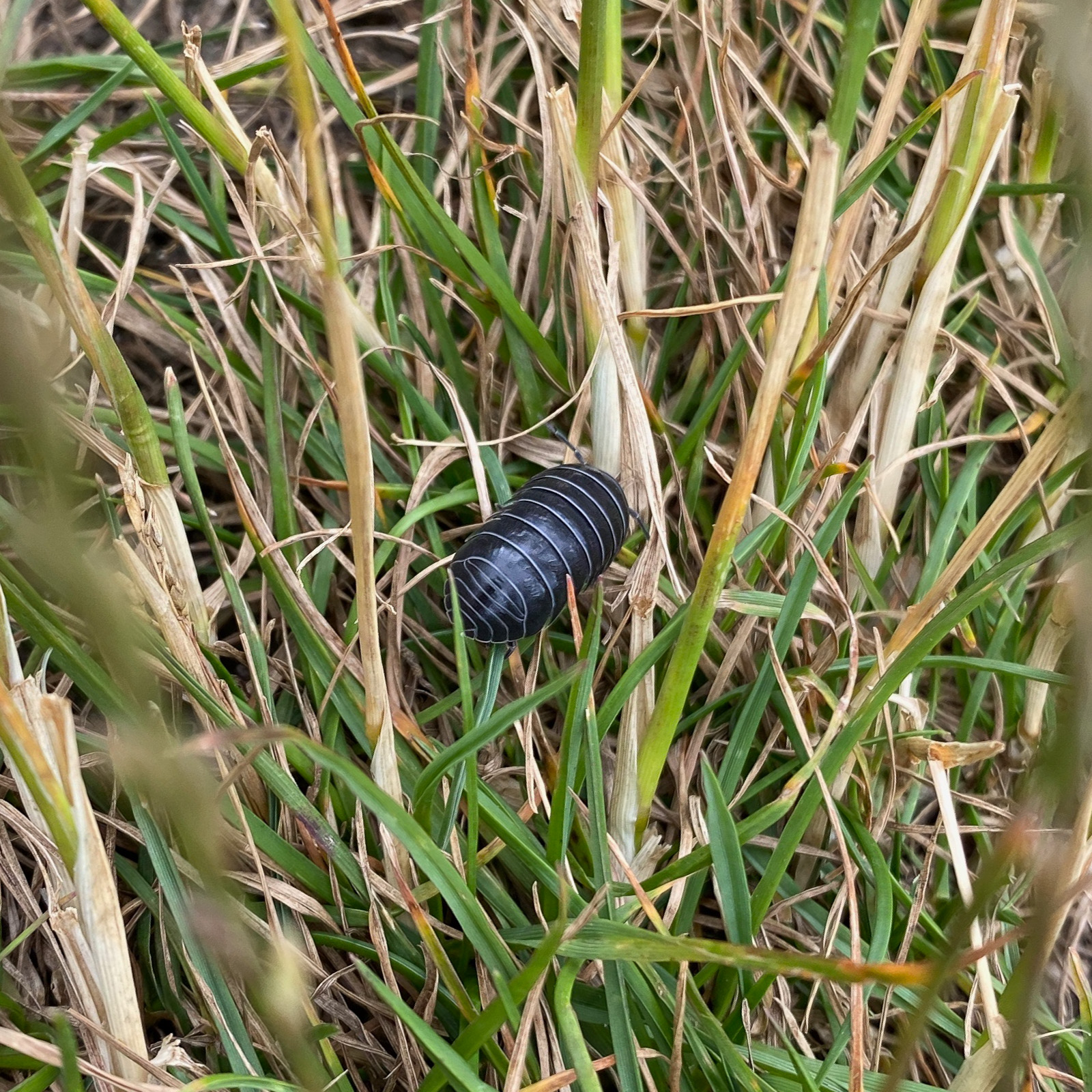
Common Pill Woodlouse (Armadillidium vulgare) — Surrey, UK, 2022
Family Oniscidae — Shiny Woodlice
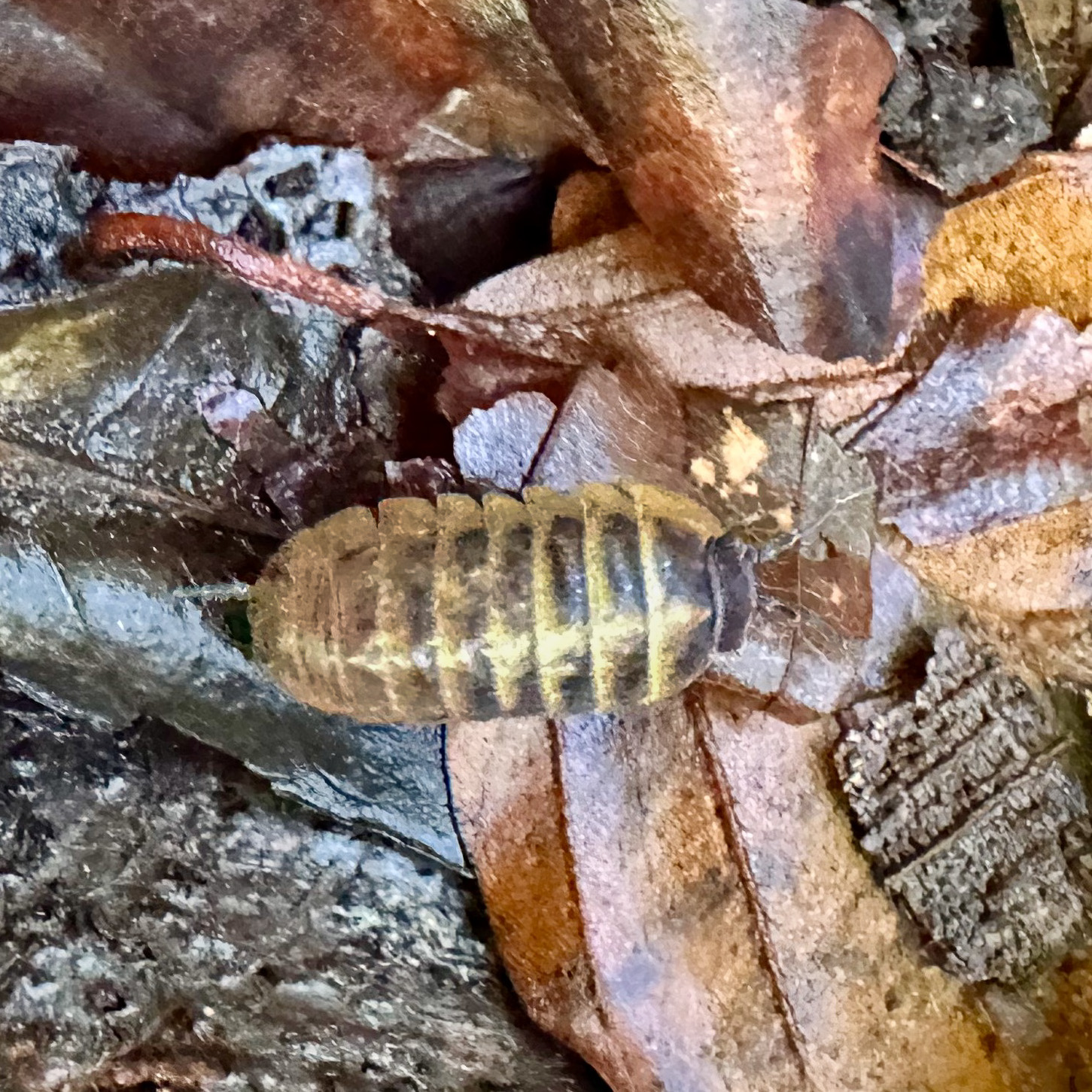
Common Shiny Woodlouse (Oniscus asellus) — Surrey, UK, 2022
Family Sphaeromatidae — Typical Seapills
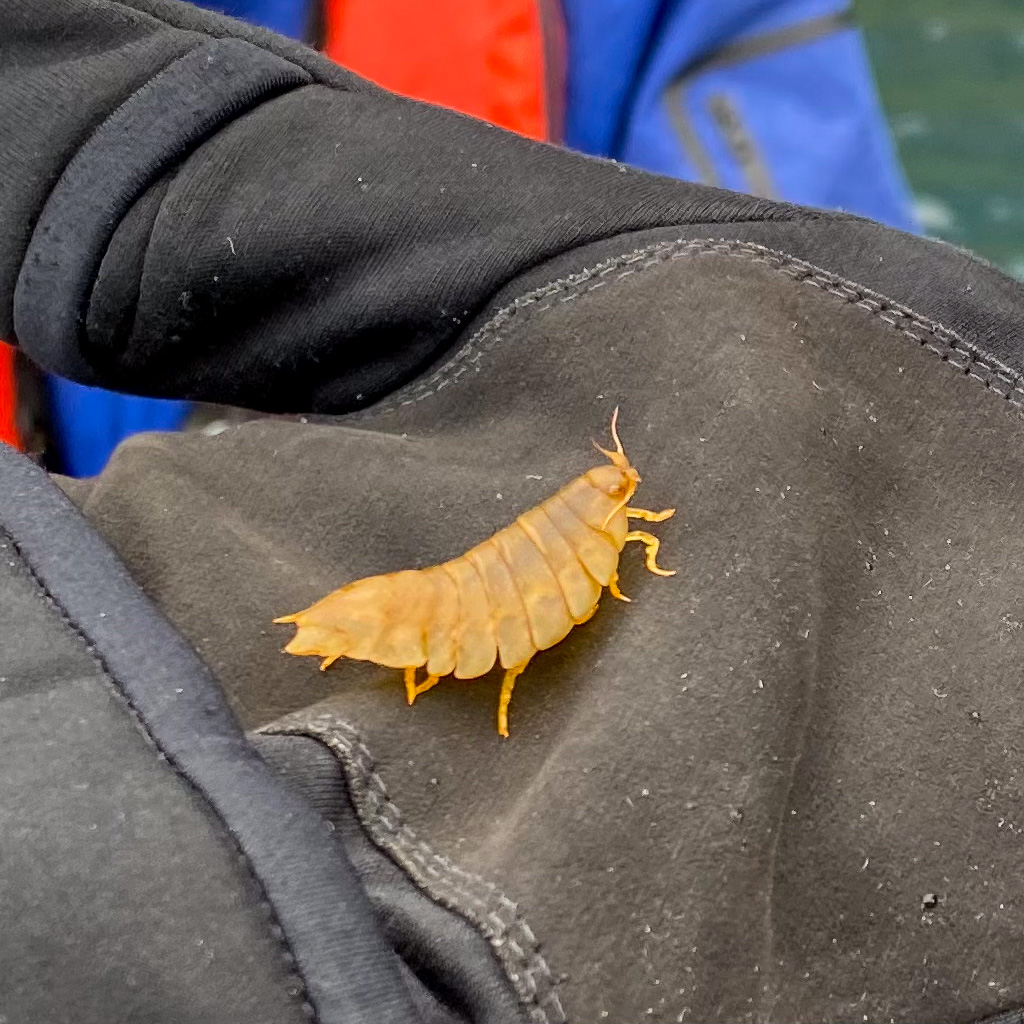
Cassidinopsis emarginata — South Georgia, 2021
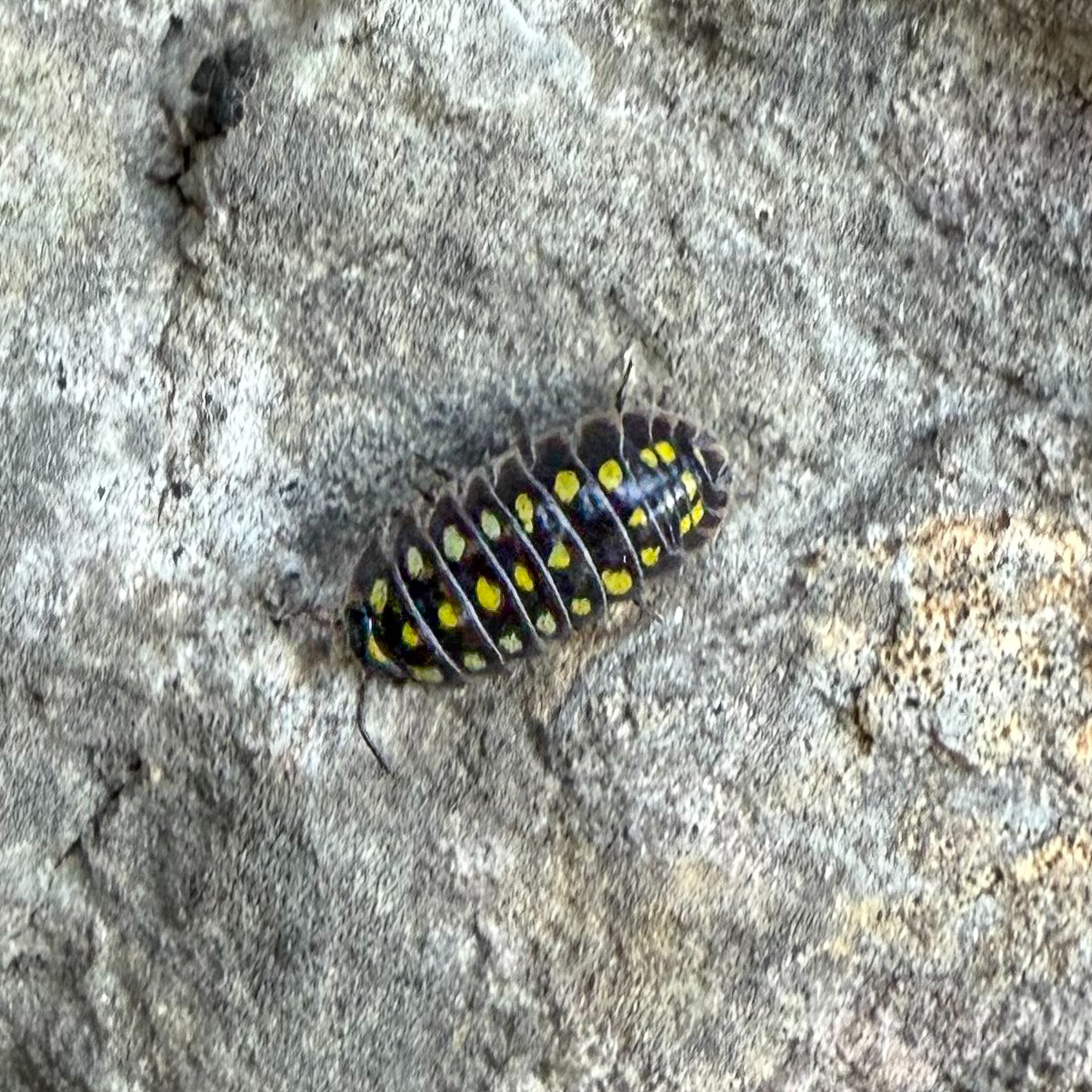
Clown Isopod (Armadillidium klugii)
— Herzegovina 2025
Common Pill Woodlouse (Armadillidium vulgare)
— Ranmore Common, UK 2022
Common Shiny Woodlouse (Oniscus asellus)
— Surrey, UK, 2023
A sea Pill (Cassidinopsis emarginata)
— South Georgia, 2021
Class Hexanauplia — Barnacles & Copepods
Hexanauplia includes barnacles and copepods, many of which are small but extremely abundant. Copepods are a major component of marine and freshwater plankton, forming a key part of aquatic food chains, while barnacles are specialised crustaceans that attach permanently to hard surfaces such as rocks, ships, and even whales.
Subclass Copepoda — Copepods
Order Calanoida — Planktonic copepods
Order Cyclopoida — Freshwater and parasitic copepods
Order Harpacticoida — Benthic copepods
Order Siphonostomatoida — Parasitic copepods
Order Monstrilloida — Planktonic parasitic copepods