Subphylum Chelicerata — Spiders & Relatives
Chelicerates are a major group of arthropods that includes spiders, scorpions, mites, ticks, horseshoe crabs, and sea spiders. Unlike many other arthropods they lack antennae and possess specialised mouthparts called chelicerae, which are often adapted as fangs or pincers used for feeding. Most chelicerates are terrestrial predators, although some groups remain marine. Chelicerates occur in both marine and terrestrial environments, with arachnids representing the largest and most familiar group.
Classes of Chelicerates
- Class Arachnida — Primarily terrestrial chelicerates including spiders, scorpions, mites, ticks, and harvestmen; the largest and most diverse class of the subphylum.
- Class Merostomata — Marine chelicerates represented today by the horseshoe crabs, sometimes described as “living fossils”.
- Class Pycnogonida — Marine arthropods known as sea spiders, with extremely long legs and reduced bodies.
Class Arachnida — Arachnids
Go to: Spiders | Harvestmen | Scorpions | Mites & Ticks
Arachnids are mostly terrestrial arthropods with four pairs of walking legs and bodies divided into two main sections. This diverse class includes spiders, scorpions, harvestmen, mites, ticks, and several smaller groups. Many arachnids are predators and play an important ecological role controlling insect populations.
Order Araneae — Spiders
Spiders are the most diverse group of arachnids, with over 50,000 described species worldwide. They are primarily predators that use silk in a variety of ways, including building webs, wrapping prey, constructing egg sacs, or creating draglines for safety. Most spiders possess venom used to subdue prey, although very few are dangerous to humans.
They are divided into the following sections:
- Orb-weavers and relatives
- Wolf spiders and allies
- Jumping spiders
- Other spider families
Jump to observations: Orb-weavers | Wolf spiders | Jumping spiders | Other spider families
Orb-weavers and relatives (Superfamily Araneoidea)
These are the master weavers. They are classic web-builders that rely on silk architecture to hunt. Many construct elaborate circular webs, but the group also includes several families that build irregular or sheet-like webs rather than true orb webs.
My observations
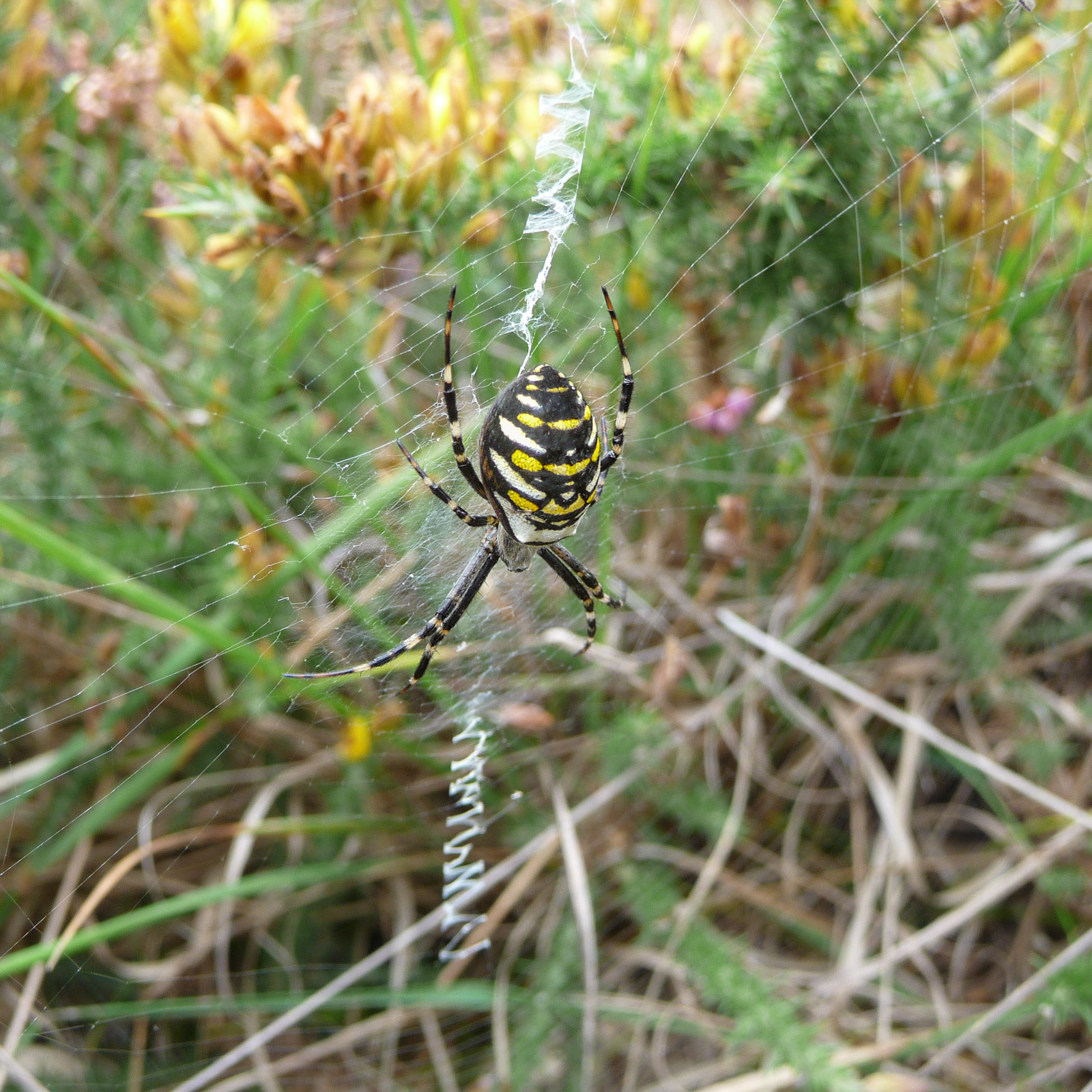
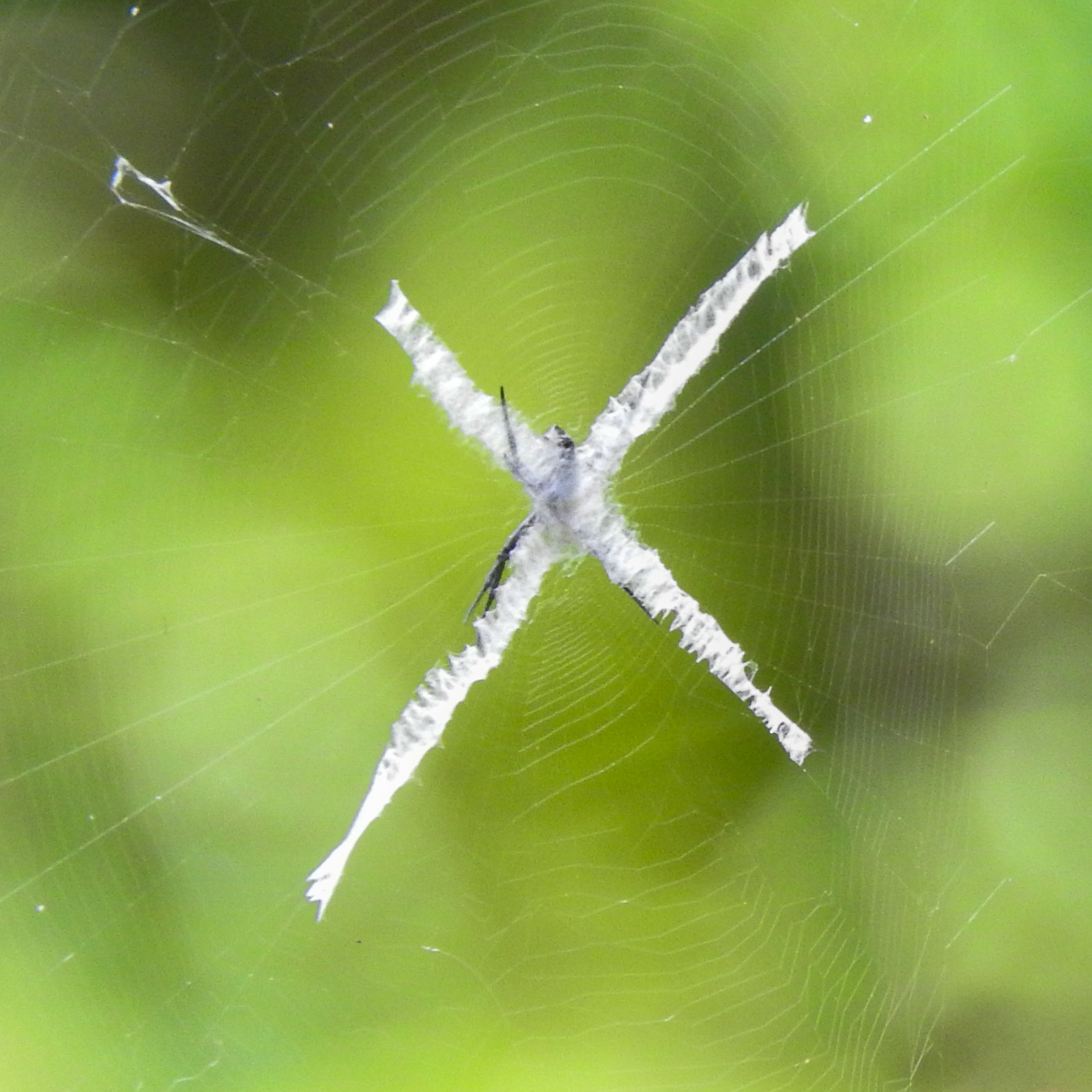
I am fascinated by the intricate webs these spiders weave, from the messy webs often seen on cold or foggy mornings to the symmetrical pieces of art created by other species. These range from the ladder-like web of the wasp spider to the distinctive cross pattern made by some orb-weavers.
List of species (7/8)
Family Araneidae — Orbweavers
- Wasp Spider (Argiope bruennichi) — Various 🇬🇧
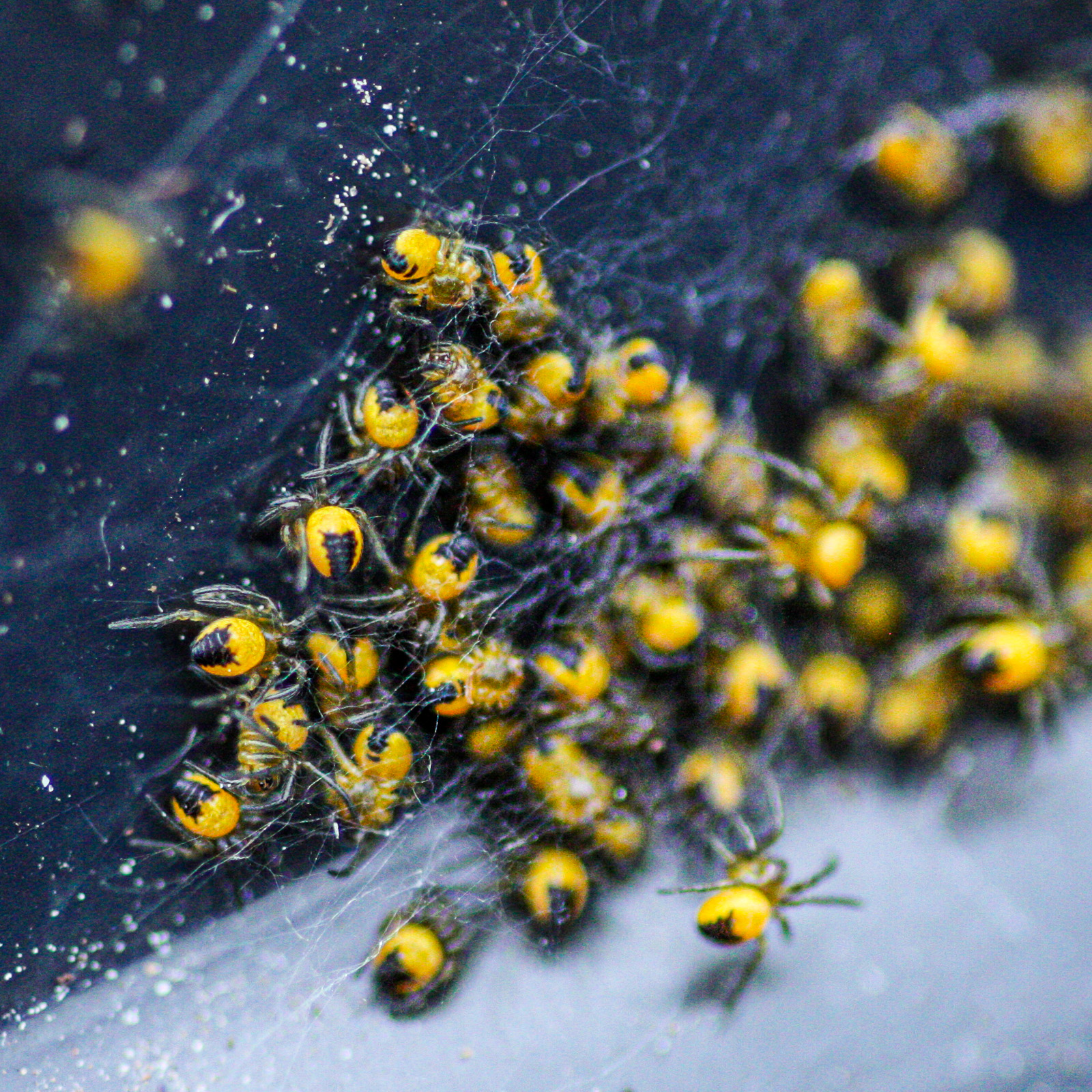
- European Garden Spider (Araneus diadematus) — Various 🇬🇧
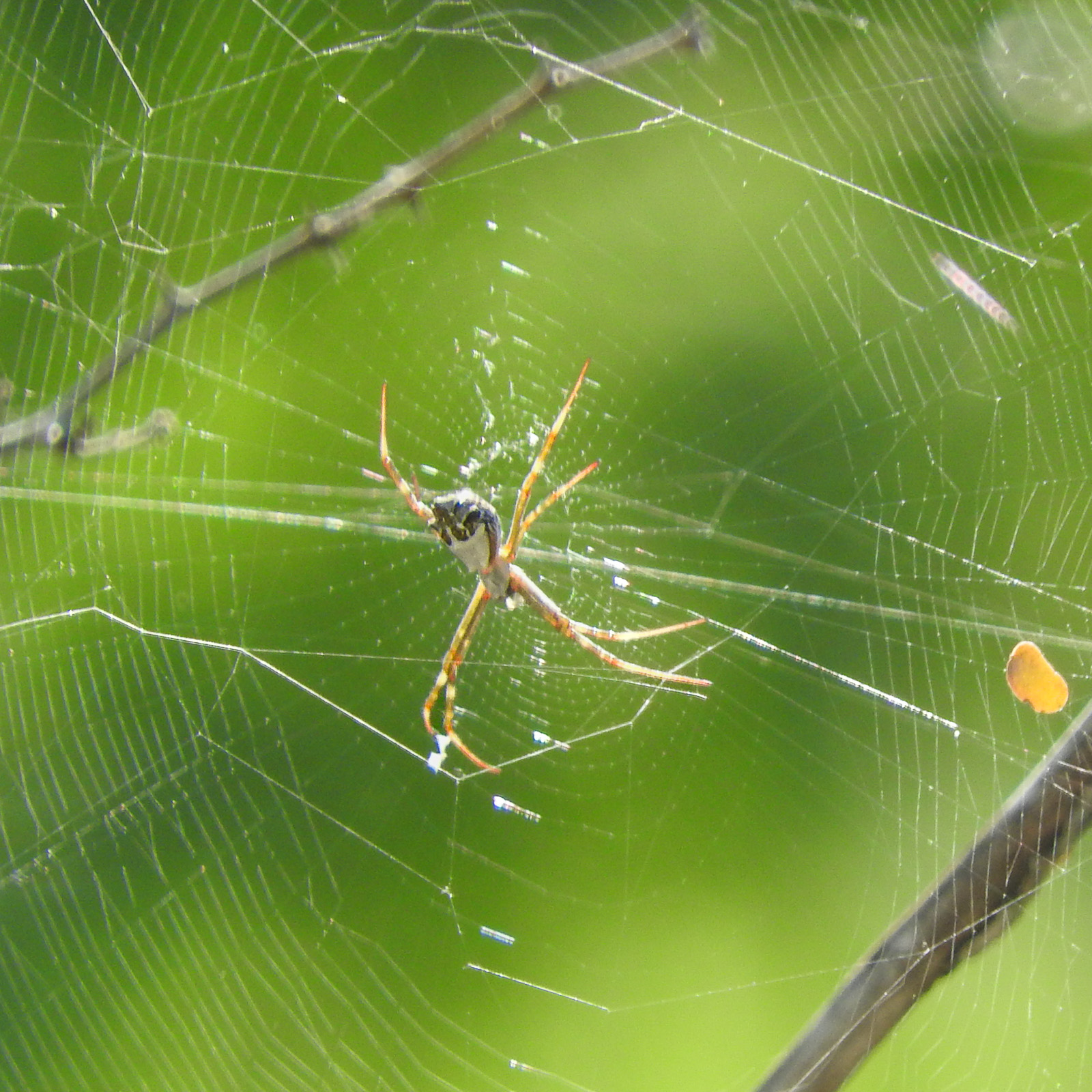
- Silver Garden Orbweaver (Argiope cf. argentata / submaronica) — Asa Wright, Trinidad, 2019
- Silver Garden Orbweaver (Argiope cf. argentata) — Texas 2024
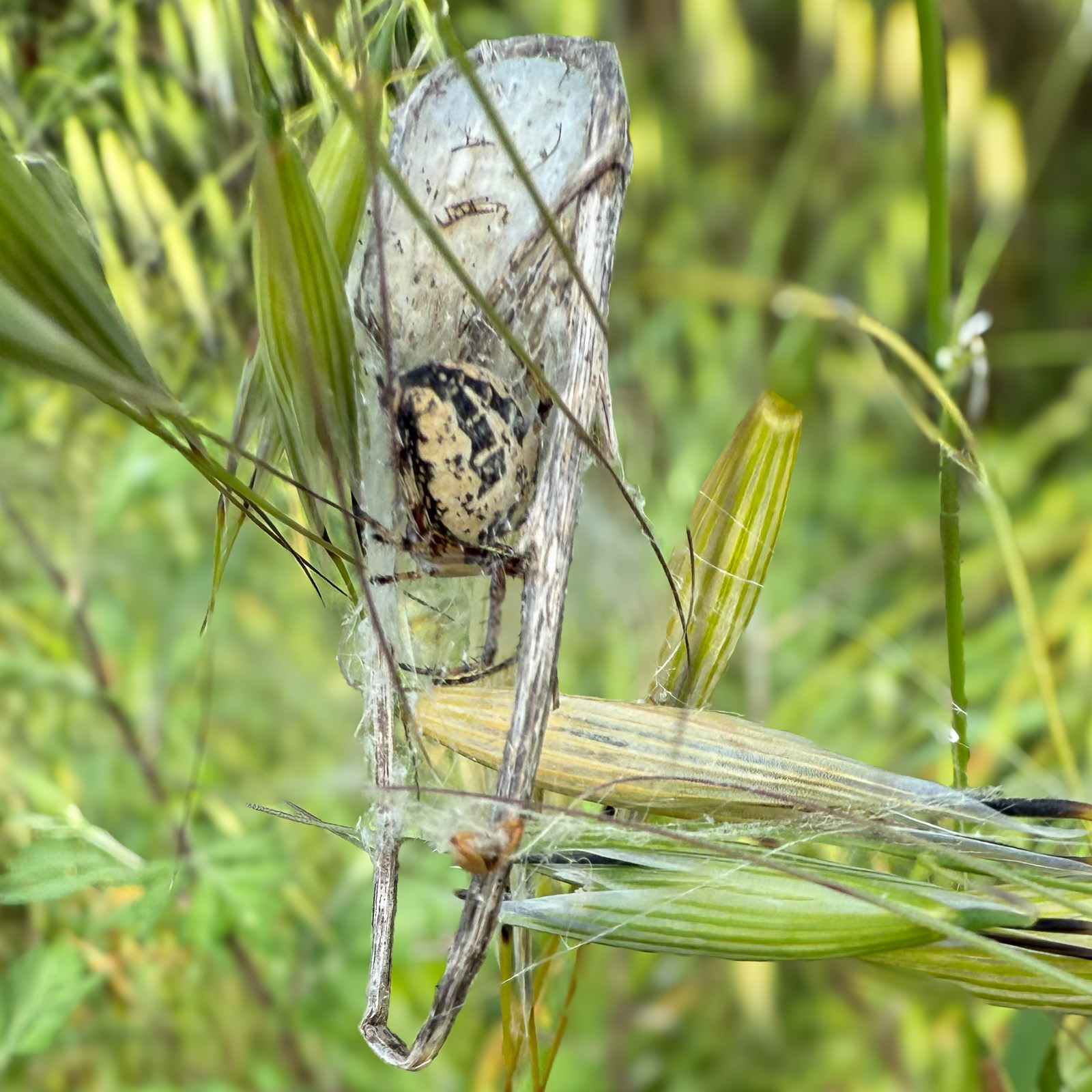
- Furrow Orbweaver (Larinioides cornutus group) — Herzegovina, 2025
Family Nephilidae — Golden Orbweavers
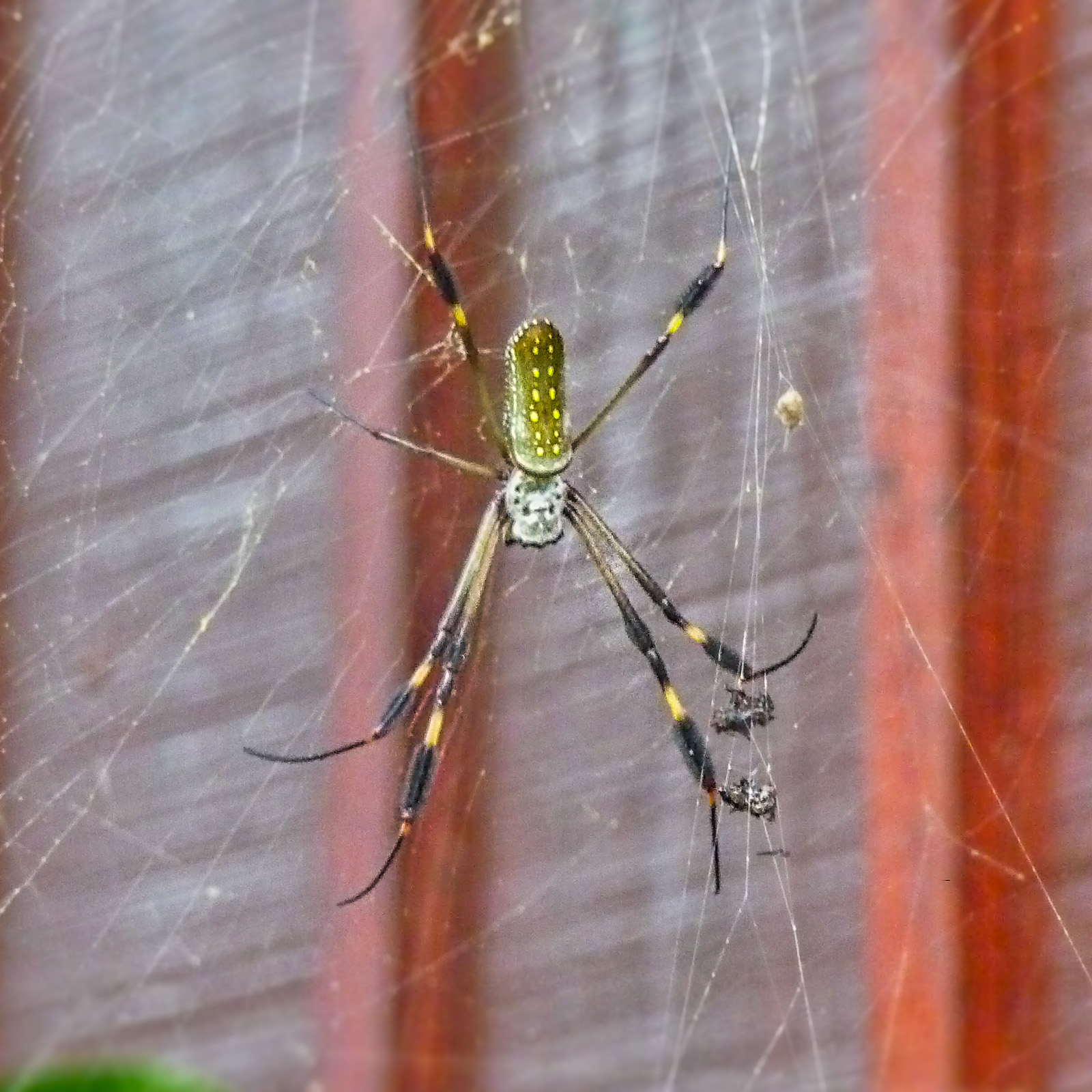
- Golden Silk Spider (Trichonephila clavipes) — Tortuguero, Costa Rica, 2025
Family Tetragnathidae — Long-jawed Orbweavers
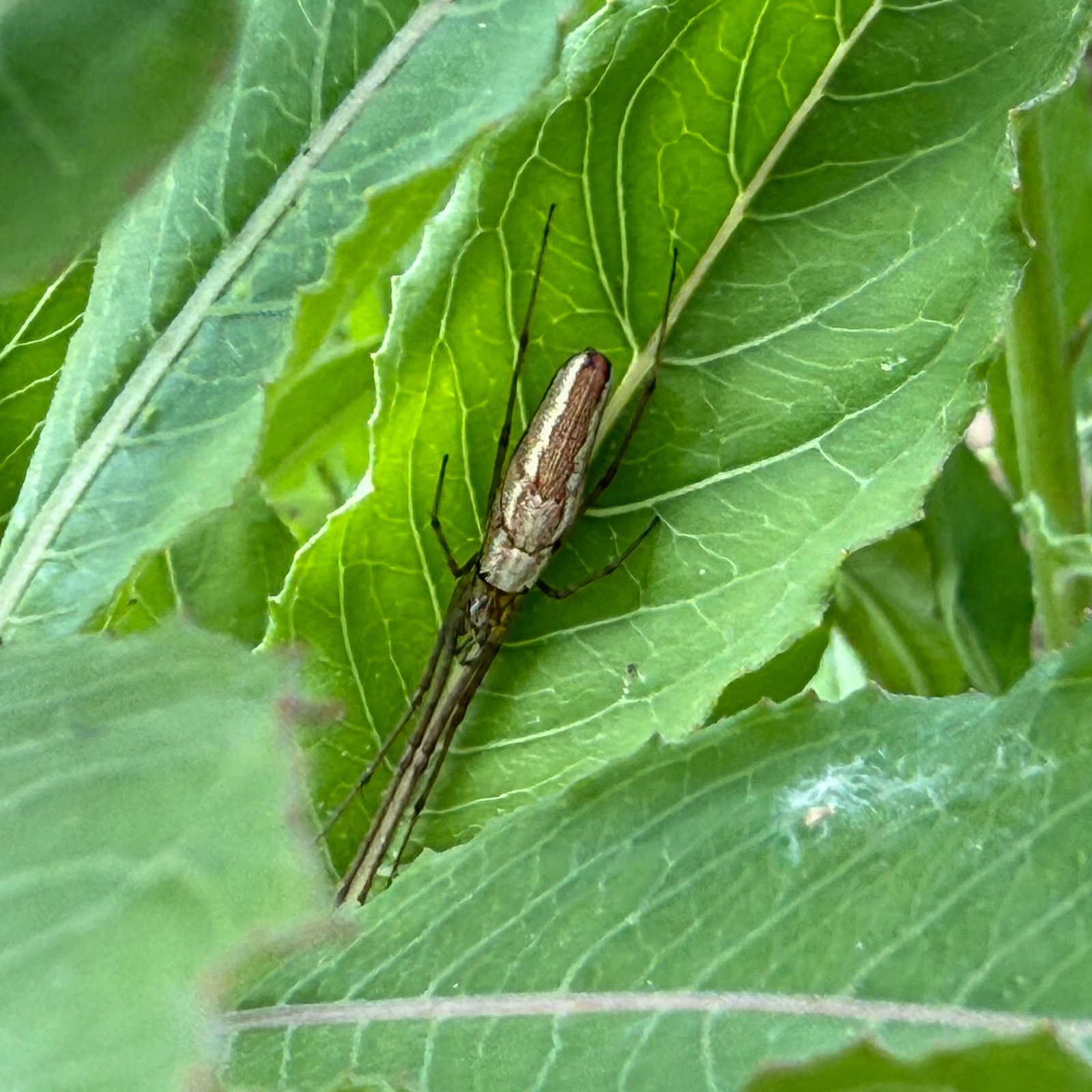
- Stretch Spider (Tetragnatha cf. nigrita)— Herzegovina, 2025
Family Theridiidae — Comb-footed Spiders
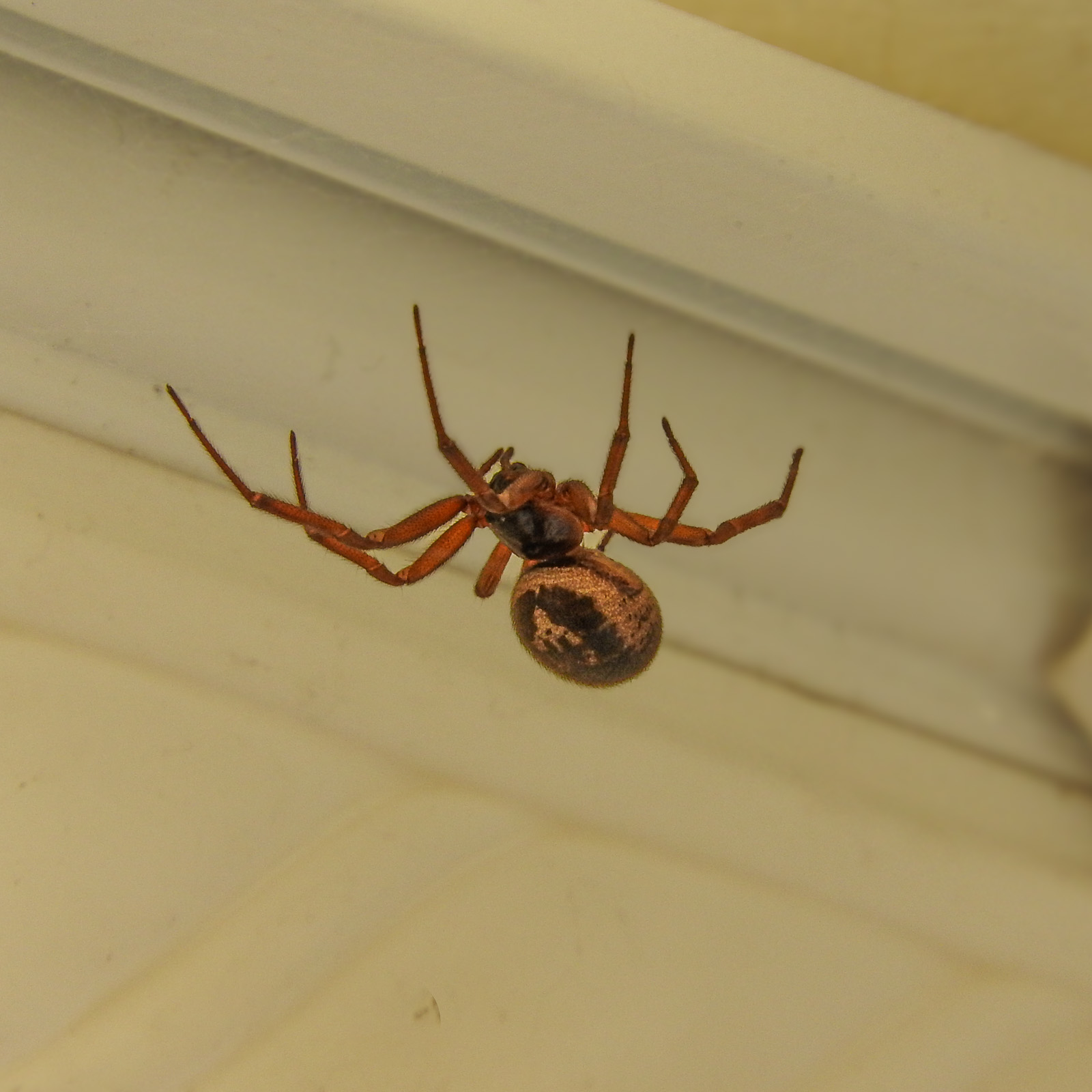
- Noble False Widow (Steatoda nobilis) — Various 🇬🇧
Wolf spiders and allies (traditionally grouped as Lycosoidea)
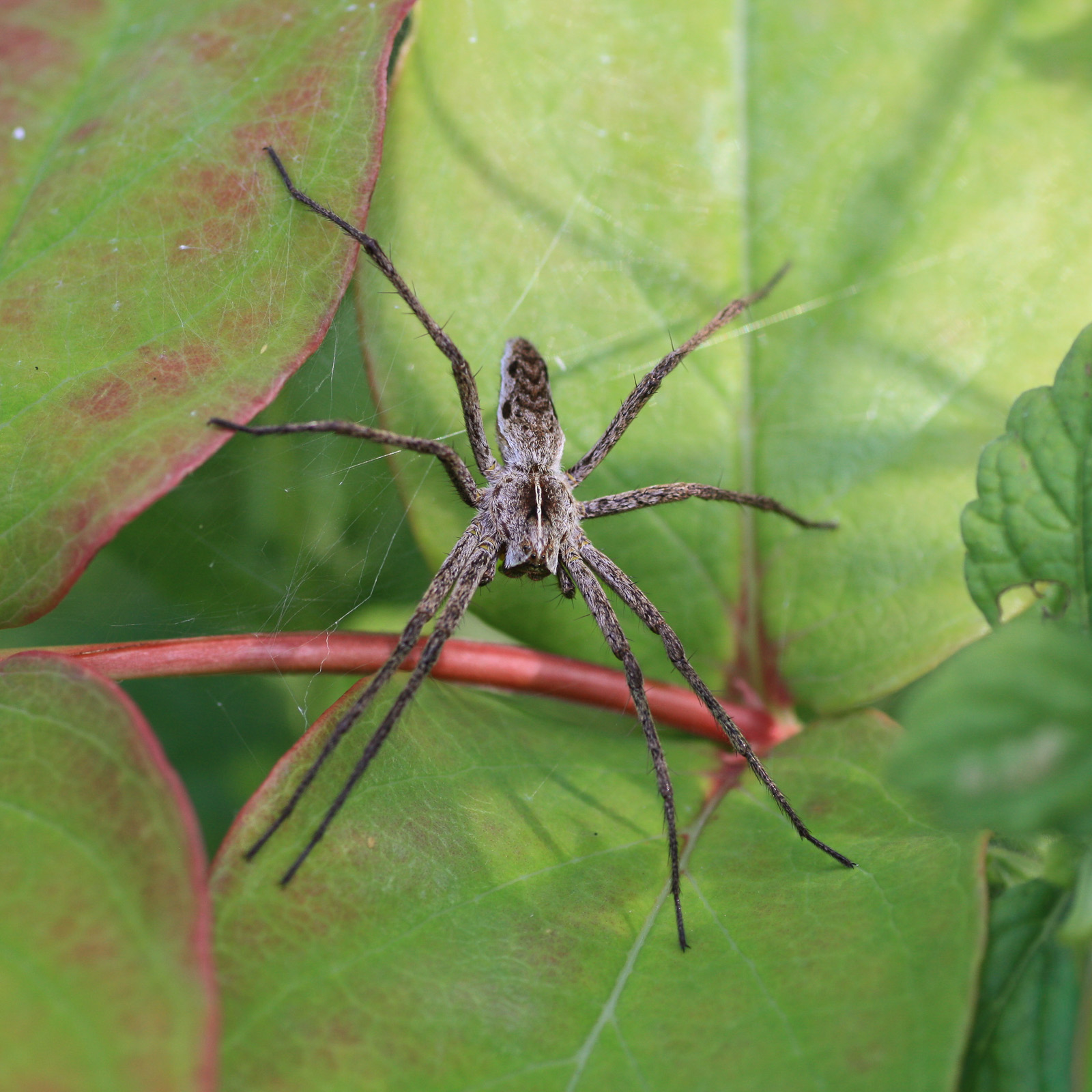
These spiders are typically robust and agile active hunters rather than web-builders, with many species running down prey on the ground or among vegetation. Some carry their egg sacs or young on their bodies. Nursery web spiders do not use webs to catch prey. Instead, the female builds a protective silk “nursery web” for her eggs and guards it until the spiderlings emerge.
My observations
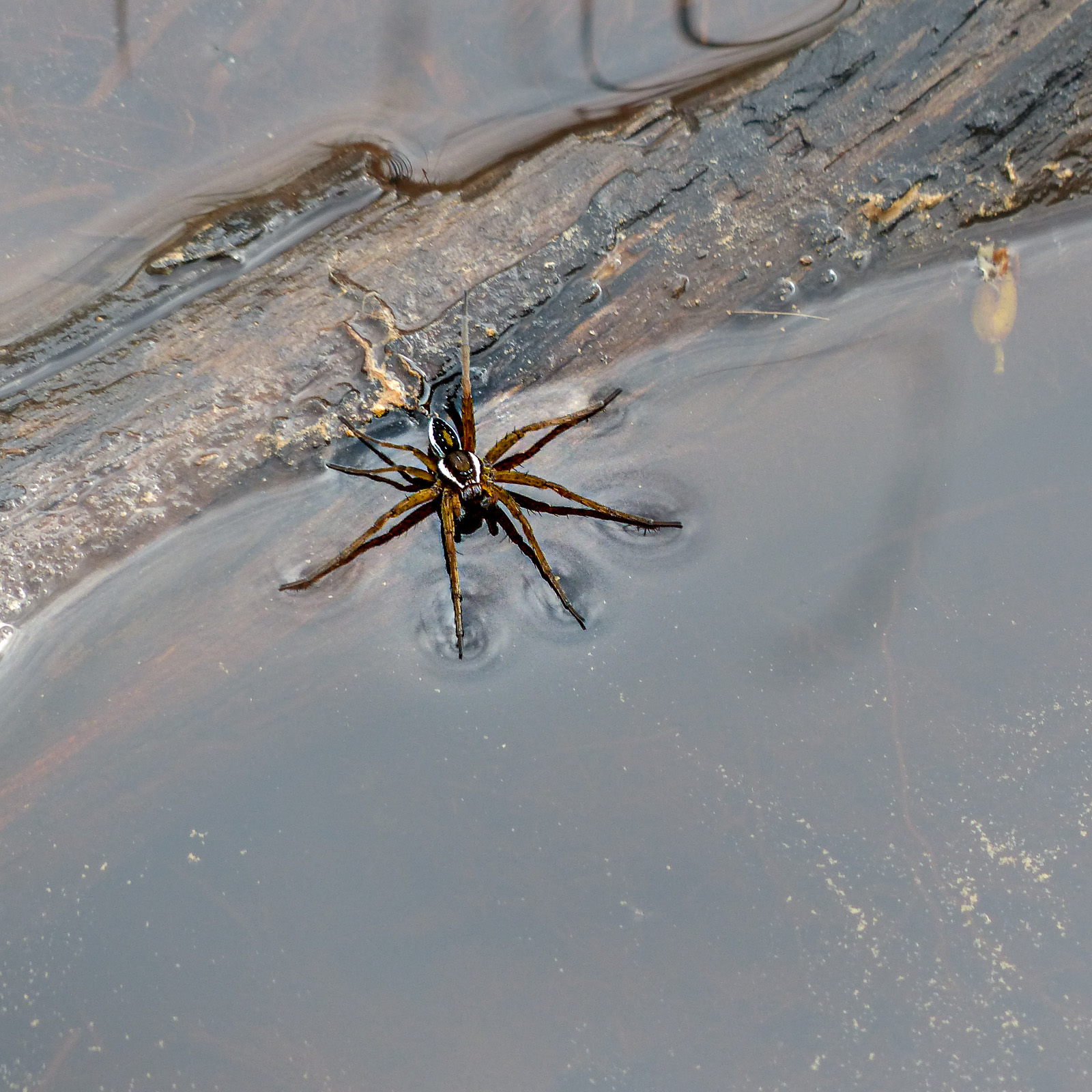
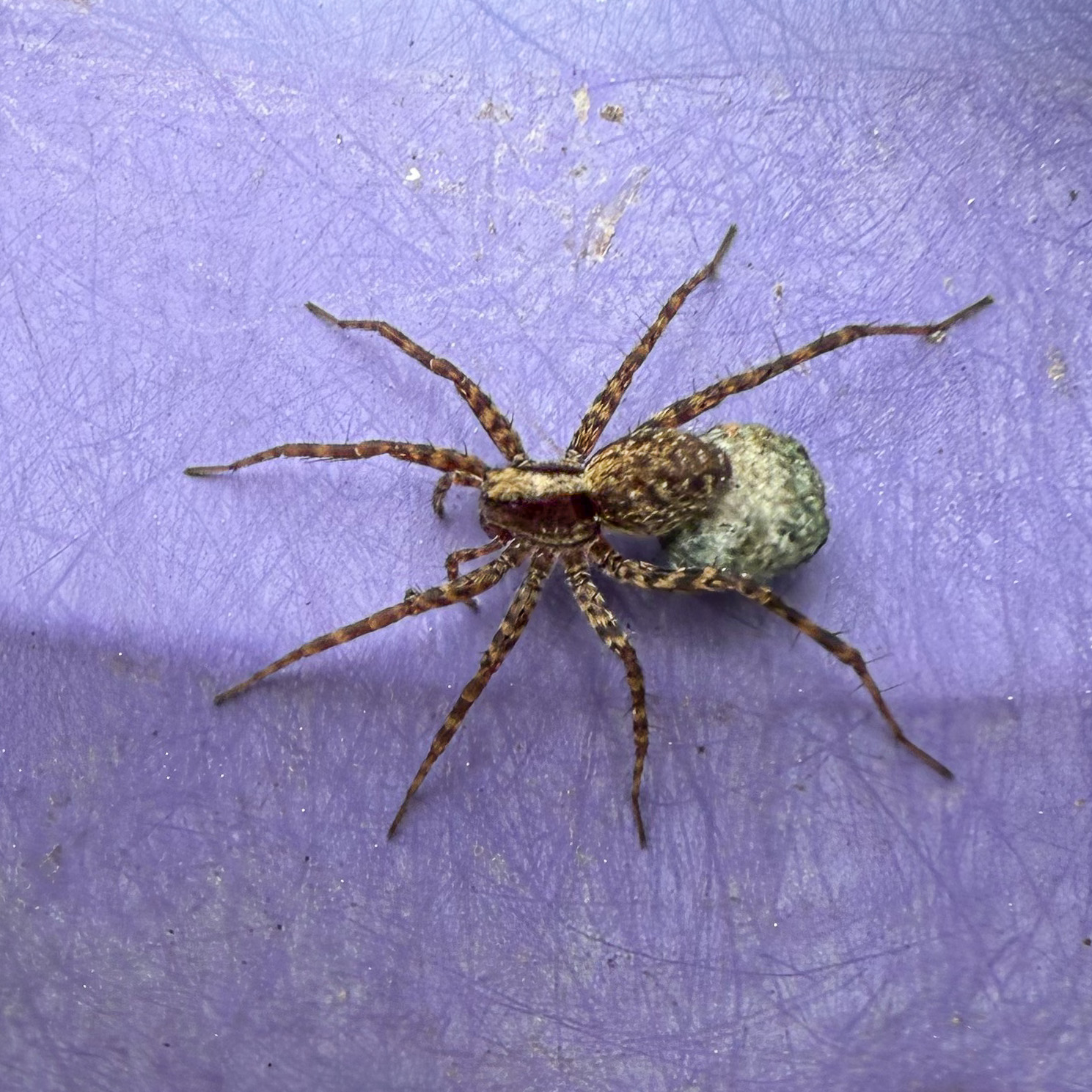
I used to see raft spiders quite often on the local common, but not so much now. I still get the occasional one in my garden. Here I also found a female spotted wolf spider carrying her egg sac attached to the end of her abdomen.
List of species (4)
Family Dolomedidae — Raft Spiders
- Raft Spider (Dolomedes fimbriatus) — Various 🇬🇧
Family Lycosidae — Wolf Spiders
- Spotted Wolf Spider (Pardosa amentata) — Various 🇬🇧
Family Pisauridae — Nursery Web Spiders
- European Nursery Web Spider (Pisaura mirabilis) — Various 🇬🇧
Family Trechaleidae — Trechaleid Spiders Long-legged Wandering Spiders
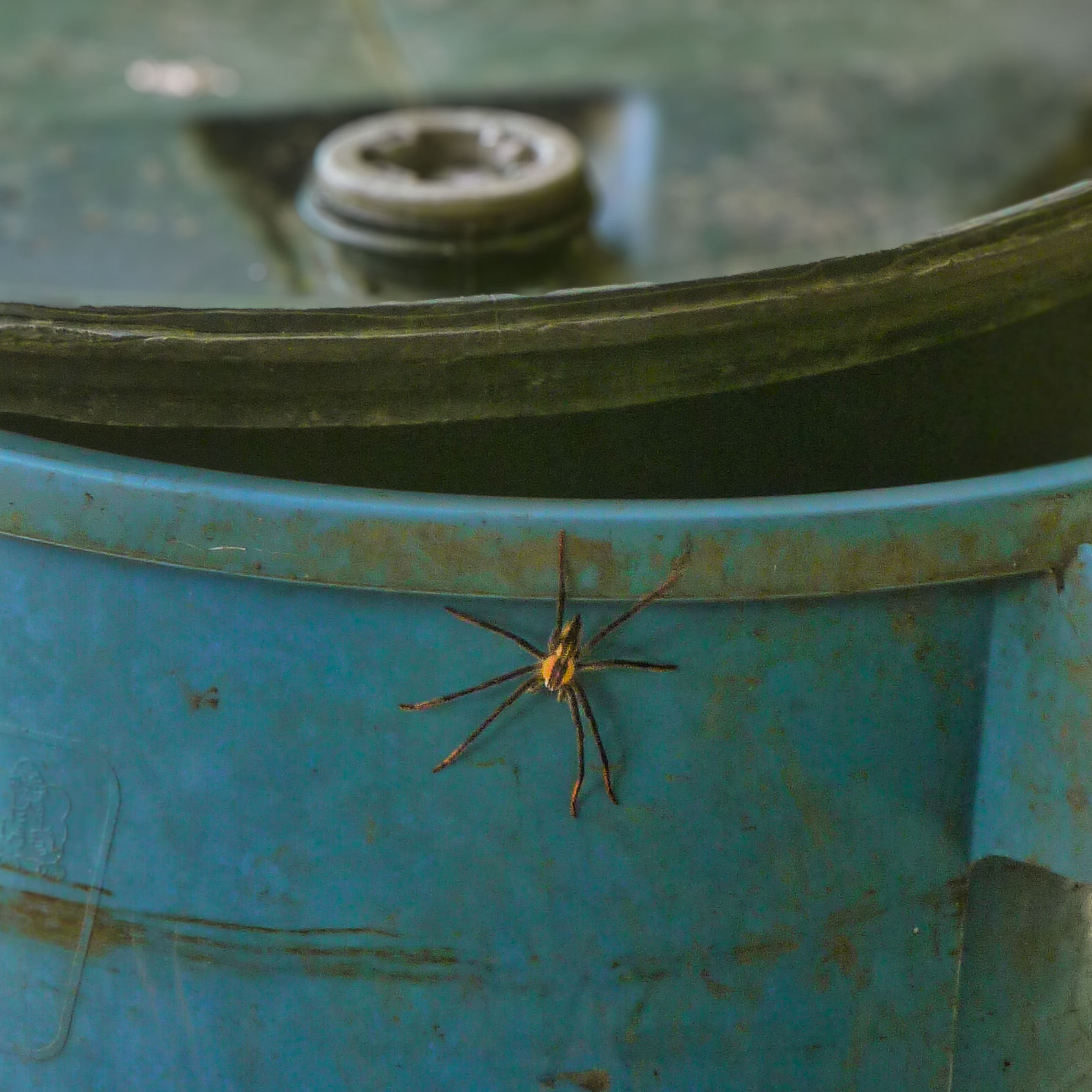
- Spot-legged Bromeliad Spider (Cupiennius getazi) — Arenal Observatory Lodge, Costa Rica 2015
Jumping spiders (Superfamily Salticoidea)
Jumping spiders are active hunters with excellent vision and compact bodies. Instead of webs, they stalk and leap onto prey, using silk mainly as a safety line. They are among the most behaviourally complex spiders.
- Family Salticidae — Jumping spiders 🇬🇧
My observations
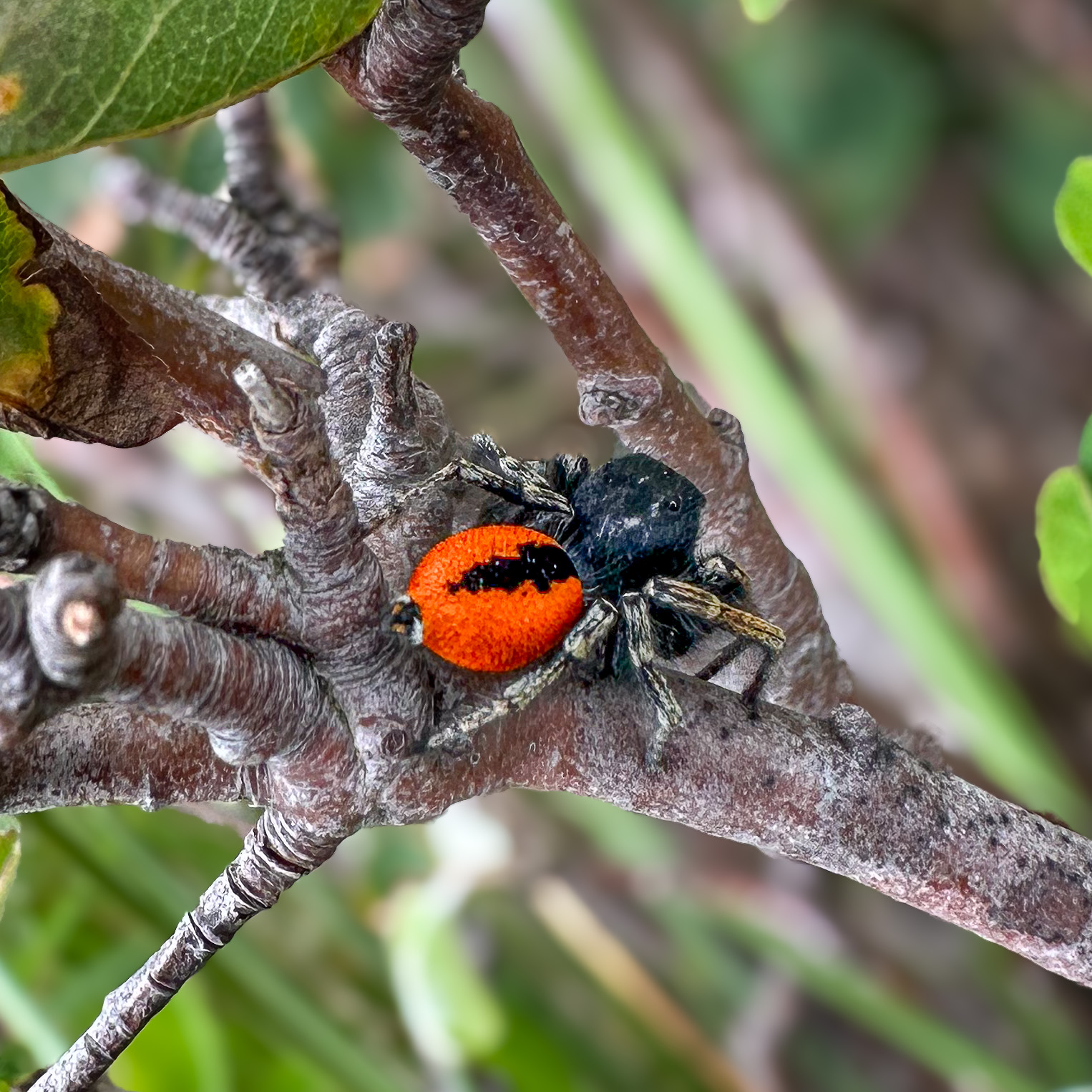
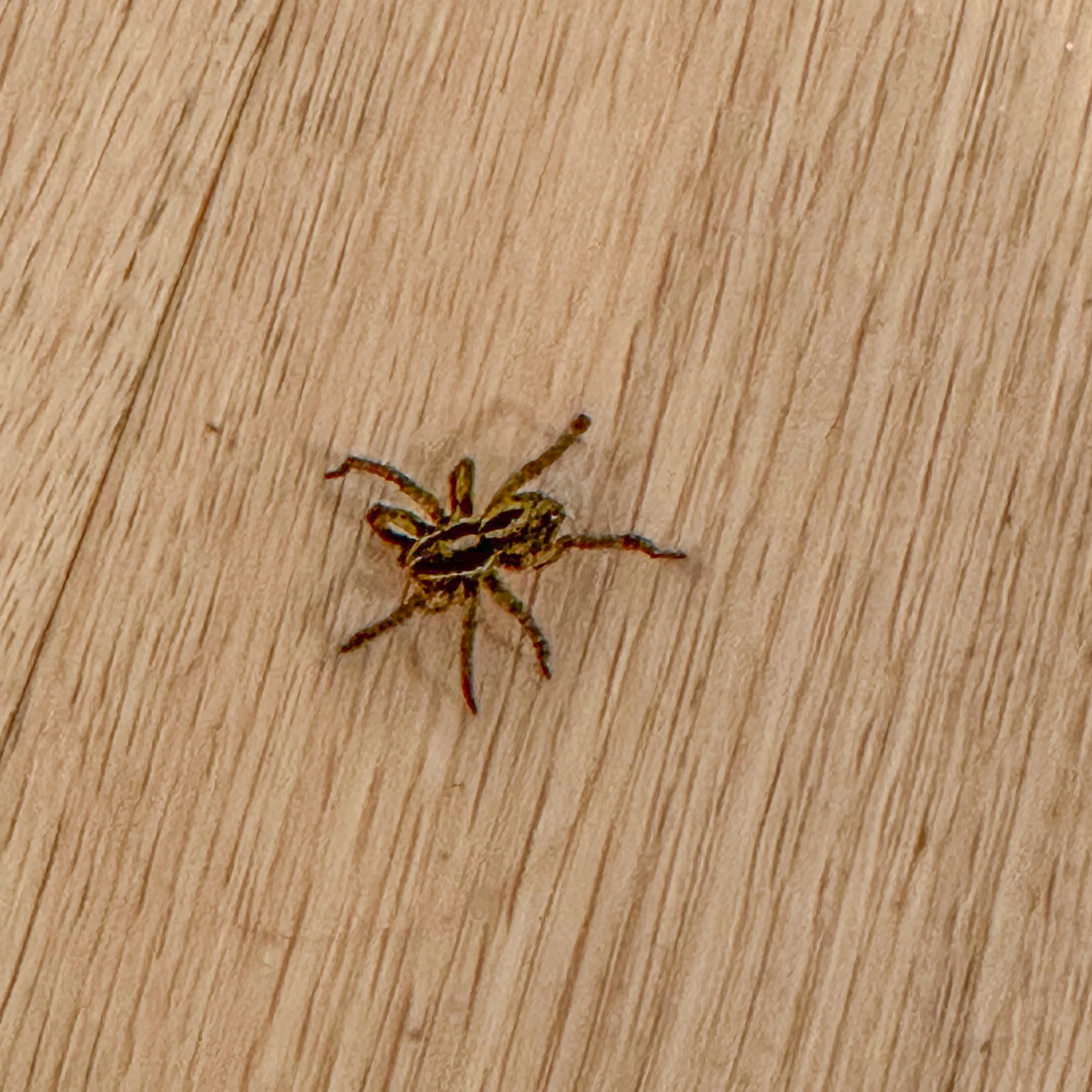
I haven’t seen many of these, but I was particularly pleased to come across the beautiful red-bellied jumping spider in Slovenia. In Texas we also found what I think is the pantropical jumping spider on the floor of our cabin.
List of species (3)
Family Salticidae — Jumping Spiders
- Pantropical Jumping Spider (Plexippus paykulli) — Texas 2024
- Red-bellied Jumping Spider(Philaeus chrysops) — Slovenia 2024
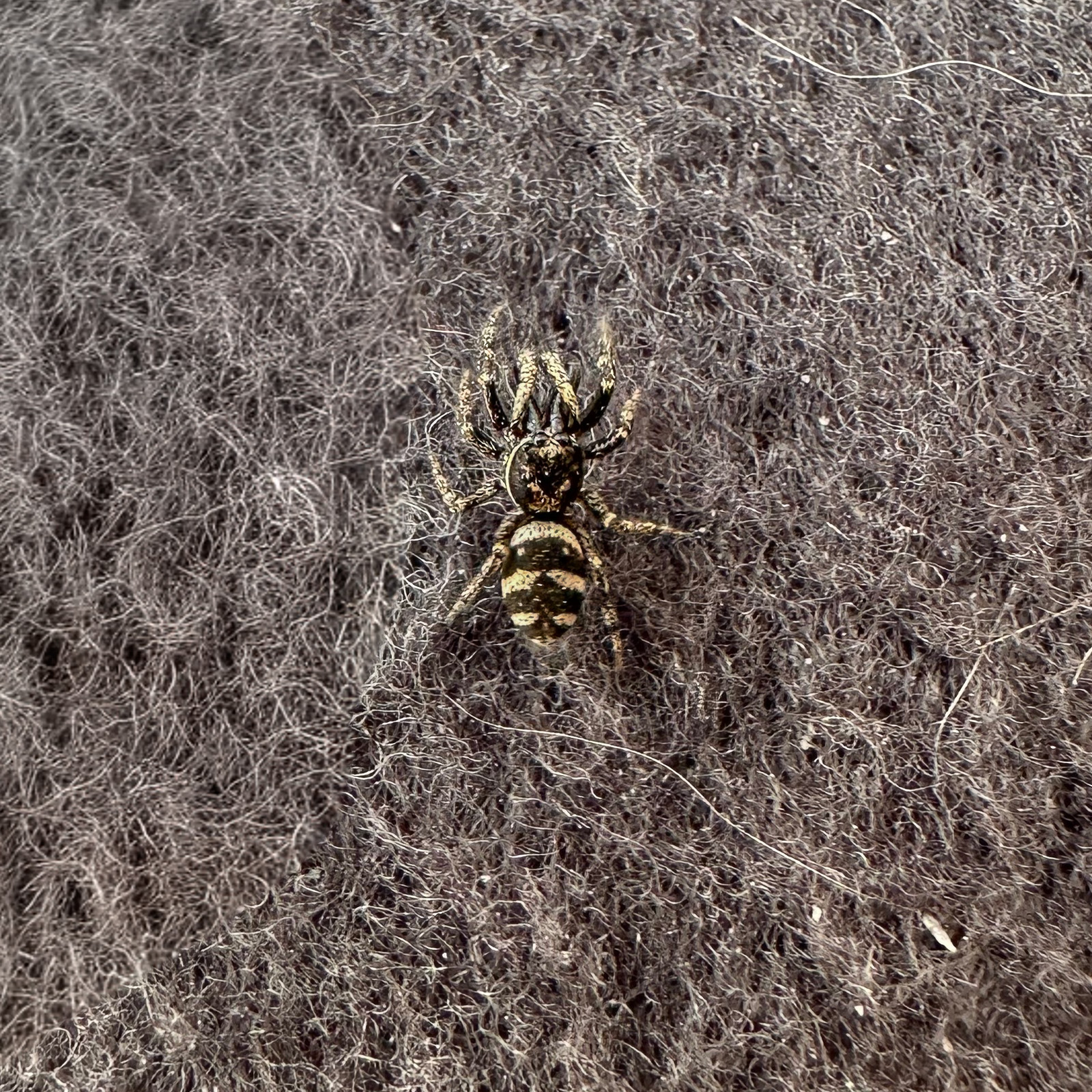
- Zebra Jumping Spider (Salticus scenicus) — Various 🇬🇧
Other Spider Families
Many spider families do not belong to the three groups above. These include a wide range of spiders with different lifestyles, such as funnel-weavers, crab spiders, velvet spiders, ground hunters, and sheet-web builders.
My observations
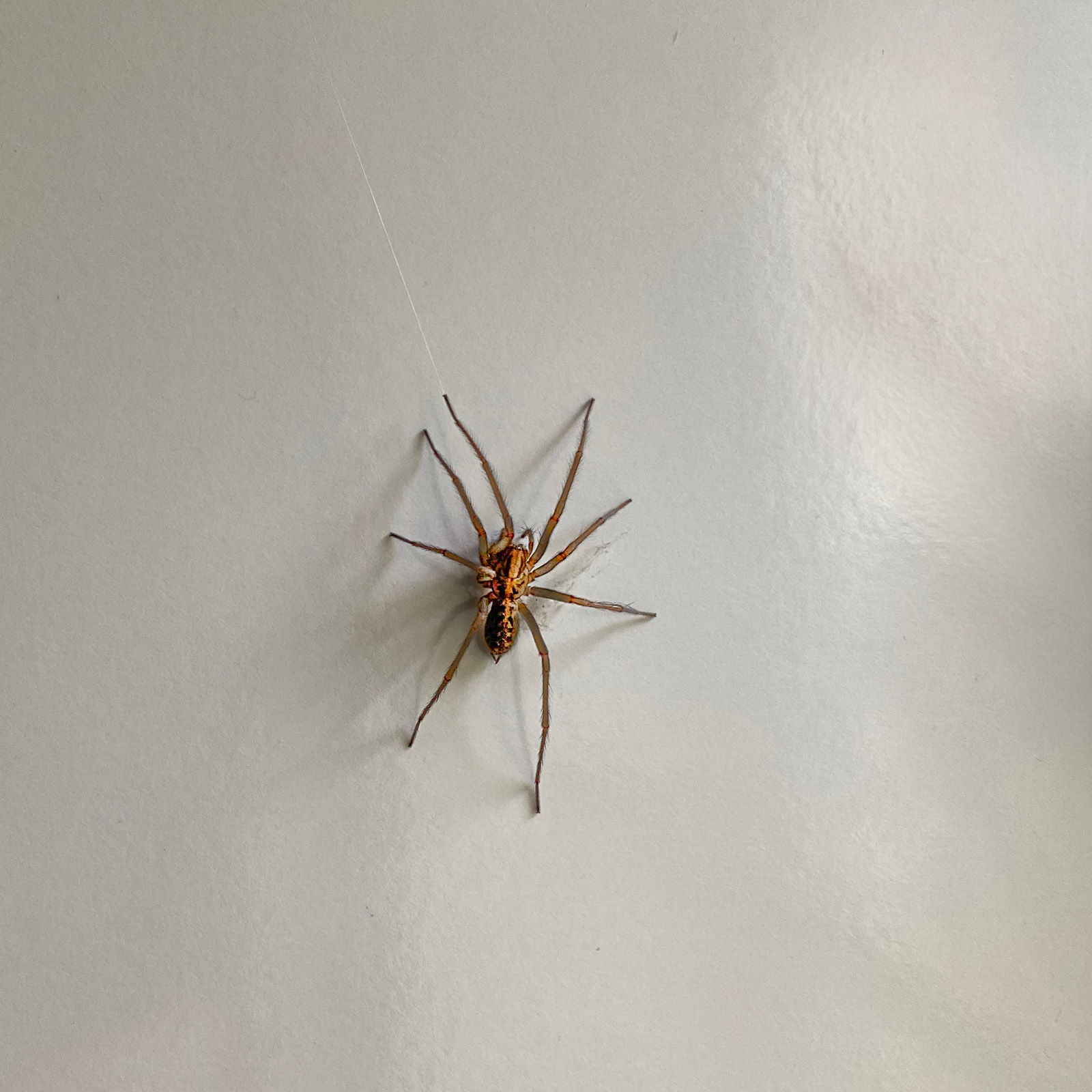
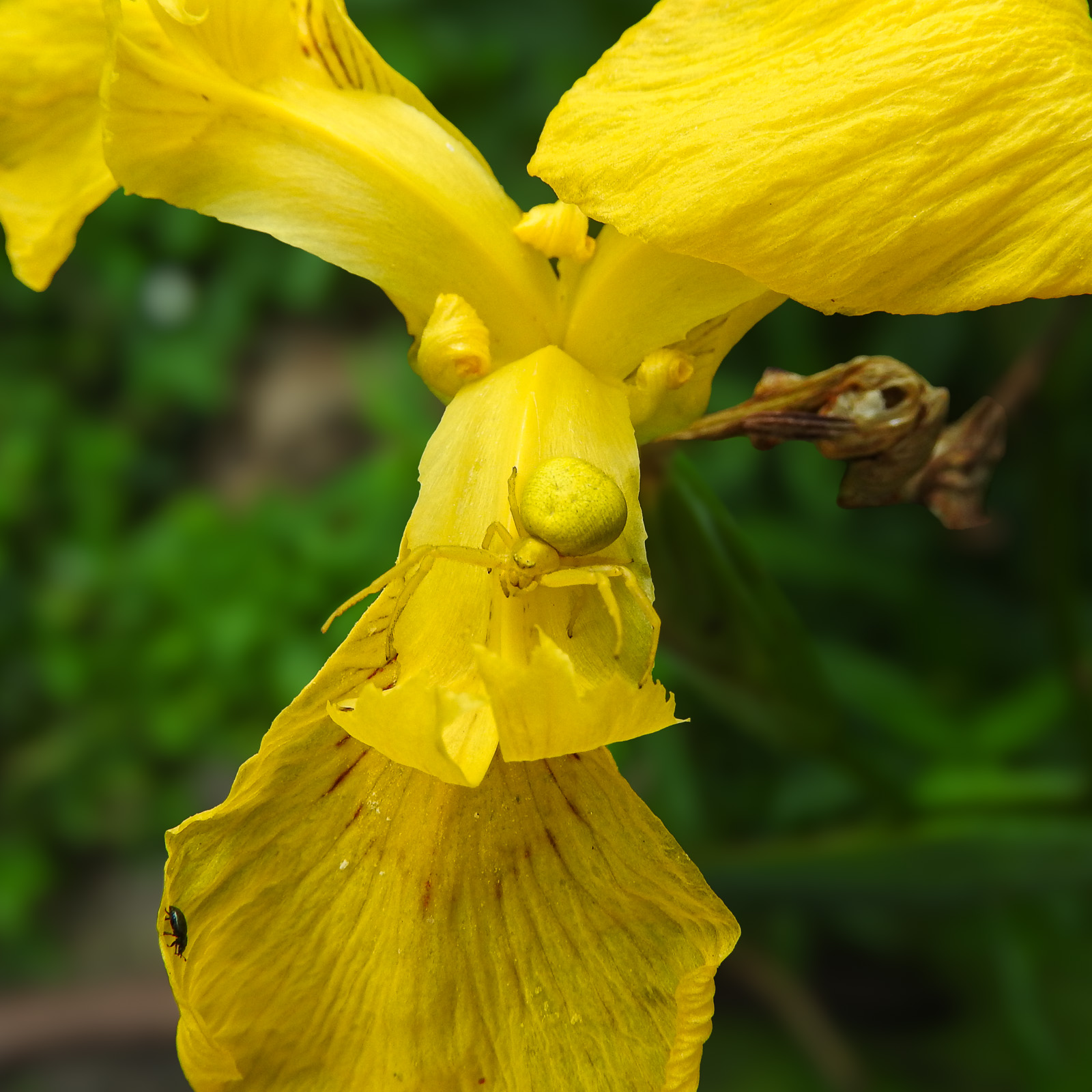
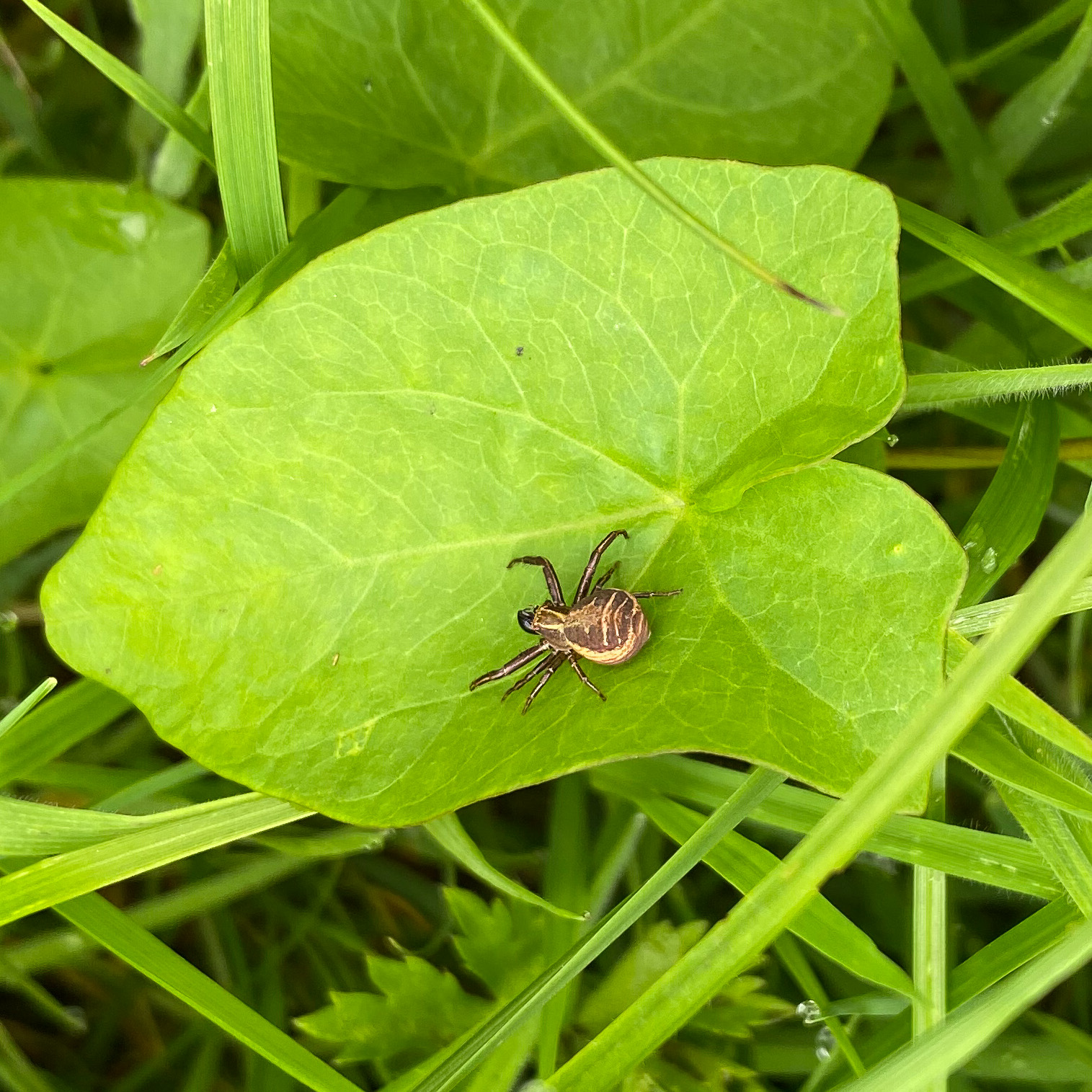
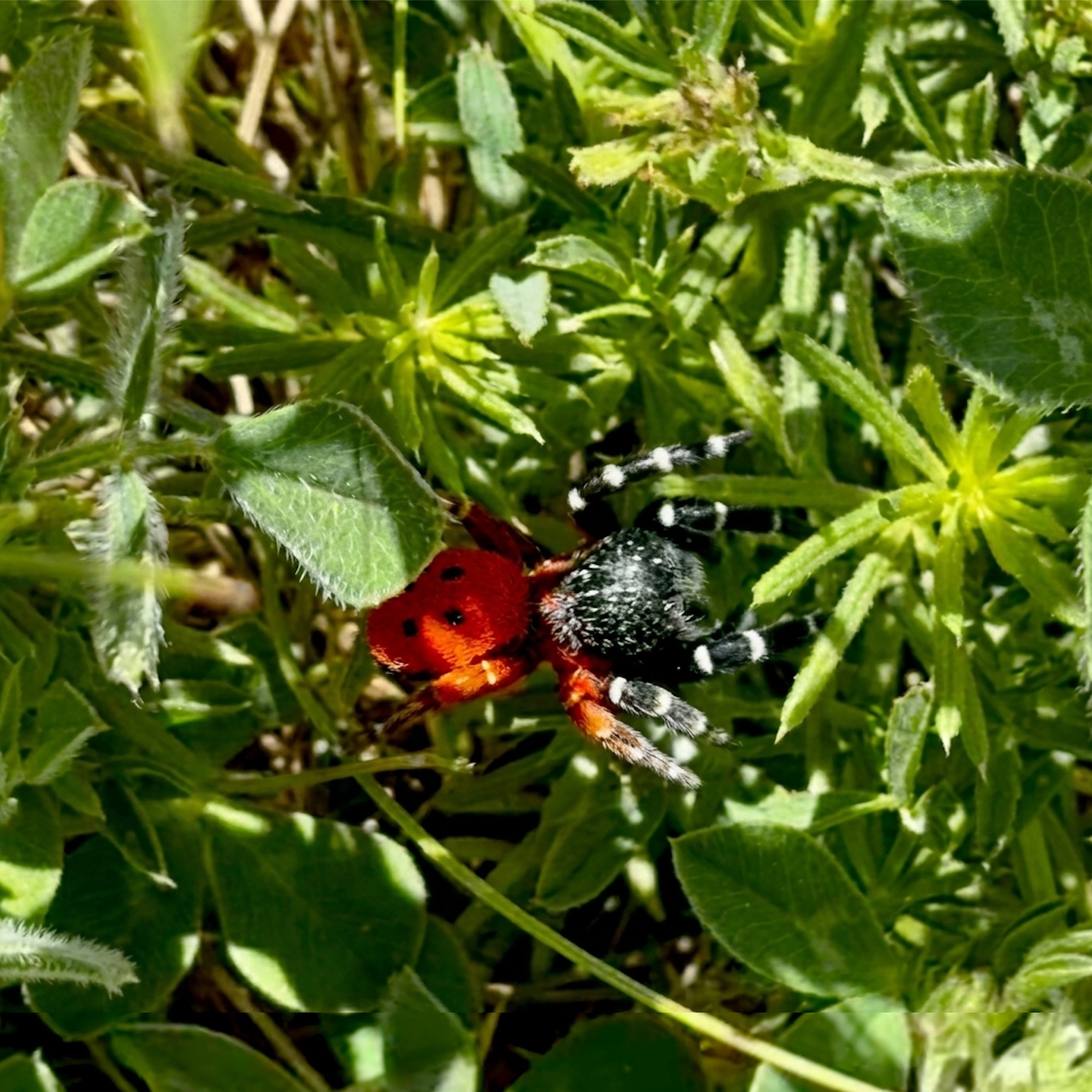
My most exciting find was the ladybird spider in Herzegovina. I found it at a picnic stop high above Mostar. It’s fascinating how the goldenrod crab spider can change its colour to match its surroundings. Although I find spiders outside quite interesting, I am not very keen on them in the house, and I have come across far more giant house spiders than I am comfortable with.
List of species (4)
Family Agelenidae — Funnel Weavers
- Giant House Spider Complex (Eratigena atrica group) — Various 🇬🇧
Family Thomisidae — Crab Spiders
- Goldenrod Crab Spider (Misumena vatia) — Various 🇬🇧
- Common Crab Spider (Xysticus cristatus) — Various 🇬🇧
Family Eresidae — Velvet Spiders
- Ladybird Spider (Eresus cf. moravicus ) — Vučja glava, Mostar, Herzegovina 2025
Other Orders
Besides spiders, the class Arachnida contains a variety of other groups collectively known as arachnids. These include scorpions, harvestmen, mites, ticks, and several smaller and less familiar lineages. Many are predators of small invertebrates, while others have evolved specialised lifestyles such as parasitism.
Order Opiliones — Harvestmen / Daddy-longlegs
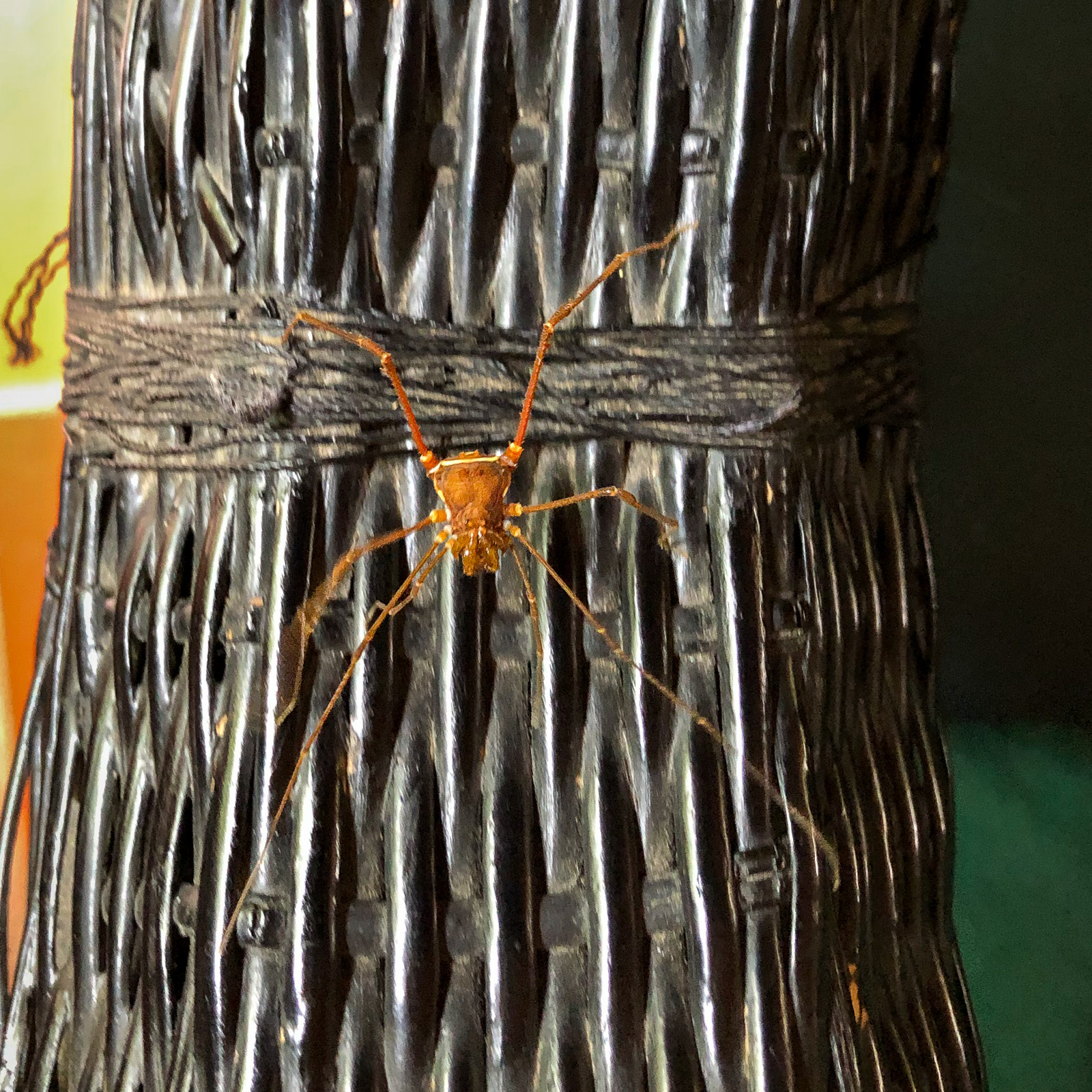
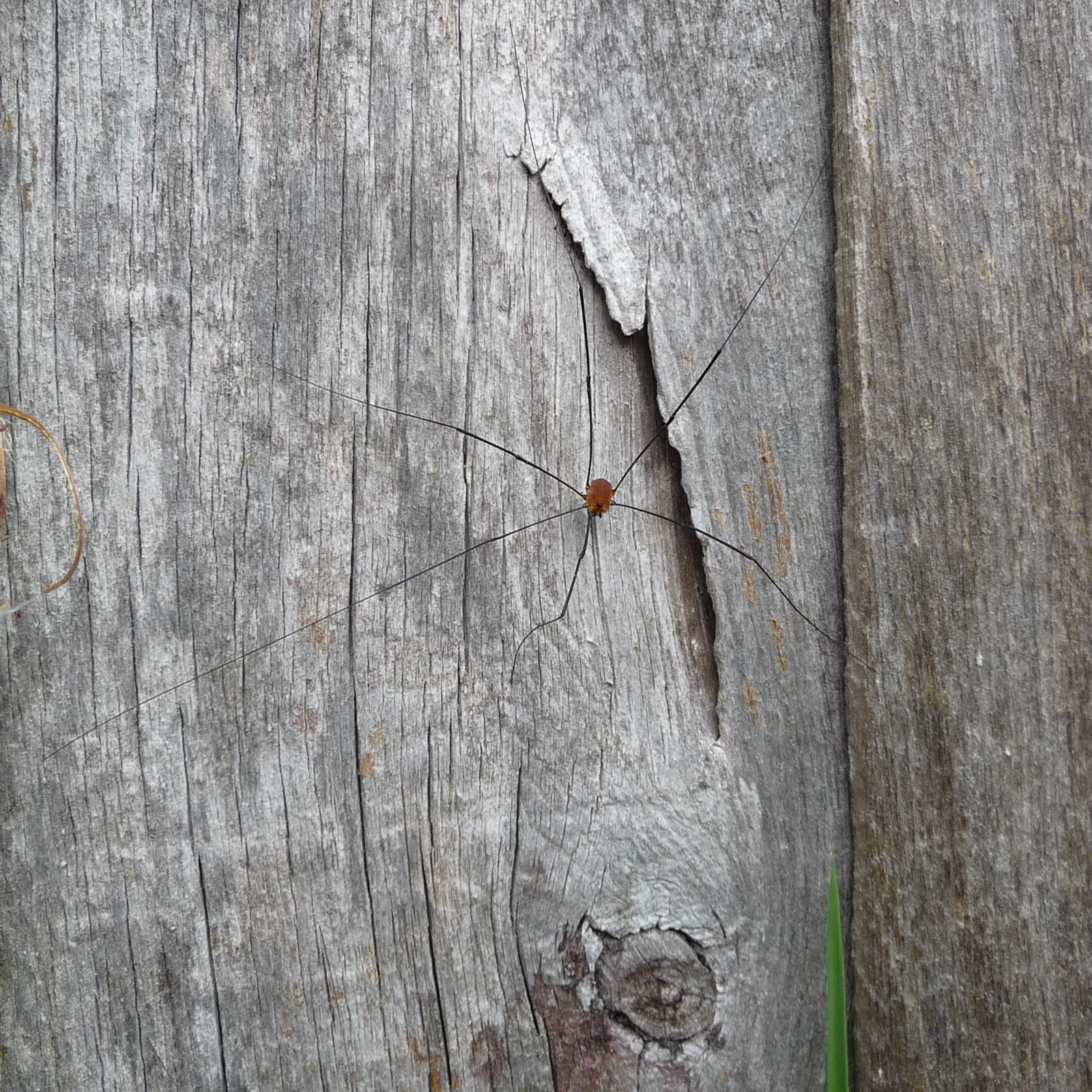
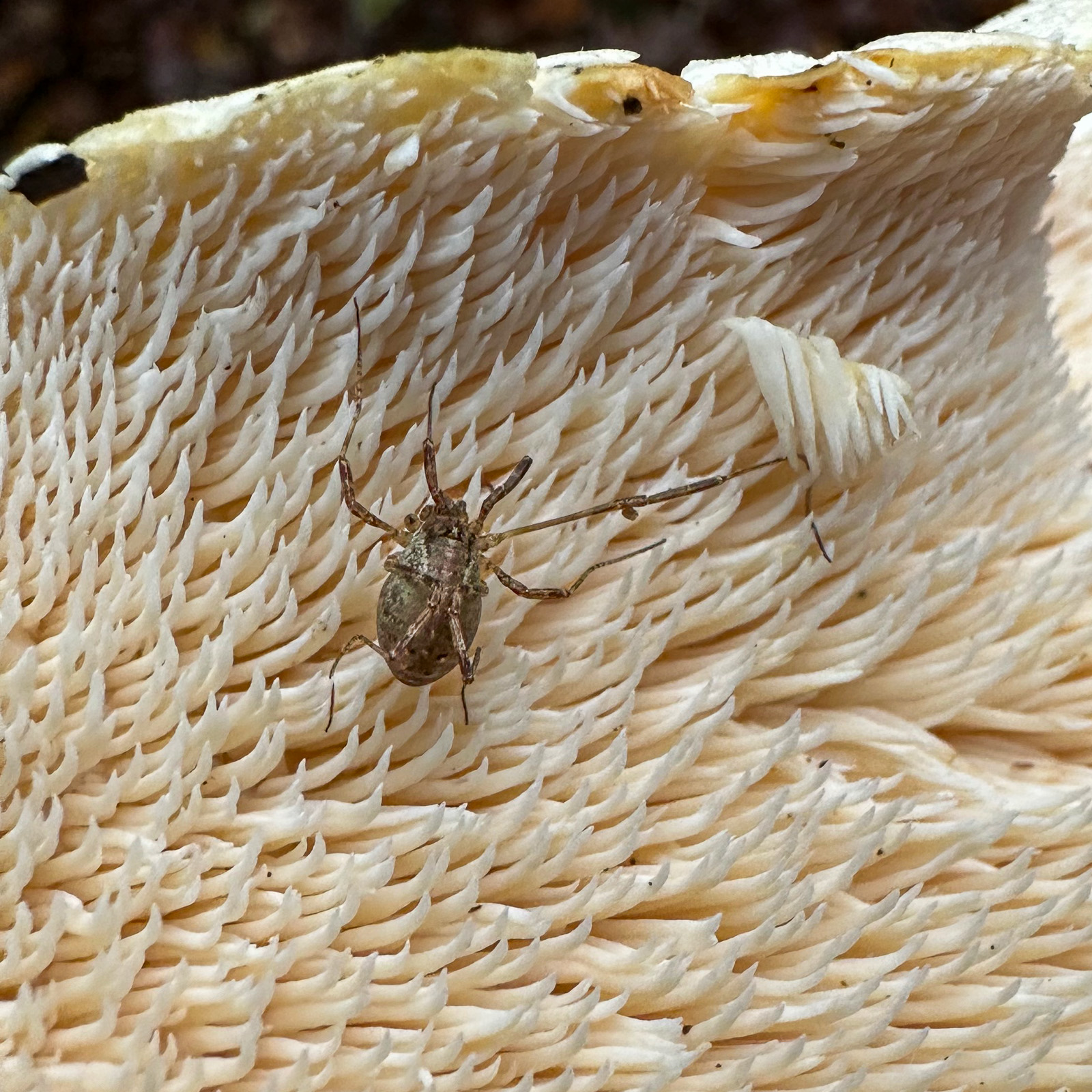
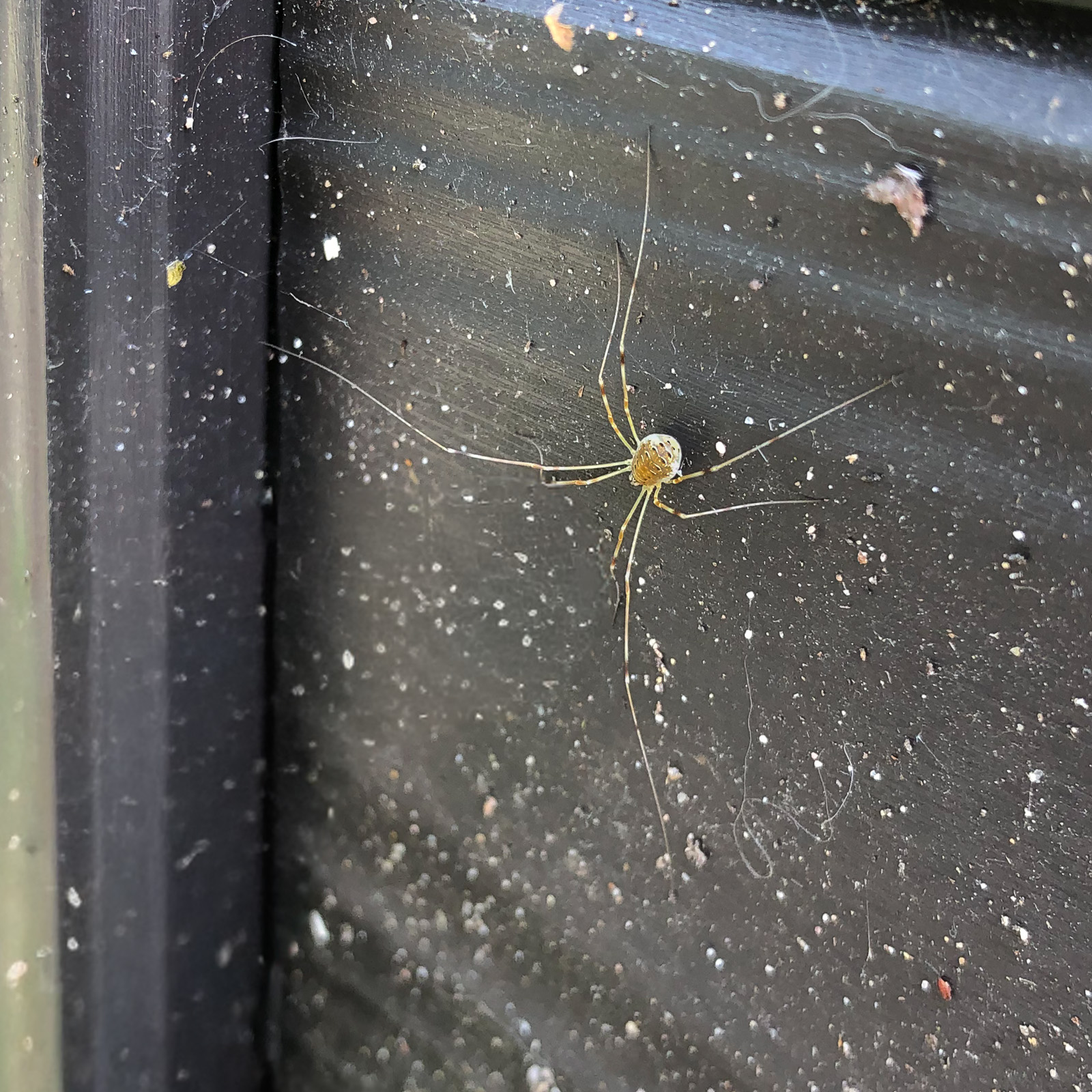
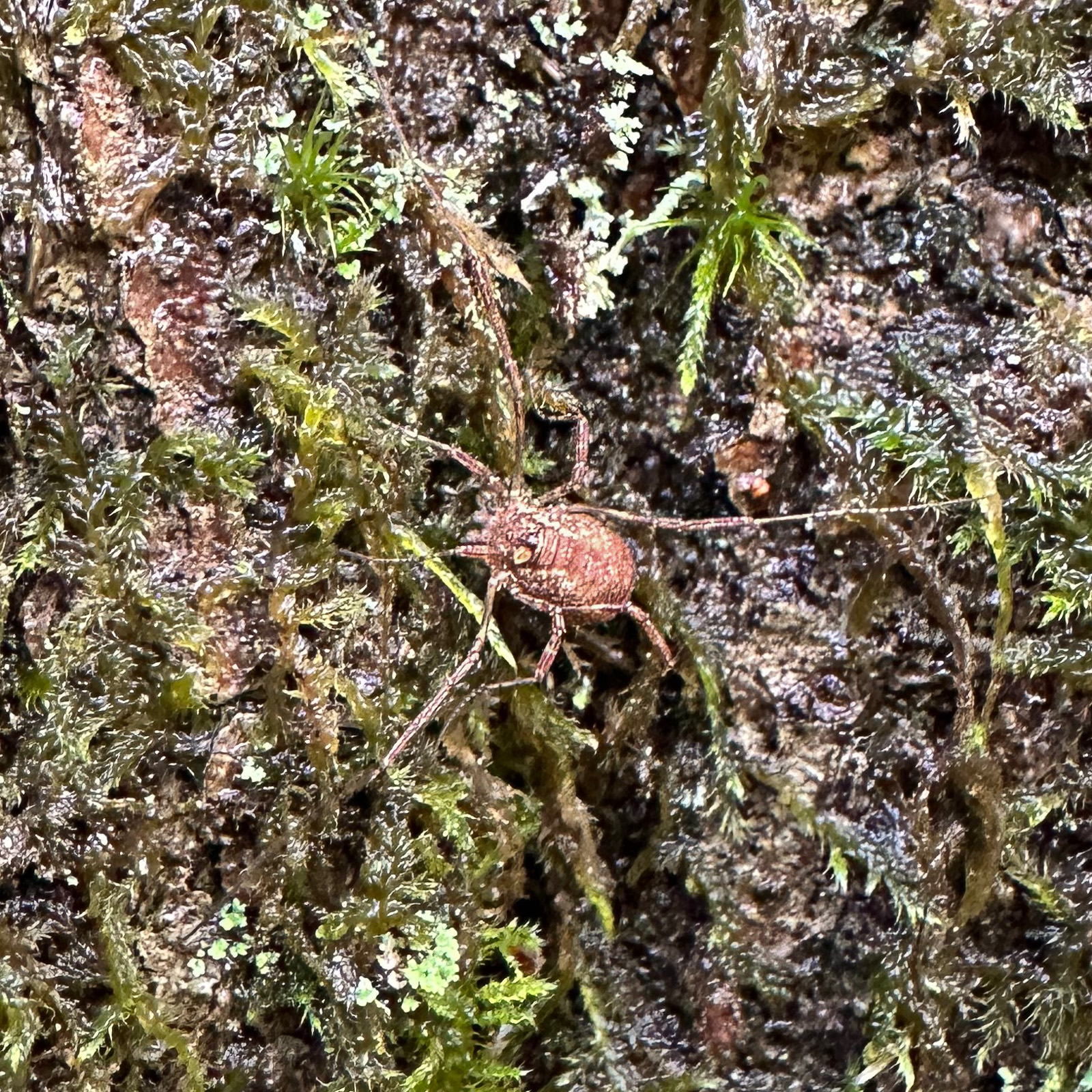
Harvestmen are long-legged arachnids with a single rounded body segment, giving them a very different appearance from spiders. They do not produce silk or venom and are typically scavengers or small predators found in vegetation, woodland, and gardens.
My observations
List of species
Family Cranaidae — Cranaid Harvestmen
- Phareicranaus calcarifer — Tobago 2019
Family Sclerosomatidae — Sclerosomatid Harvestmen
- Leiobunum cf. rotundum — Elstead UK, 31 August 2009
Family: Phalangiidae —Phalangiid Harvestmen
- Paroligolophus cf. agrestis — Golden Valley, Surrey, UK 17 Nov 2022
Order Scorpiones — Scorpions
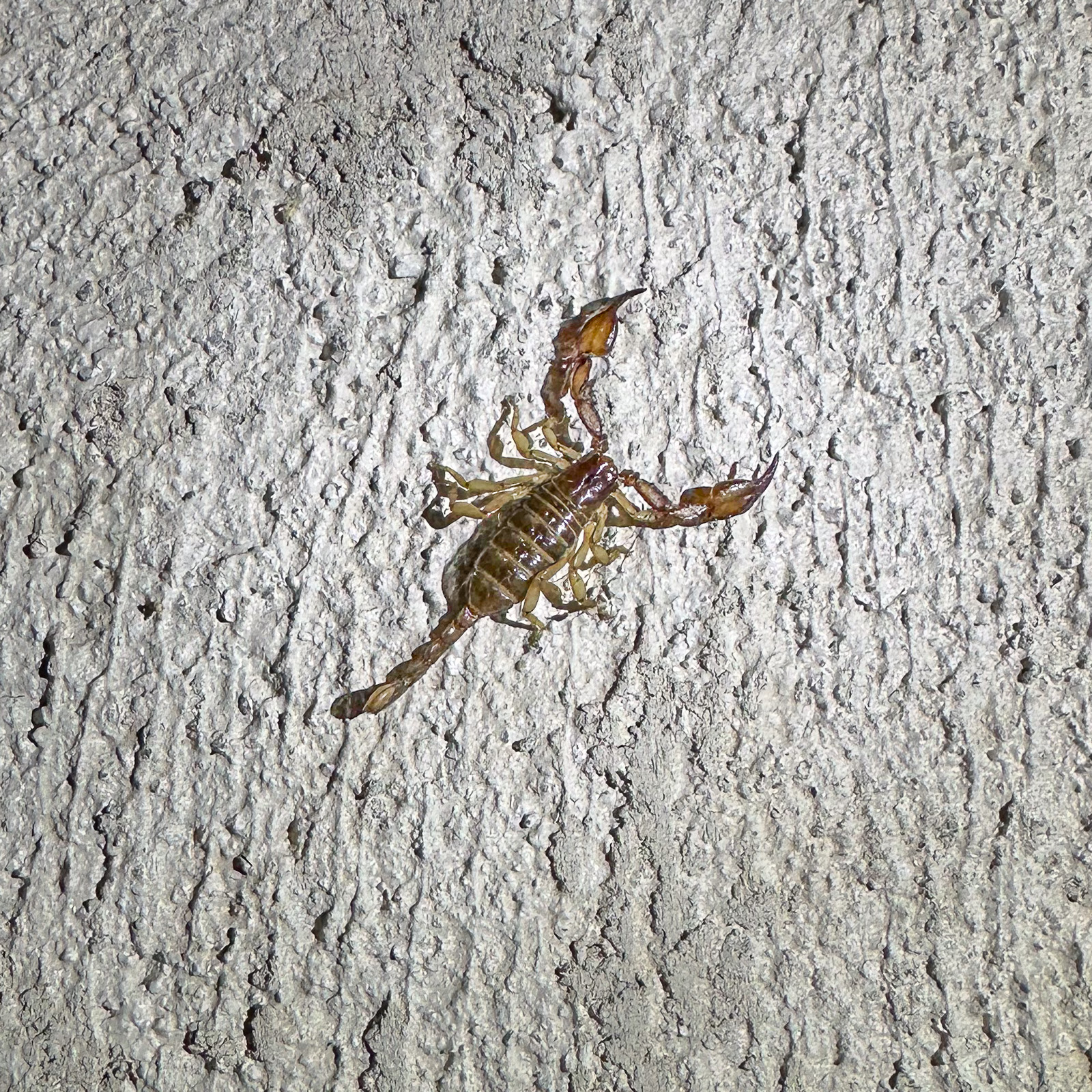
Scorpions are recognisable by their large pincers and segmented tail ending in a venomous sting. They are mostly found in warm regions of the world, where they are nocturnal predators of insects and other small animals.
My Observations
In Slovinia our guide took us too an old stone building where he knew there was a ‘resident’ scorpion. This is the only scorpion I have seen
Order Acari — Mites and Ticks
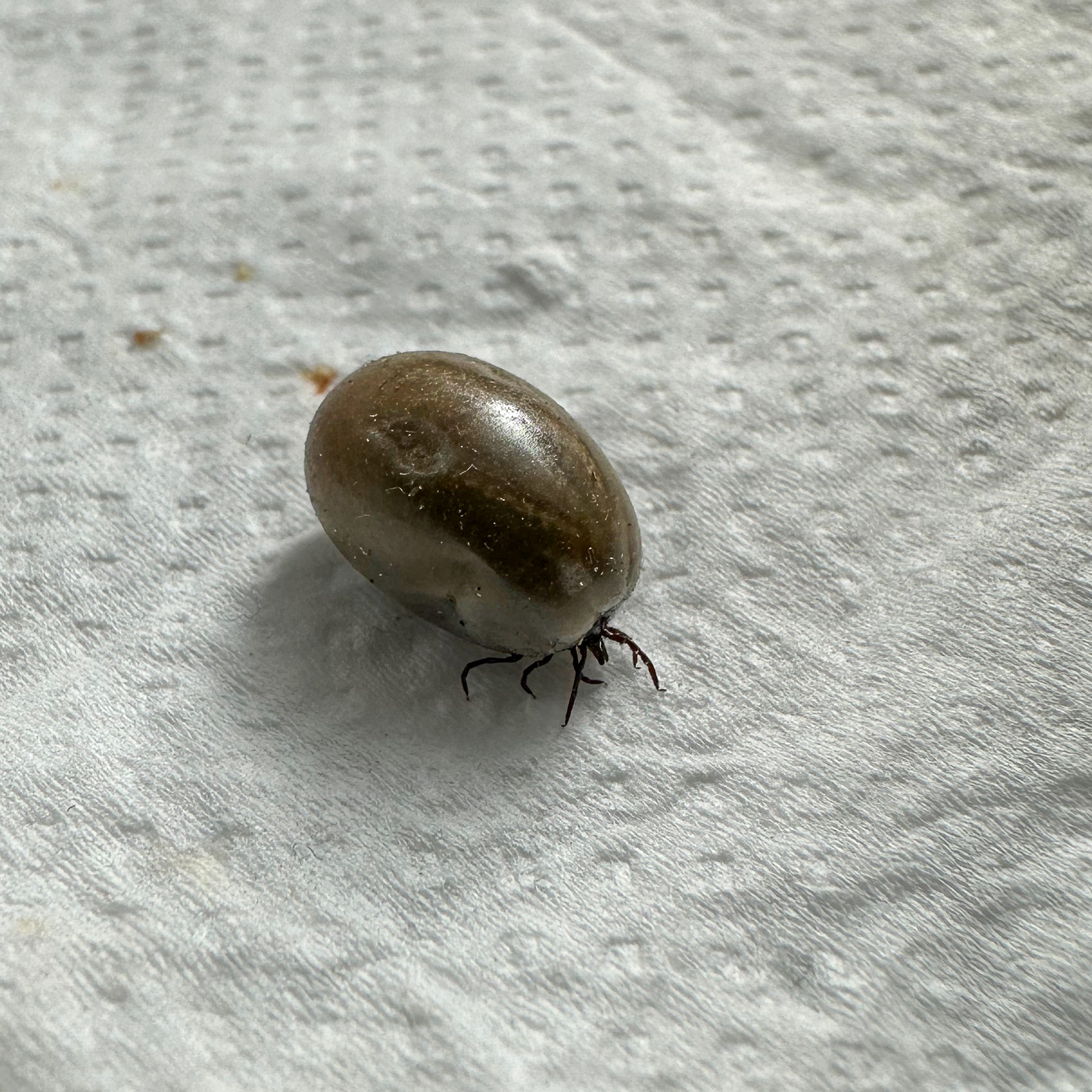
Mites and ticks form the largest and most diverse group of arachnids. Many are microscopic and live in soil or vegetation, while others are parasites of animals and plants.
My observations
Ticks can be surprisingly difficult to identify from photographs alone, as many species look very similar and often require microscopic examination for a reliable identification. I have encountered quite a few over the years, both on myself and on my cats and dog. I also picked up several while walking in Slovenia. I have photographed some of these, although they may all turn out to be the same species.
Other Orders
Order Pseudoscorpiones — Tiny arachnids resembling scorpions but lacking a tail or sting.
Order Solifugae — Fast-running desert arachnids sometimes called camel spiders.
Order Amblypygi — Tailless whip scorpions with extremely long front legs used as sensory organs.
Order Uropygi — Whip scorpions or vinegaroons, named for the defensive spray they can produce.
Order Schizomida — Small tropical arachnids related to whip scorpions.
Order Palpigradi — Minute soil-dwelling arachnids with long whip-like tails.
Order Ricinulei — Rare tropical arachnids with a movable hood covering the mouthparts.
Class Merostomata — Horseshoe Crabs
Horseshoe crabs are marine chelicerates found mainly in coastal waters of North America and Asia. Despite their name they are not true crabs and are more closely related to arachnids. They do not occur naturally in the United Kingdom.
I have not yet encountered members of this group during my travels, although horseshoe crabs occur in some of the coastal regions I have visited.
Class Pycnogonida — Sea Spiders
Sea spiders are unusual marine arthropods with extremely long legs and very small bodies. They live on the sea floor and are rarely encountered except by divers or marine researchers.
Notes