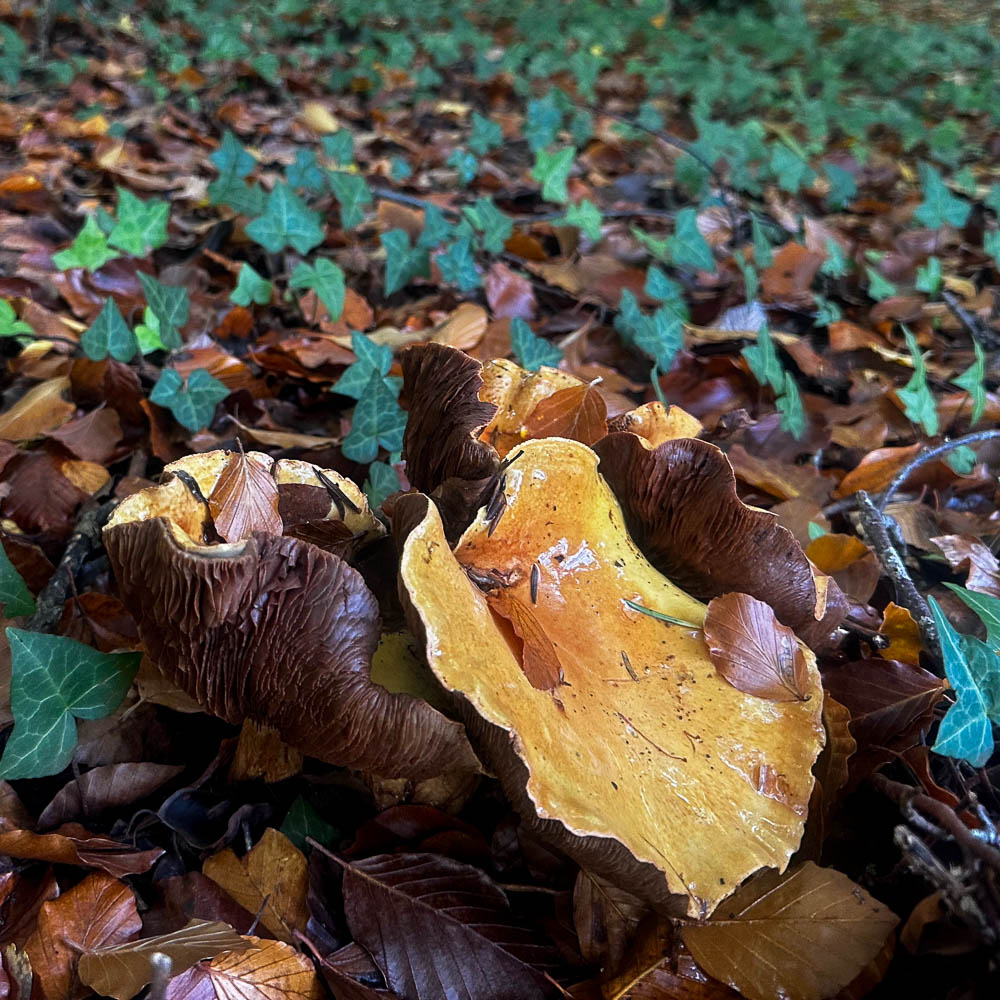
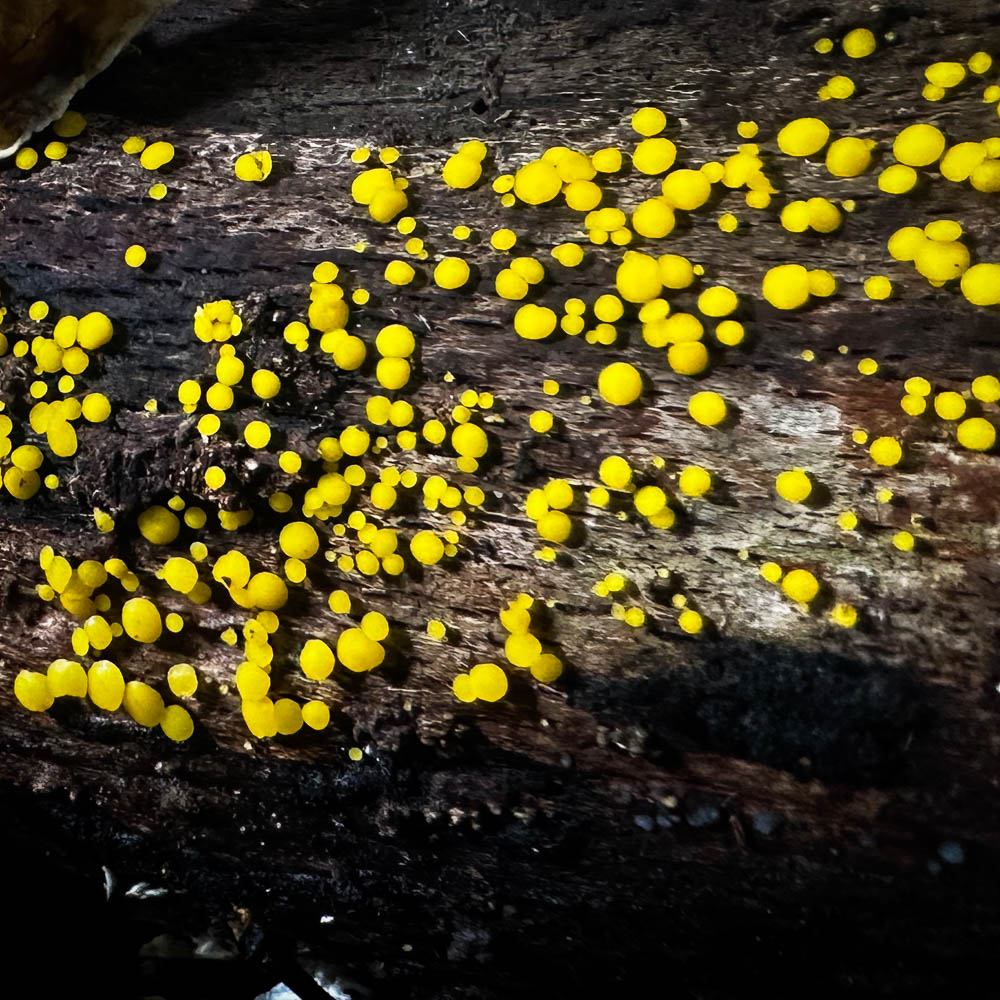
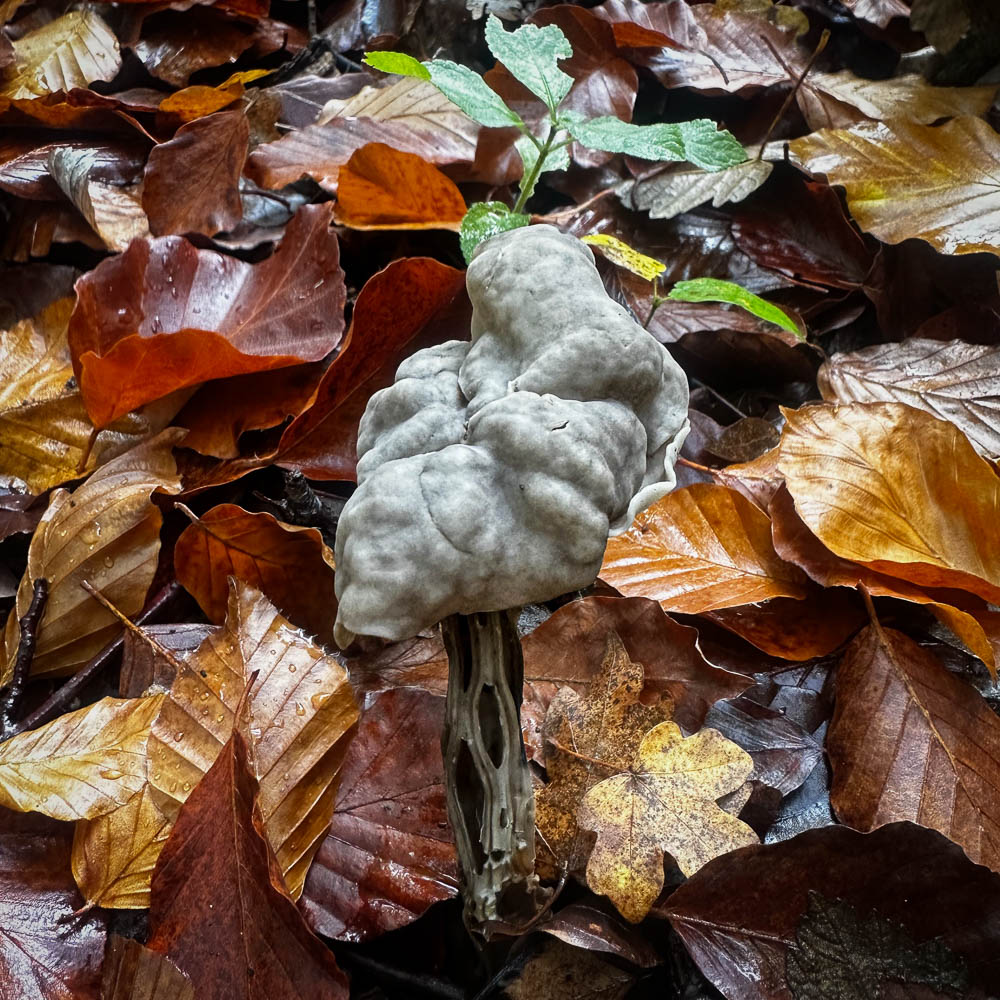
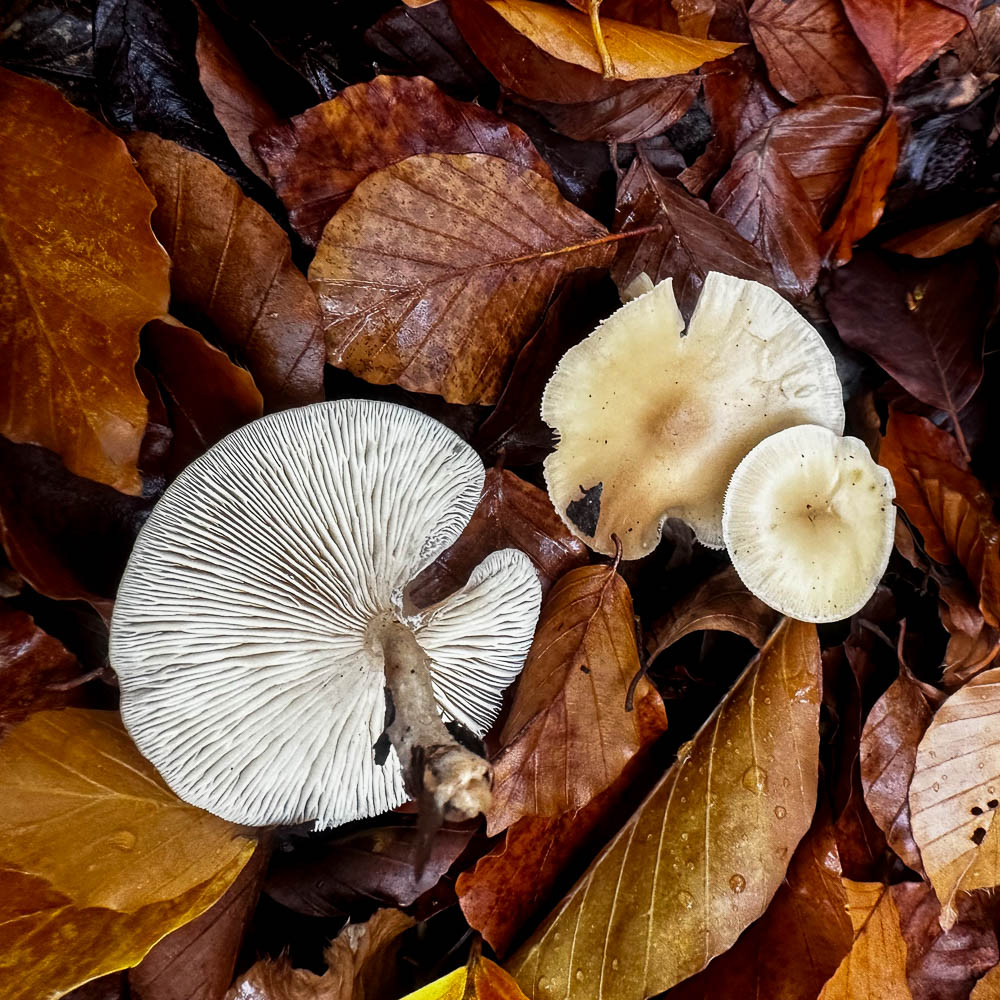
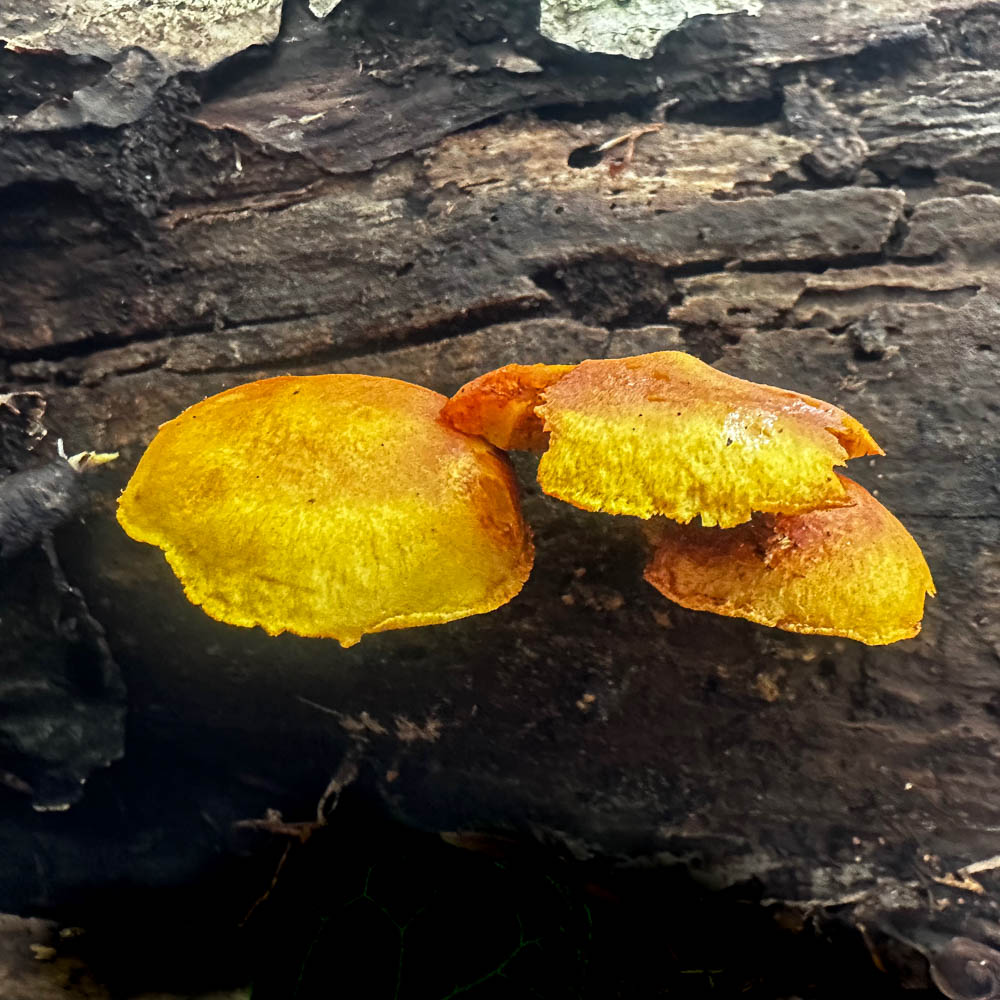
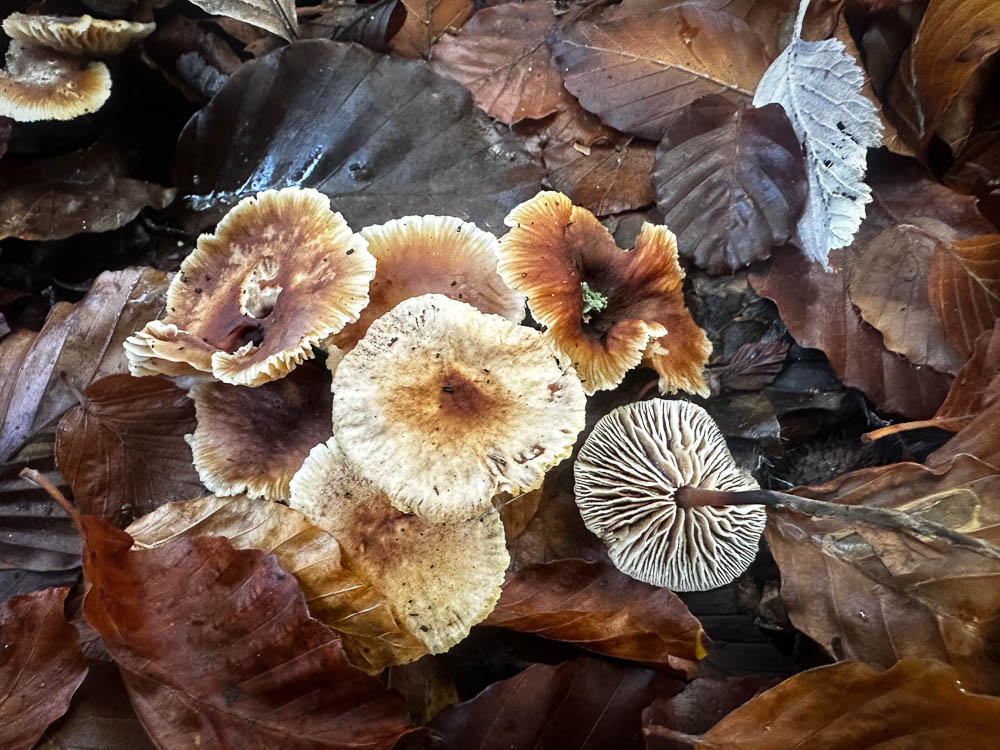
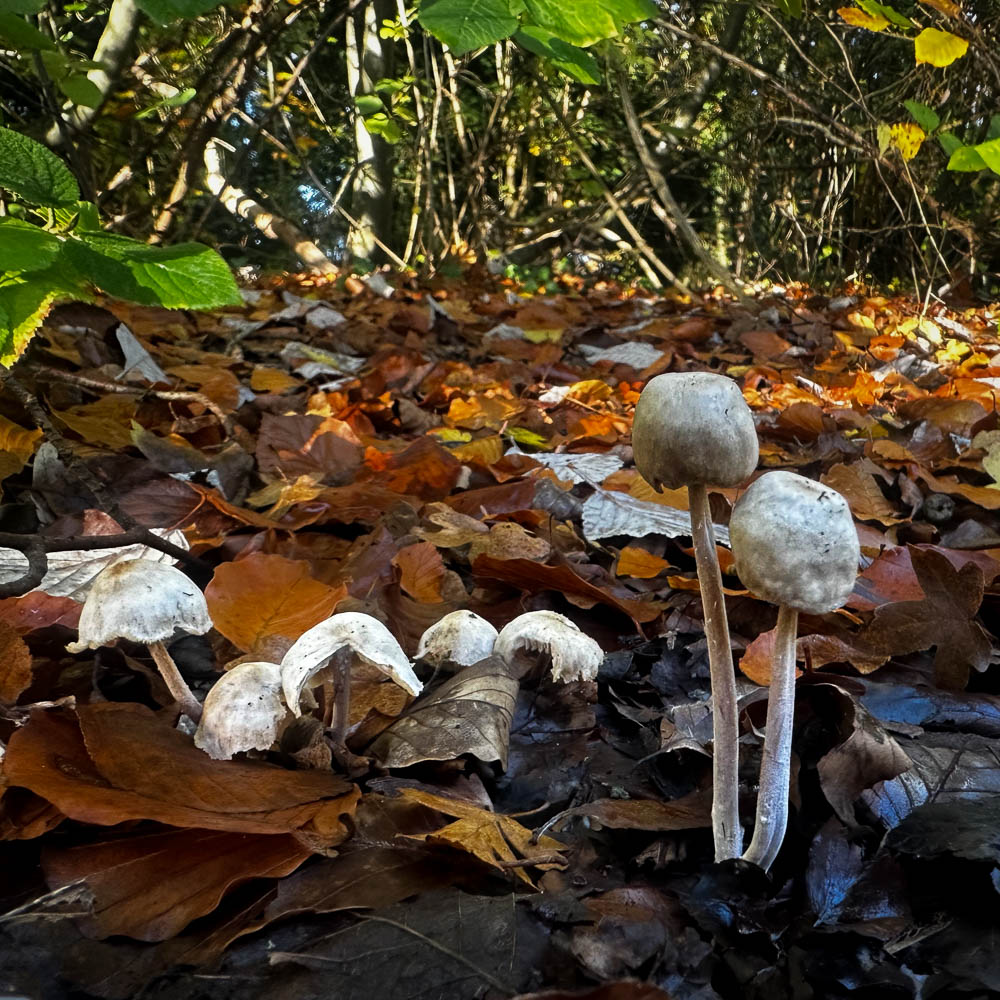
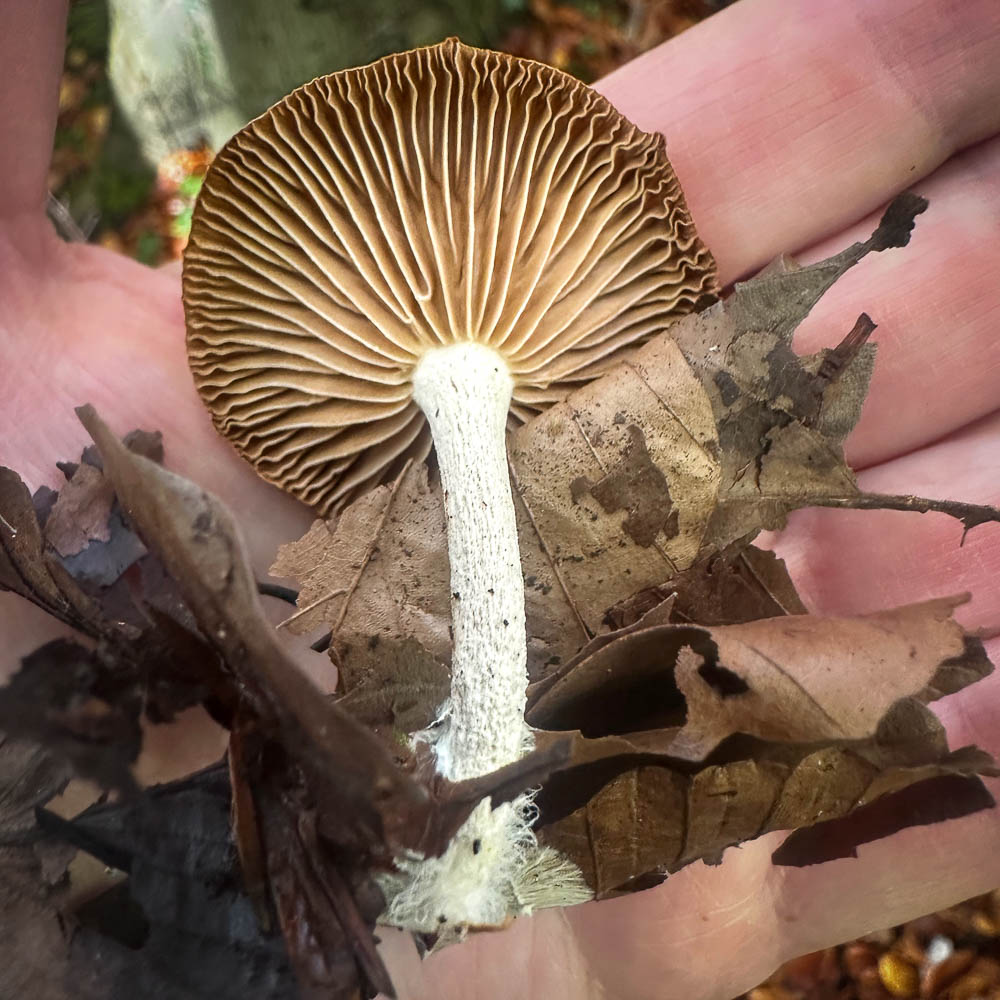
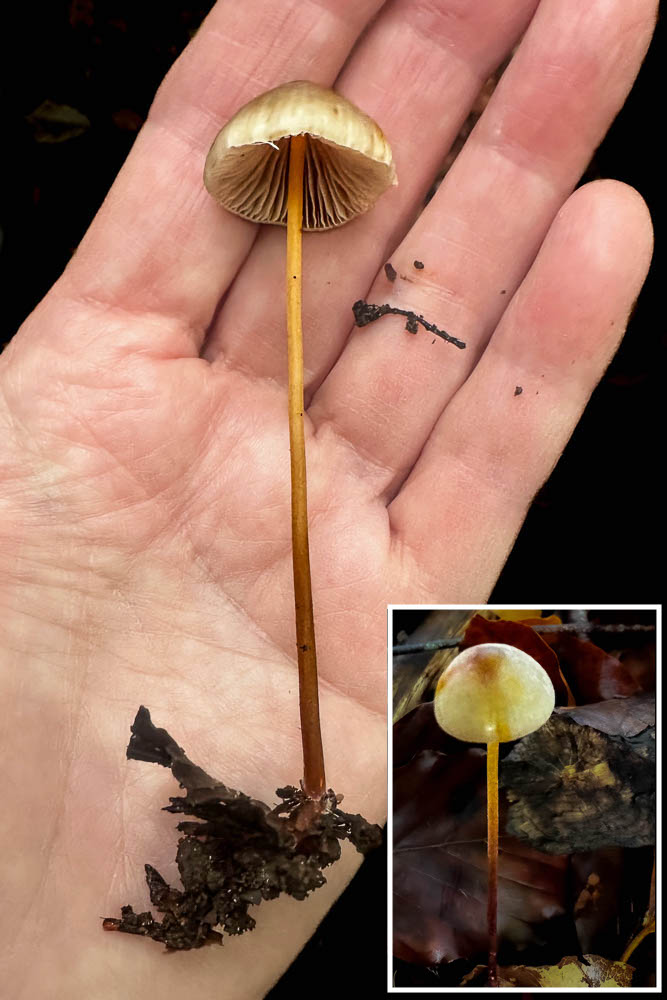
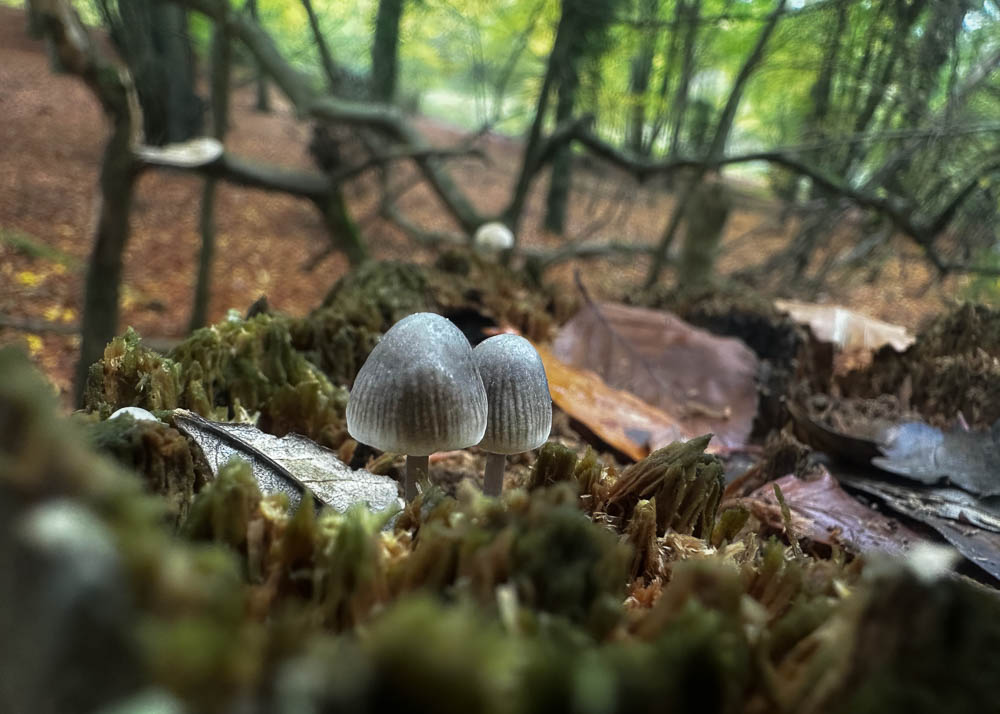
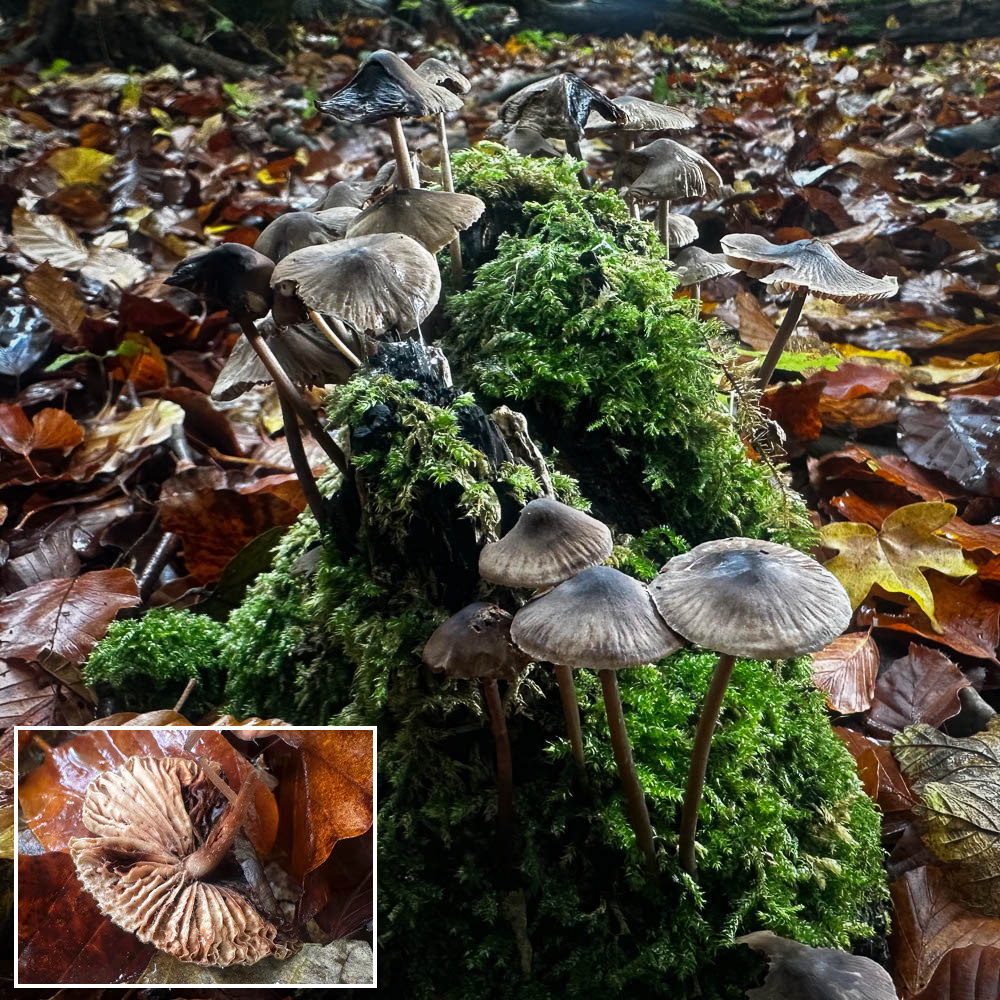
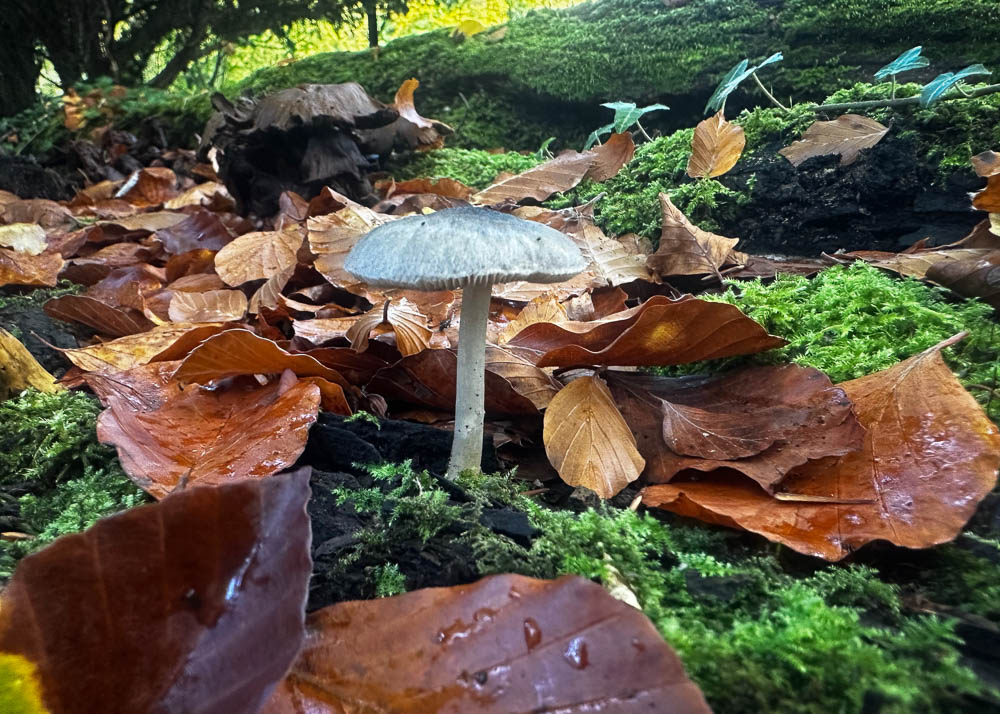
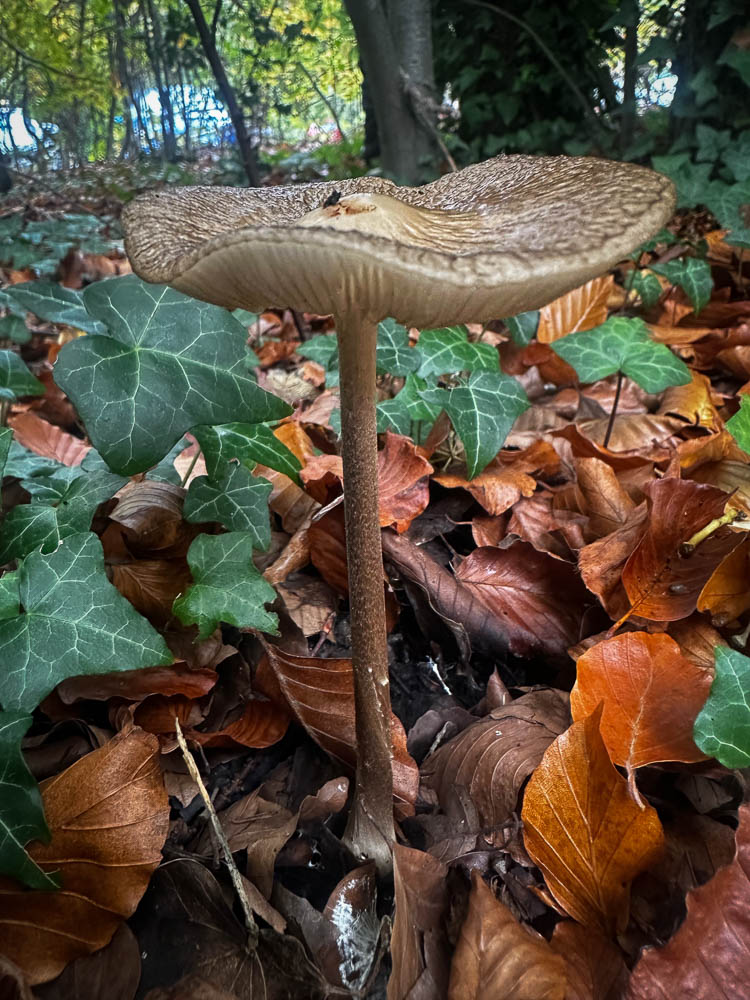
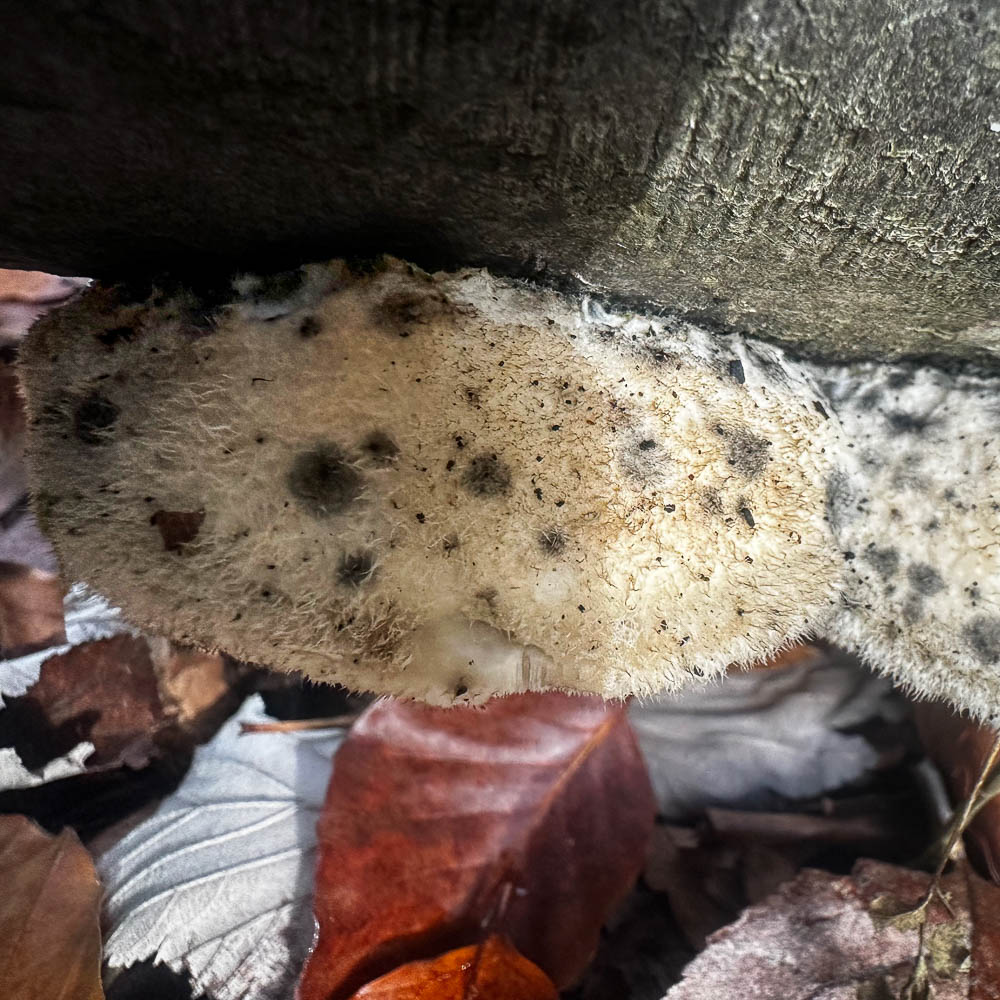
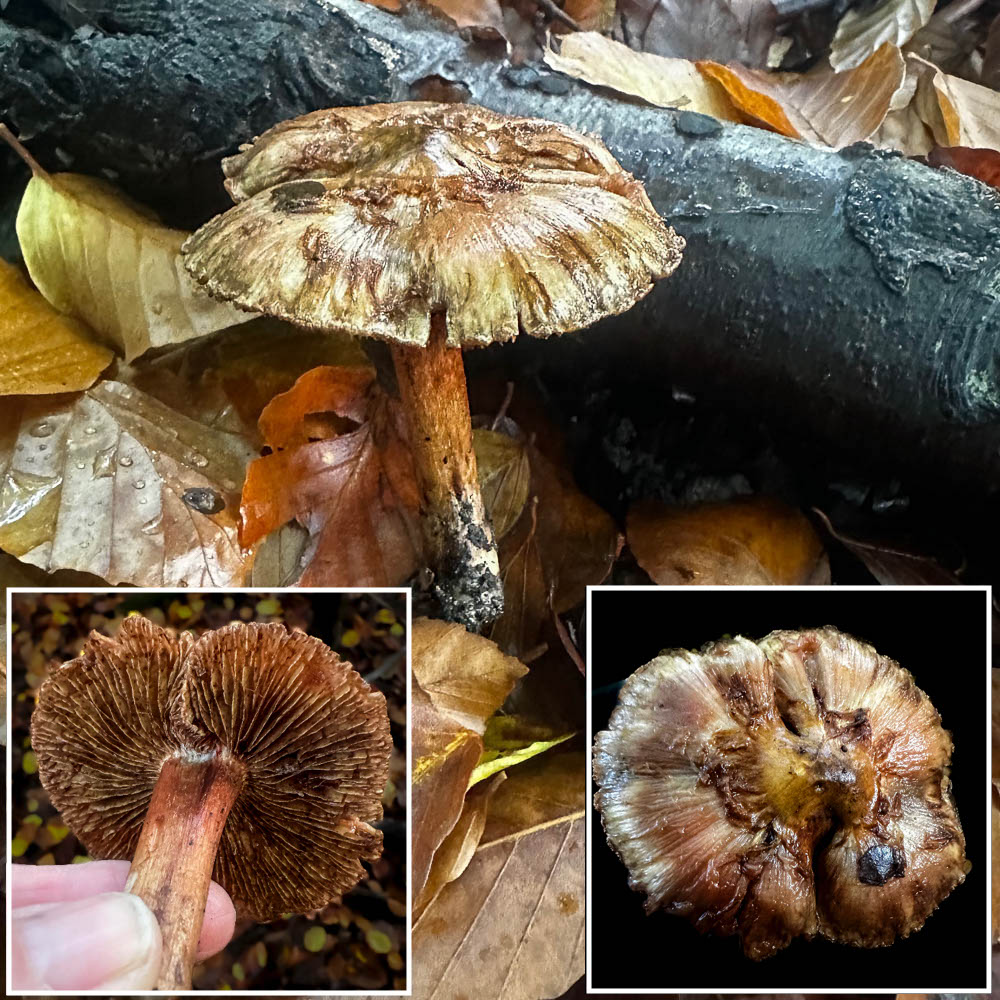
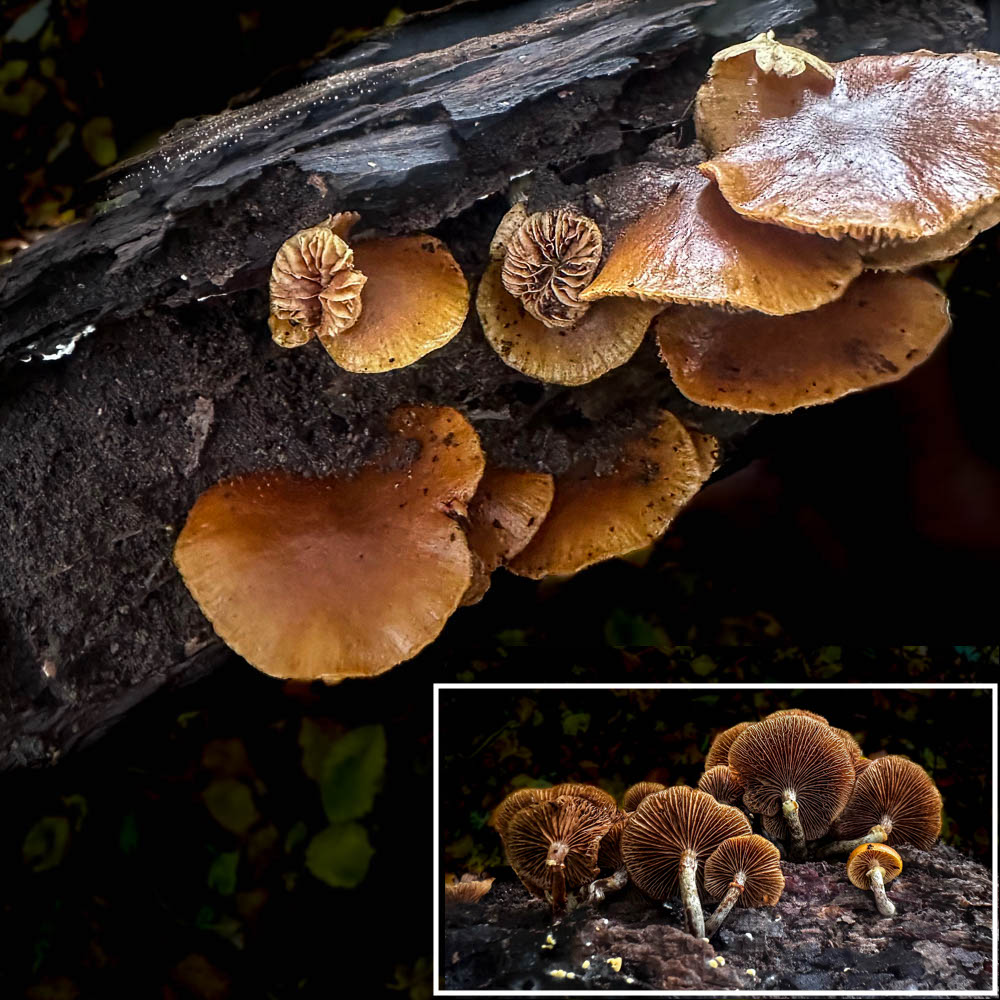
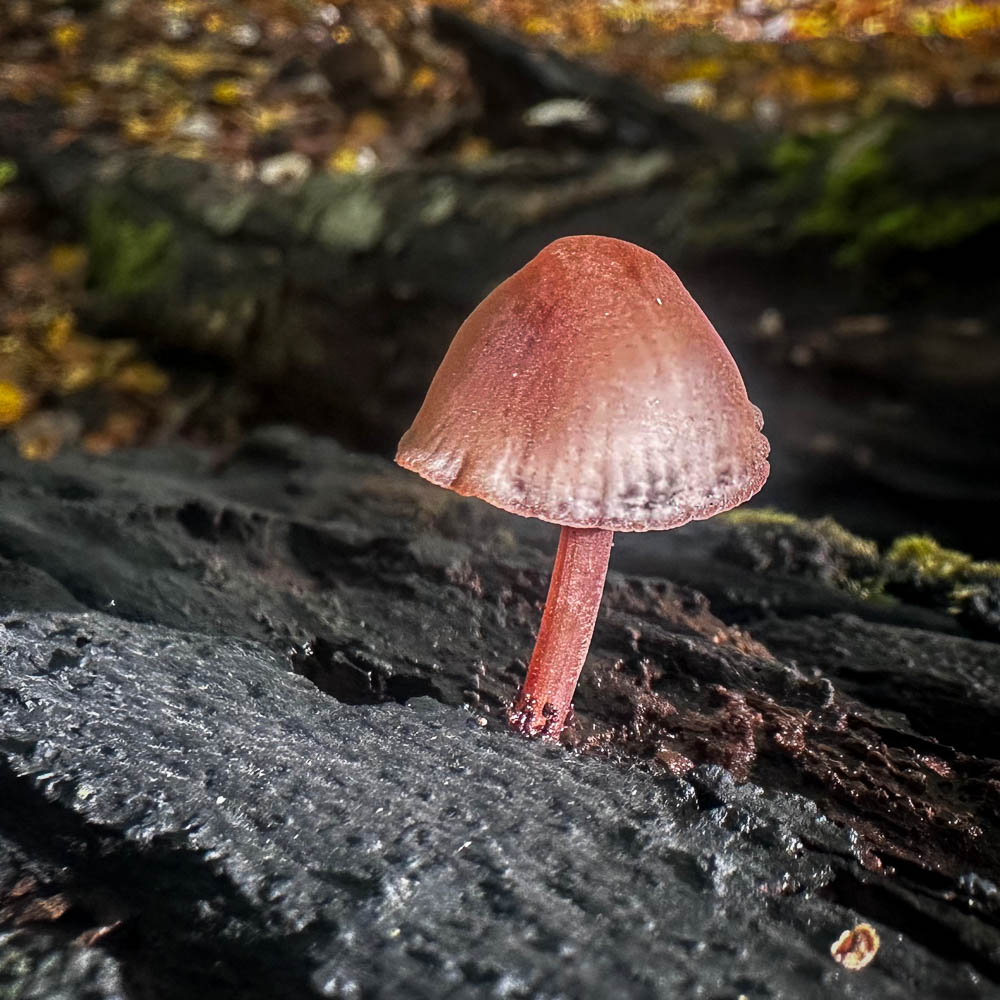
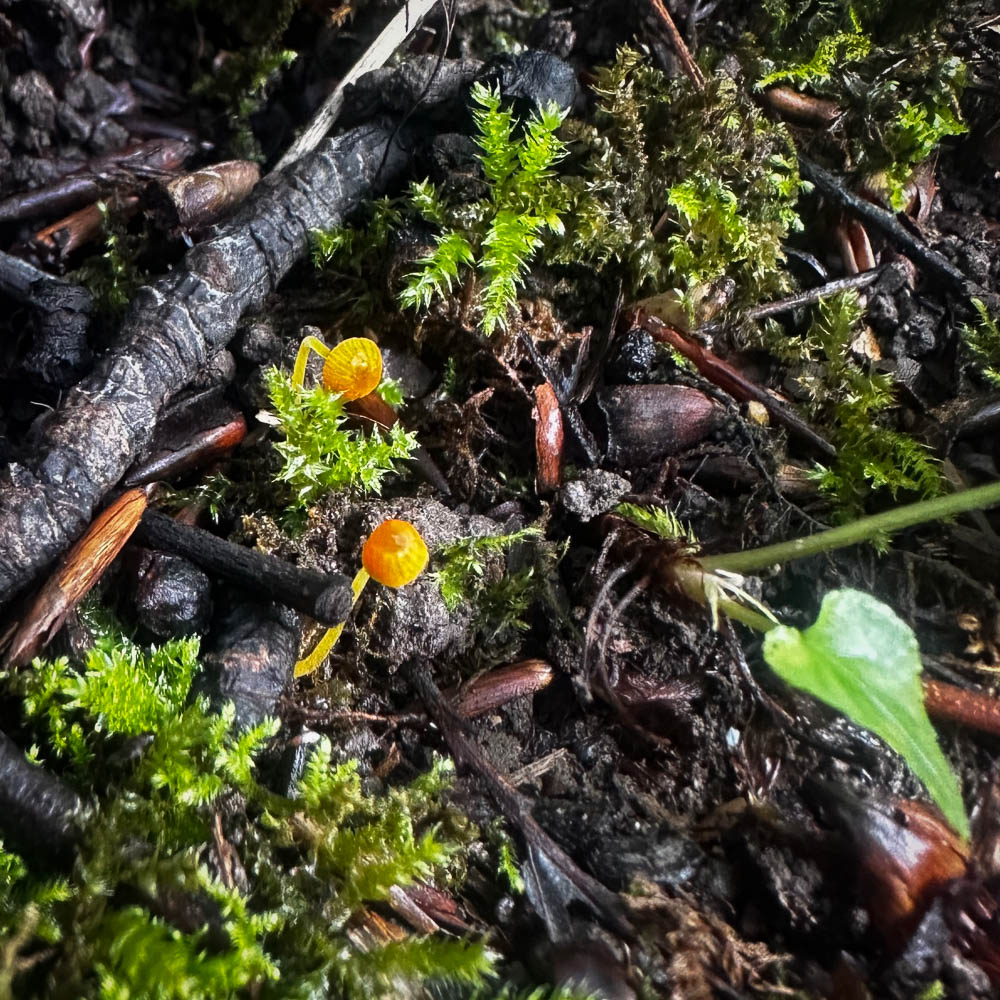
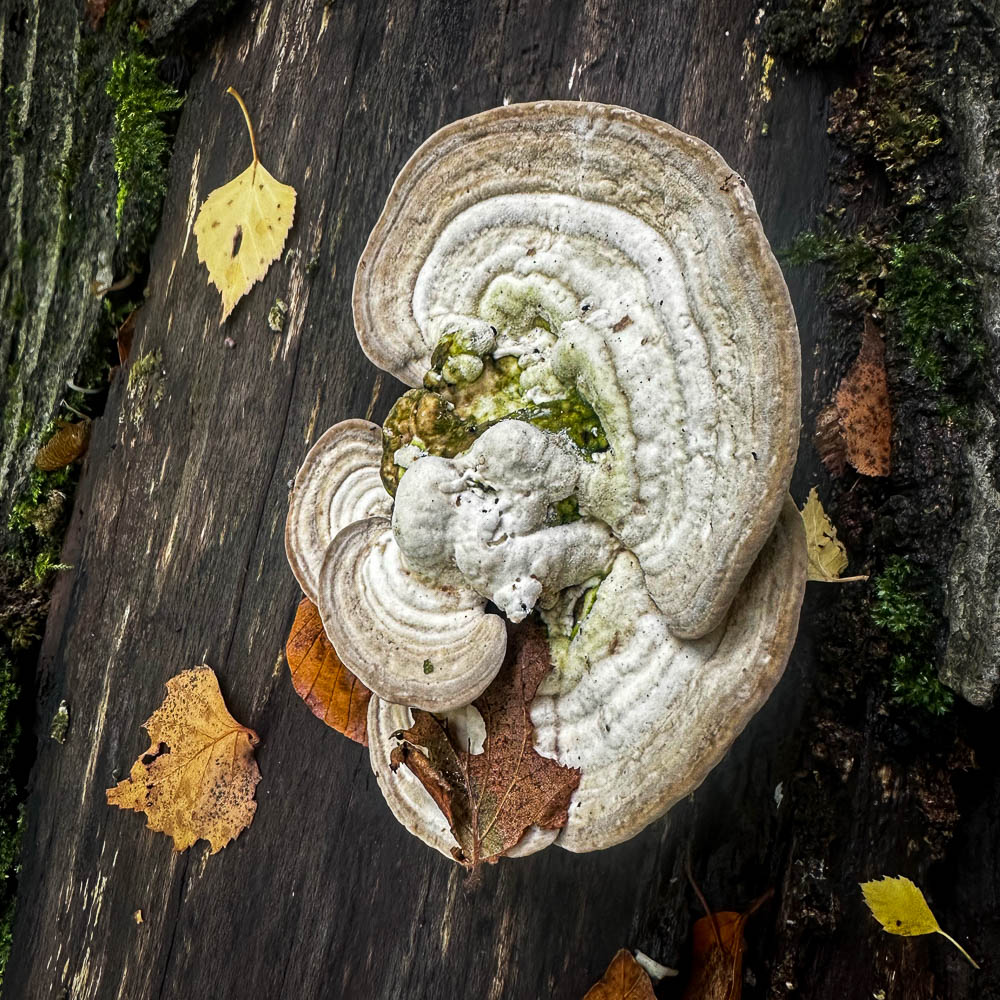
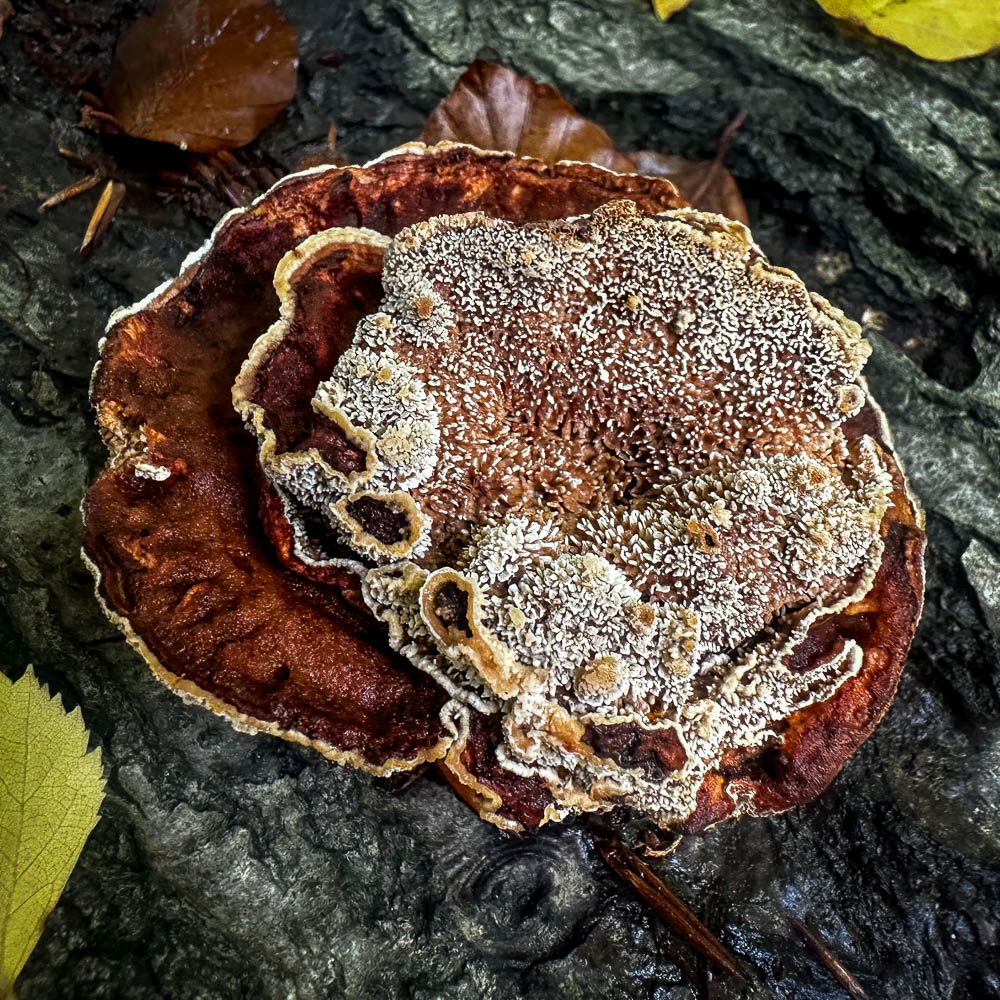
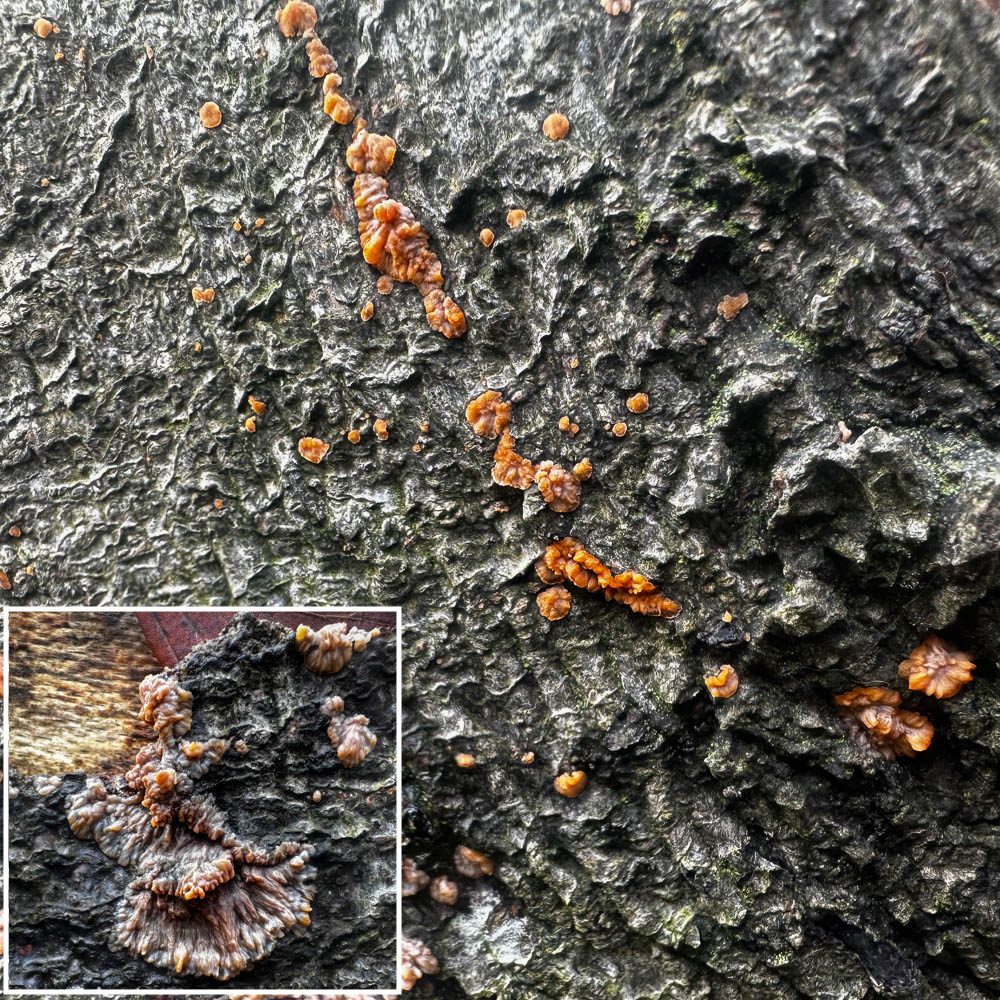
On Monday 24th October and I accompanied Sara to do a recce for the RSPB Guildford Group’s annual fungal foray due a few days later, on Thursday 27 October, 2022. Sara’s list of species below is from the actual walk but I have included a few photos of fungi we found on the recce that we couldn’t find again on the actual walk.
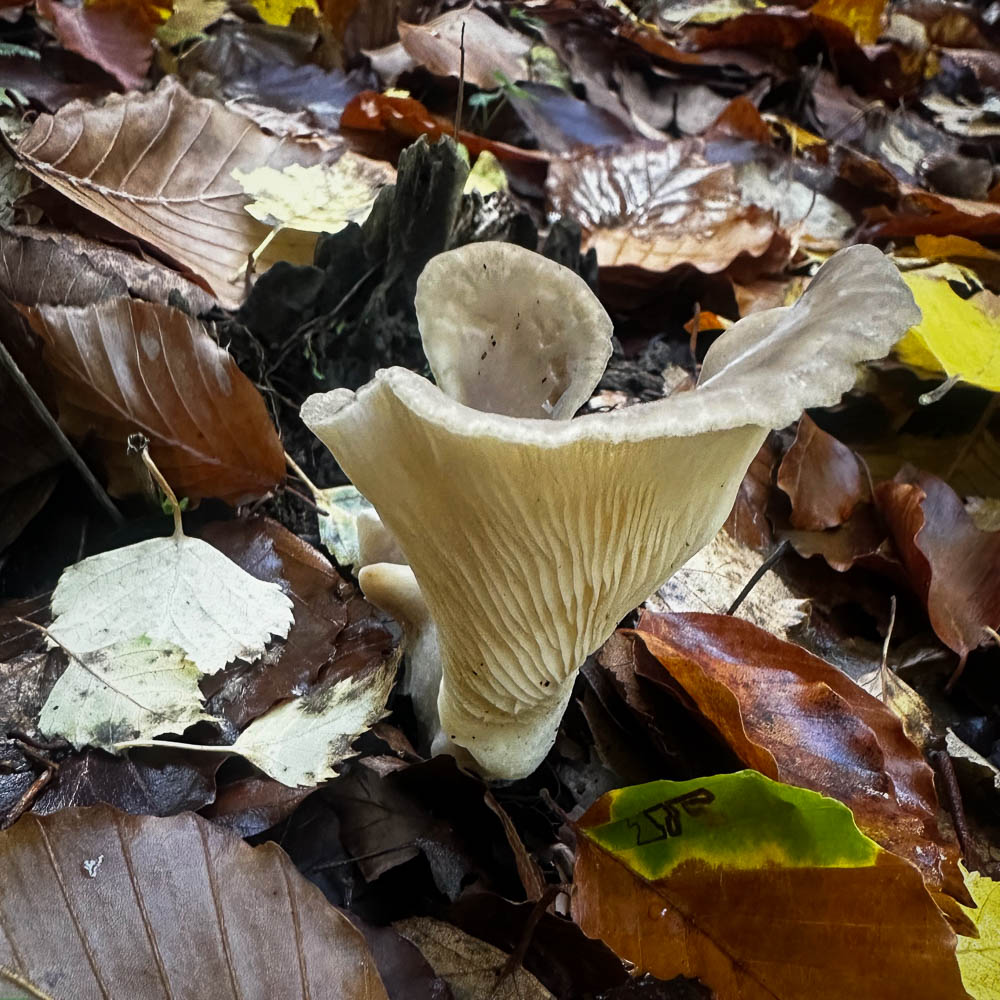
The weather was pretty good on both days and the autumn colours were lovely. Quite a few people turned up for the walk, some with all their professional-looking camera equipment, and some stunning photos were shared in our local RSPB chat group. We saw both white and black saddle and lots of lovely Ivory Woodwax. A new one for me was the lovely Hohenbuehelia petaloides (given the English name Shoehorn Oyster on iNaturalist).
Sara’s list of 48 species below, is from the walk on the 27th of October.
This is a list of the fungi seen on the 27 October
Gymnopus confluens, Clustered Toughshank
Amanita muscaria, Fly Agaric
Lactarius blennius, Beech Milkcap
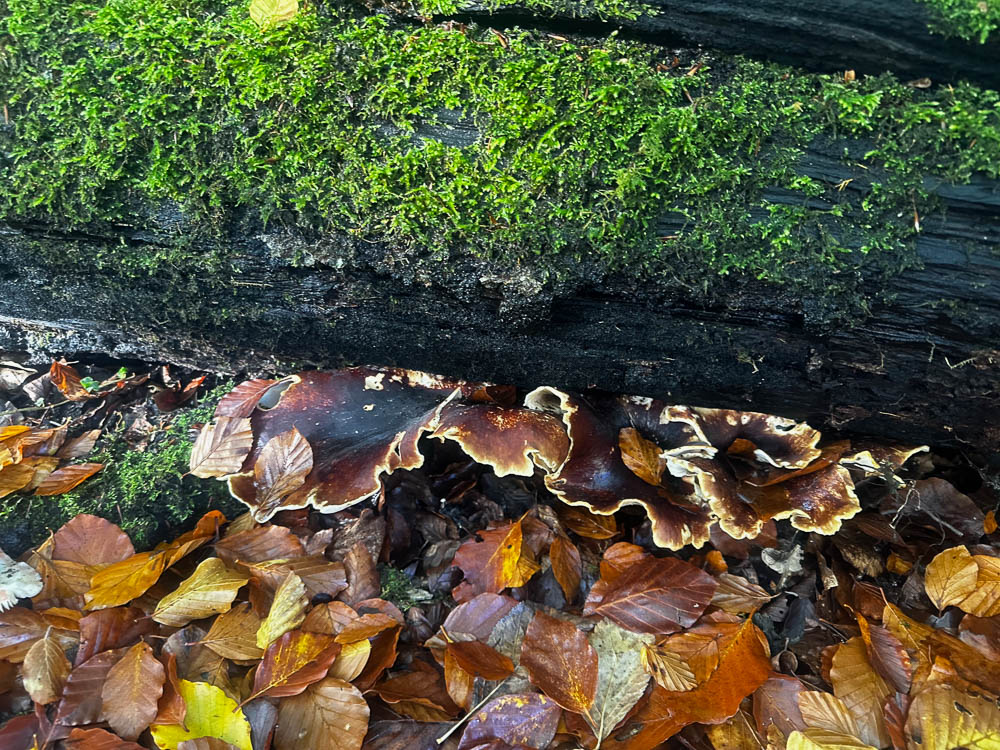
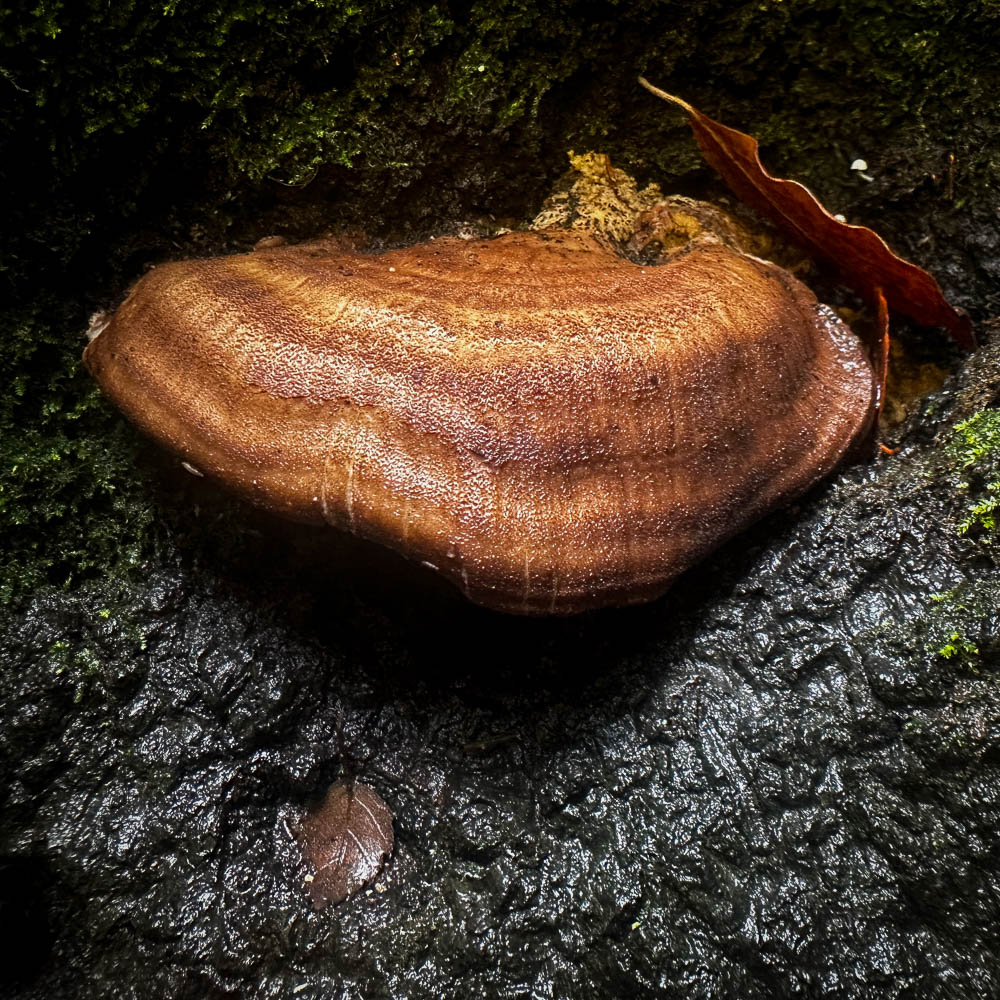
Polyporus durus, Bay Polypore
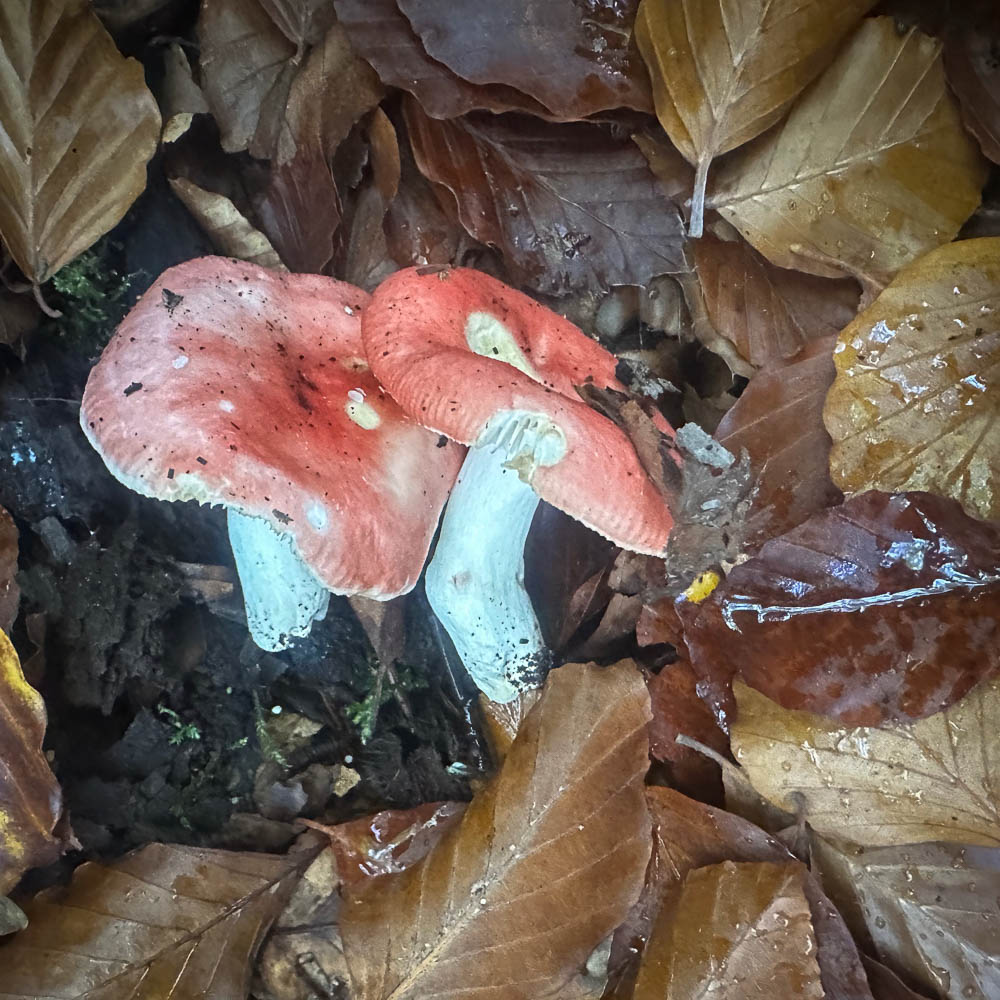
Russula silvestris, One of many red/pink Russulas. The chemical reactions and spore prints, etc fit silvestris
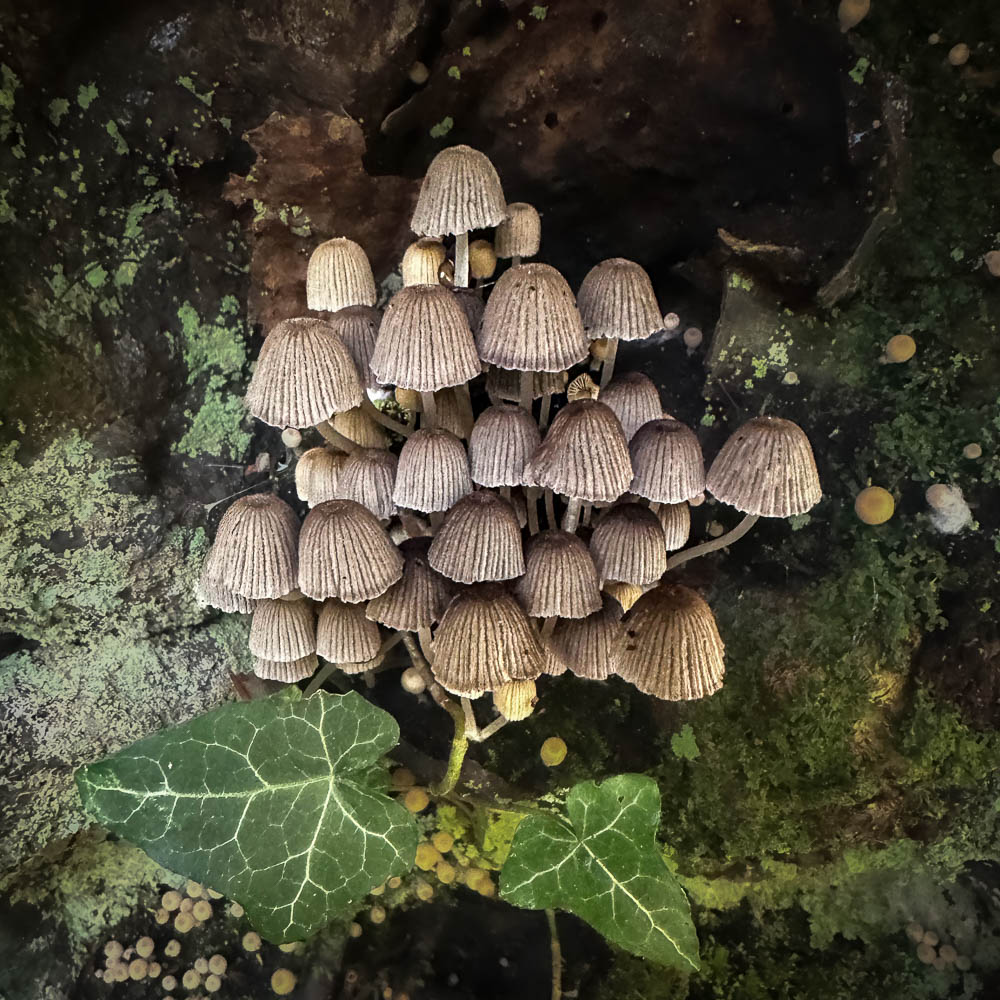
Coprinellus disseminatus, Fairy Inkcap/Trooping Crumble Cap
Xerula radicata, Rooting Shank
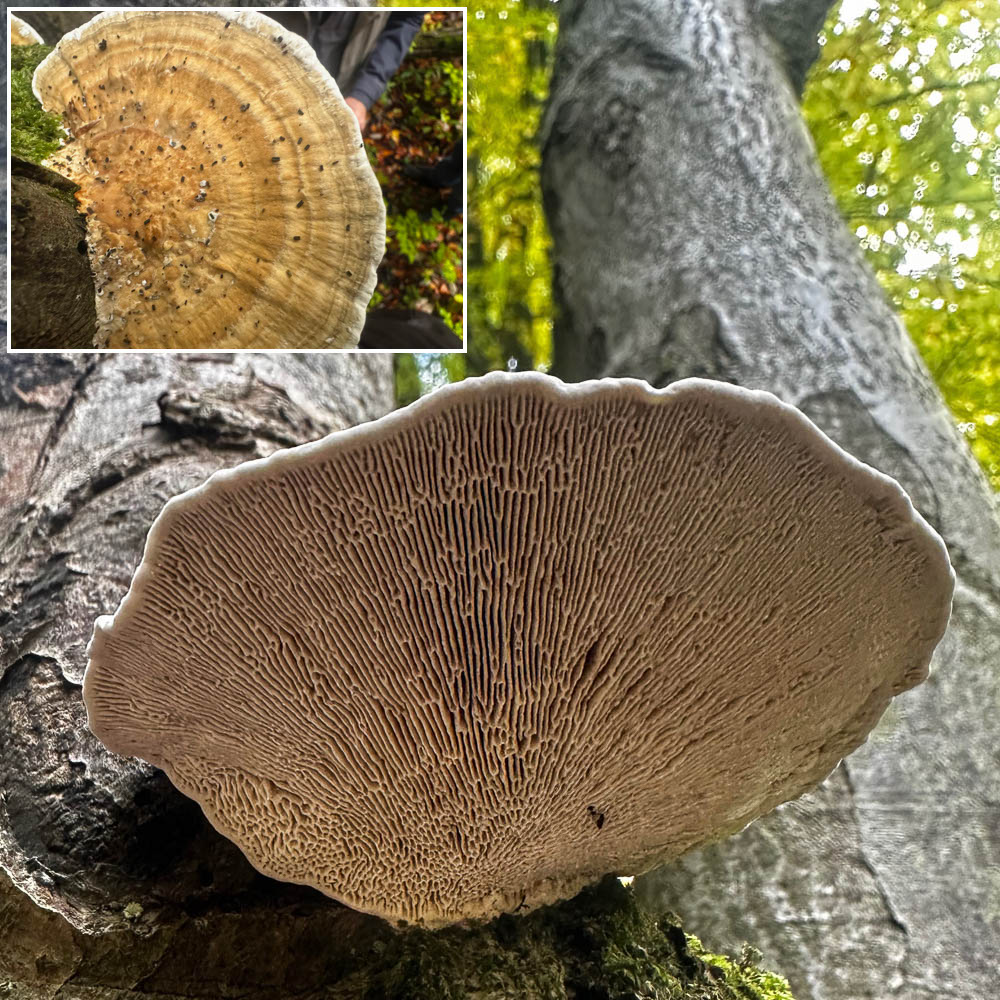
Lenzites betulina, Birch Mazegill (despite its name, this species does grow on trees other than Birch)
Stereum subtomentosum, Yellowing Curtain Crust
Crepidotus variabilis, Variable Oysterling
Marasmius epiphyllus, Leaf parachute
Hebeloma sp., One of the Poison Pies
Bisporella citrina, Lemon Disco
Clitocybe phaeophthalma, Chickenrun Funnel
Stereum hirsutum, Hairy Curtain Crust
Tubaria furfuracea, Scurfy Twiglet
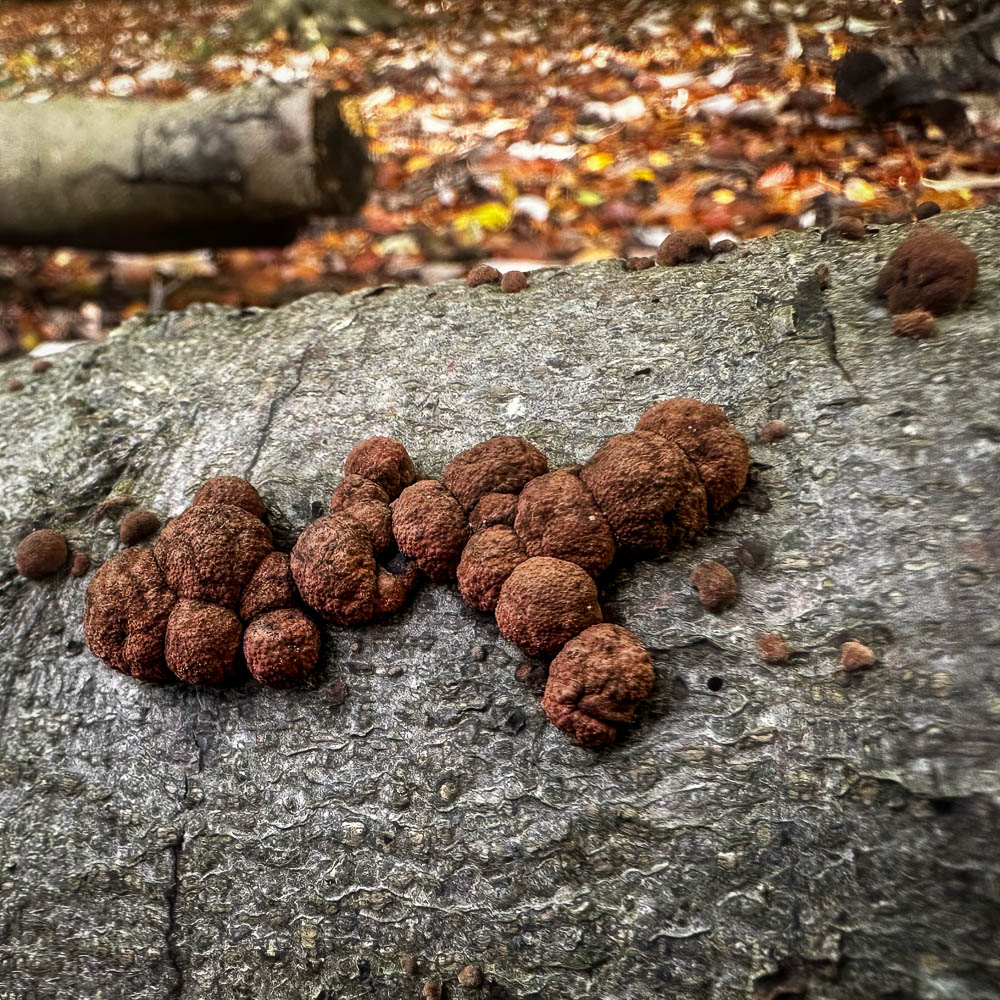
Hypoxylon fragiforme, Beech Woodwart
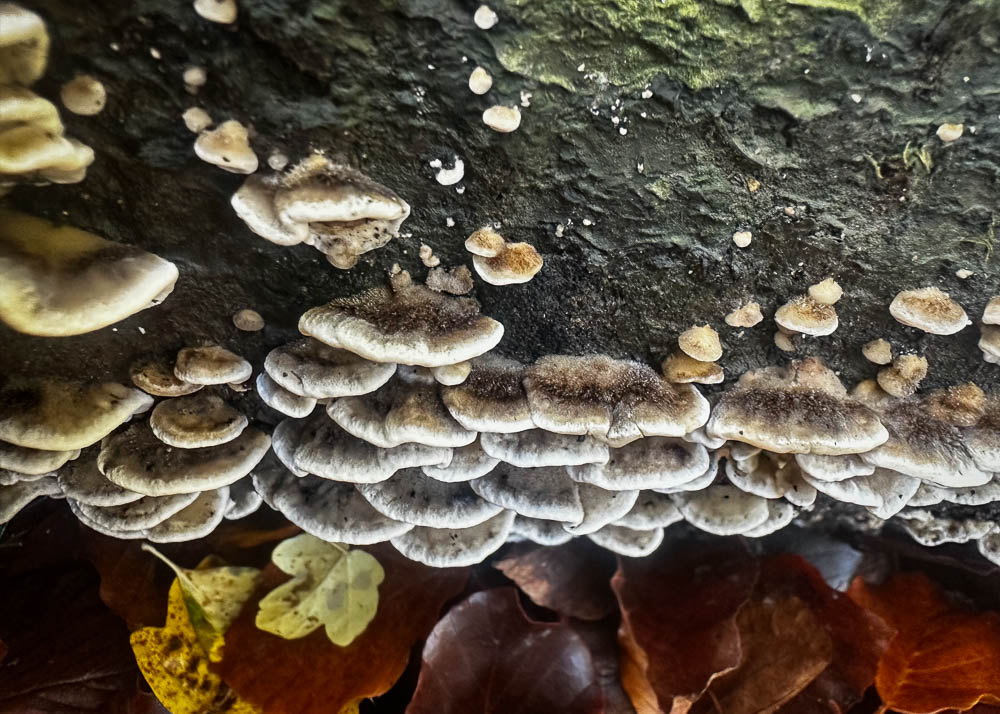
Postia tephroleuca, Greyling Bracket
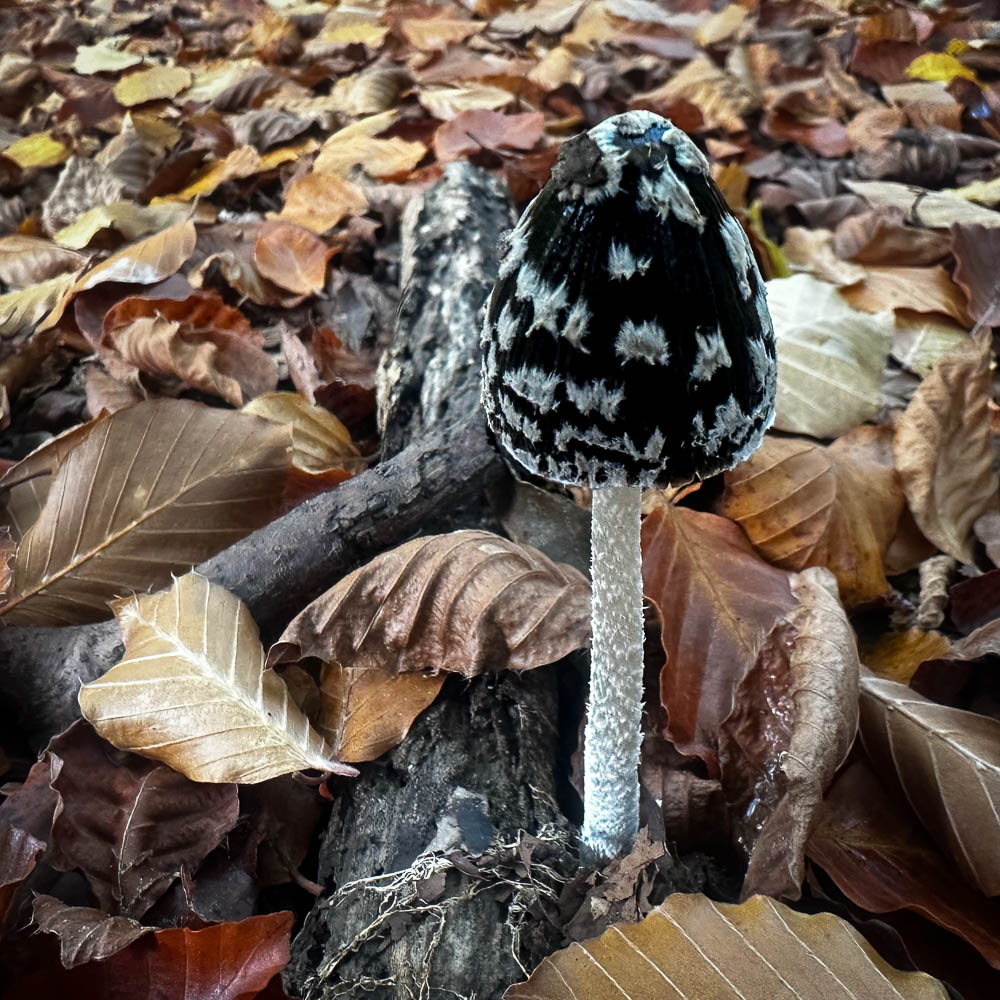
Coprinopsis picaceus, Magpie Fungus
Hygrophorus eburneus, Ivory Woodwax
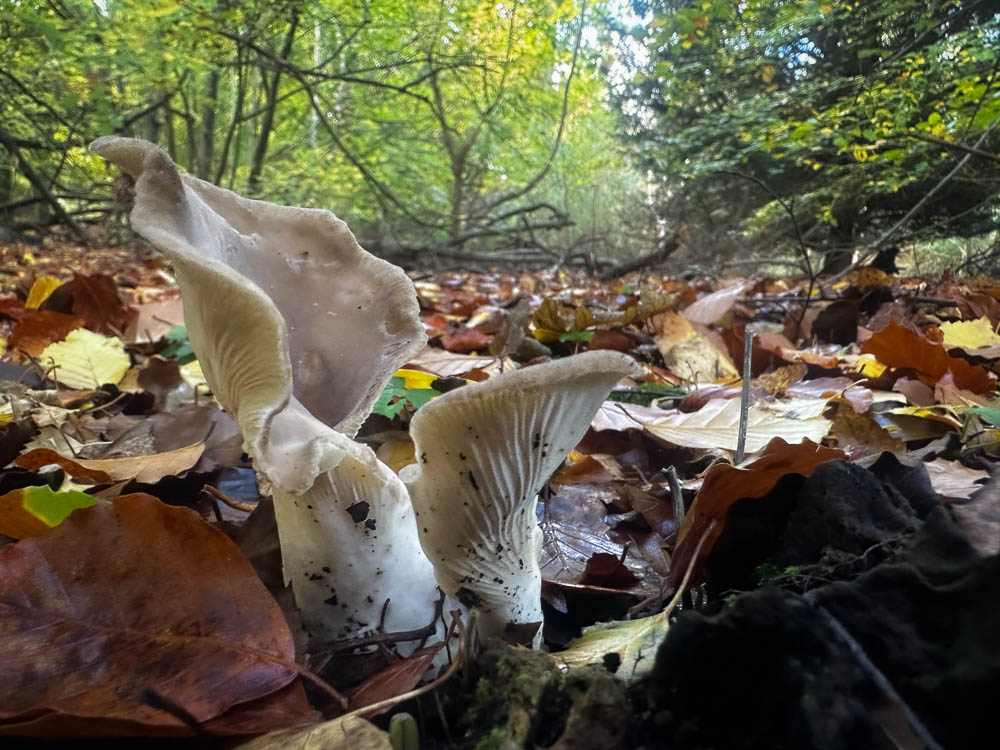
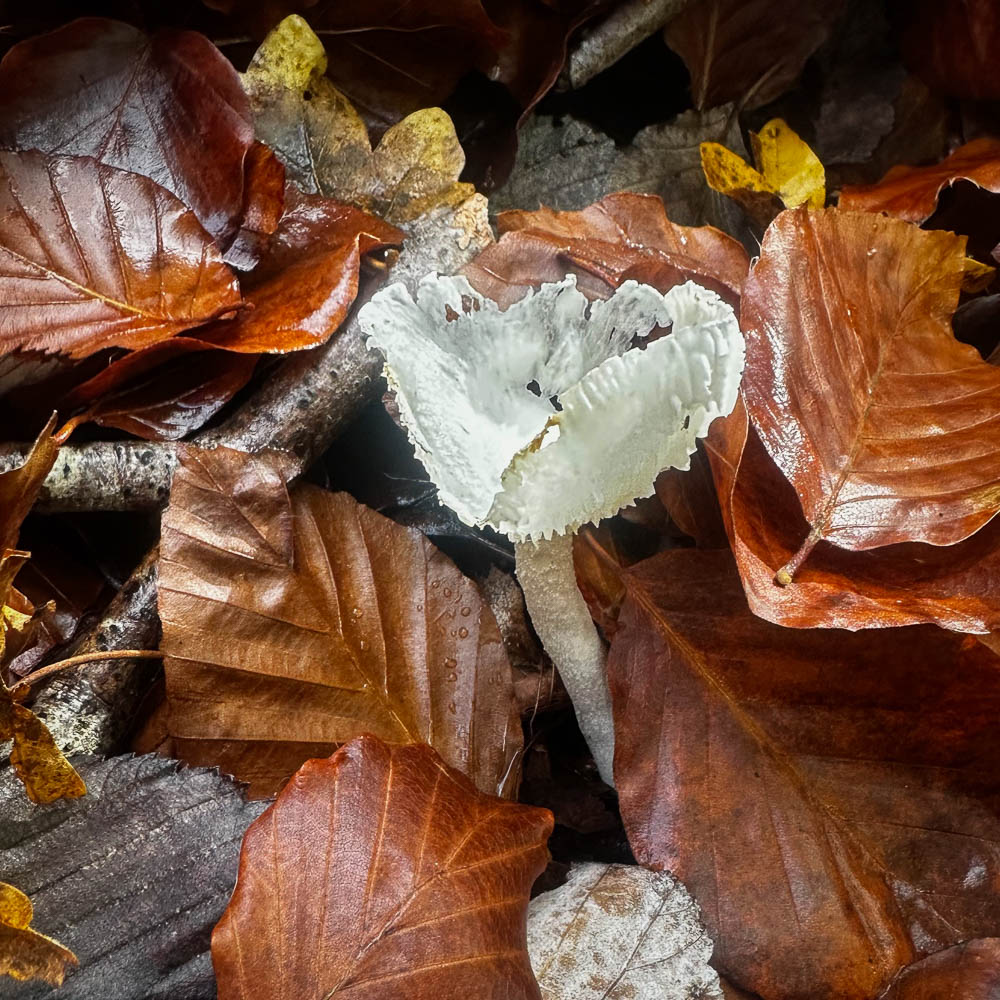
Helvella lacunosa, Black Saddle
Mycena leptocephala, Nitrous bonnet
Mycena maculata, Reddish-spotted Mycena
Armillaria mellea, Honey Fungus
Helvella crispa, White Saddle
Hypoxylon multiforme, Birch Woodwart
Daedaleopsis confragosa, Blushing Bracket
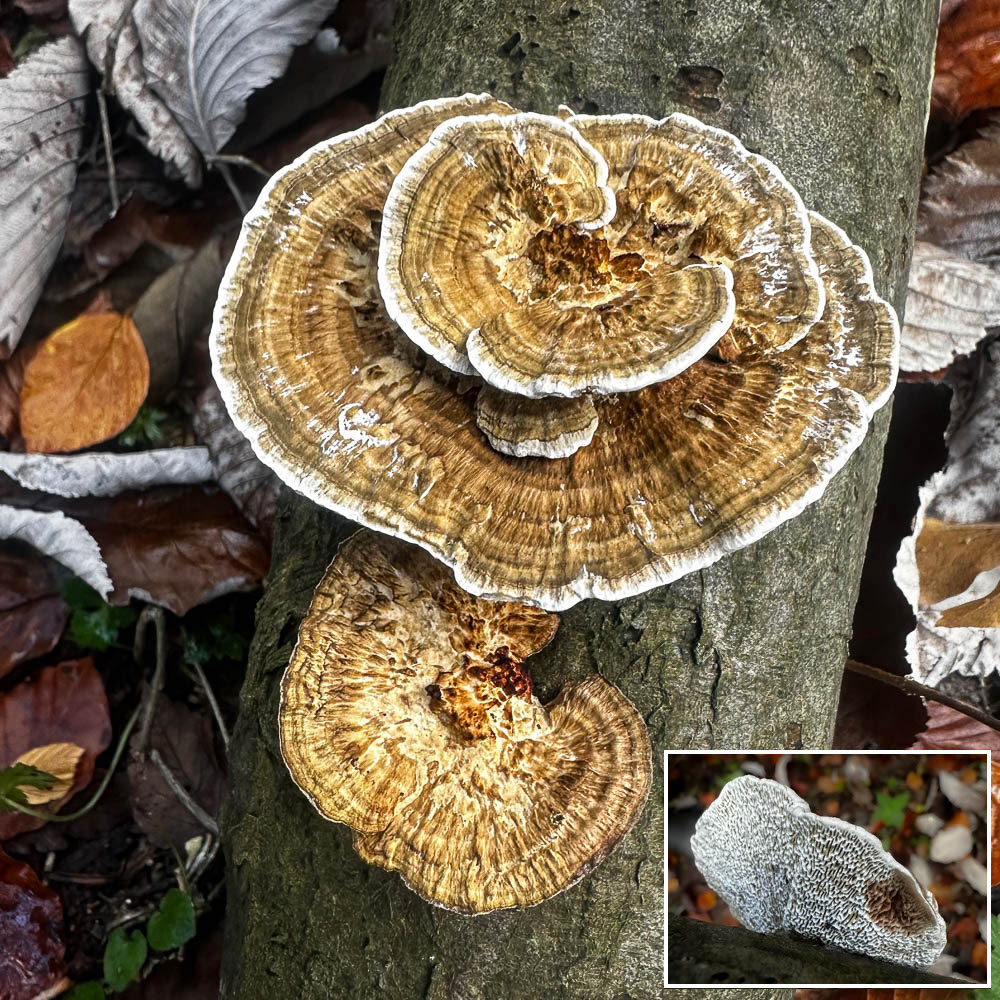
Trametes versicolor, Turkey Tail
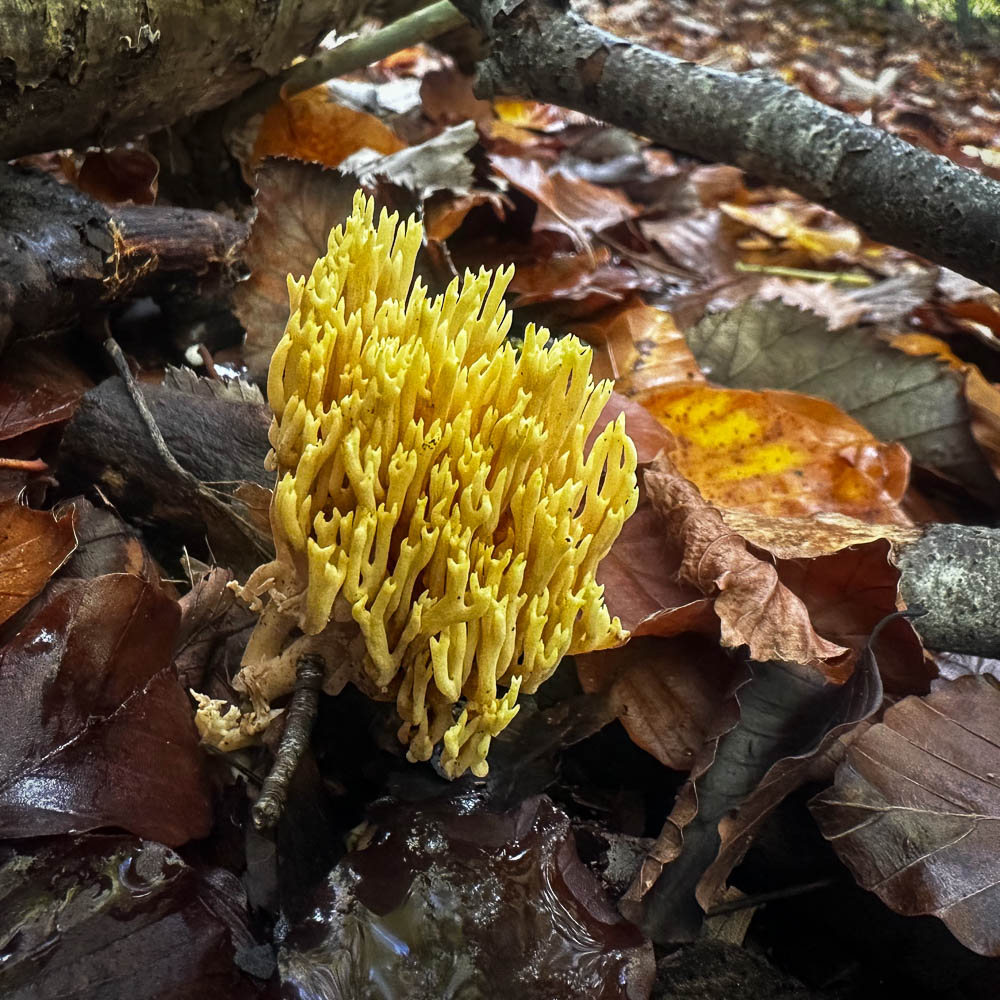
Ramaria stricta, Upright Coral
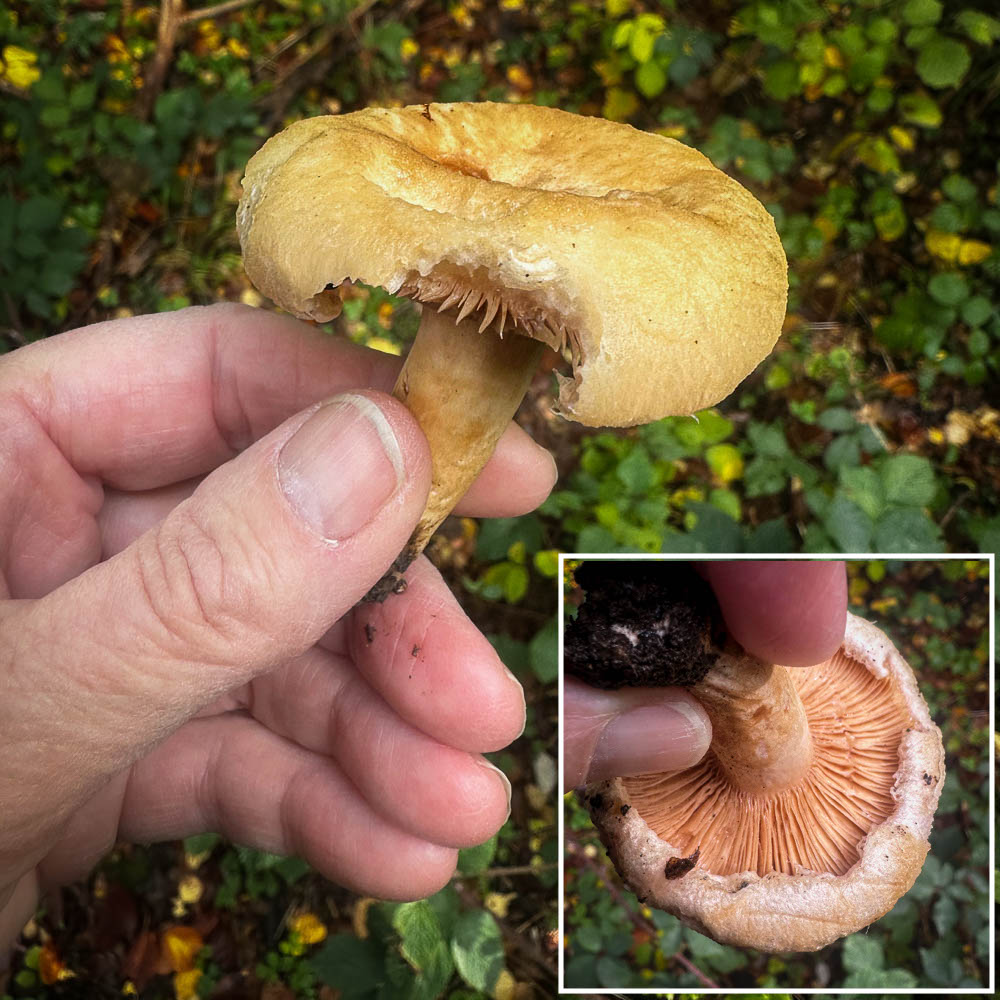
Lactarius pubescens, Bearded Milkcap
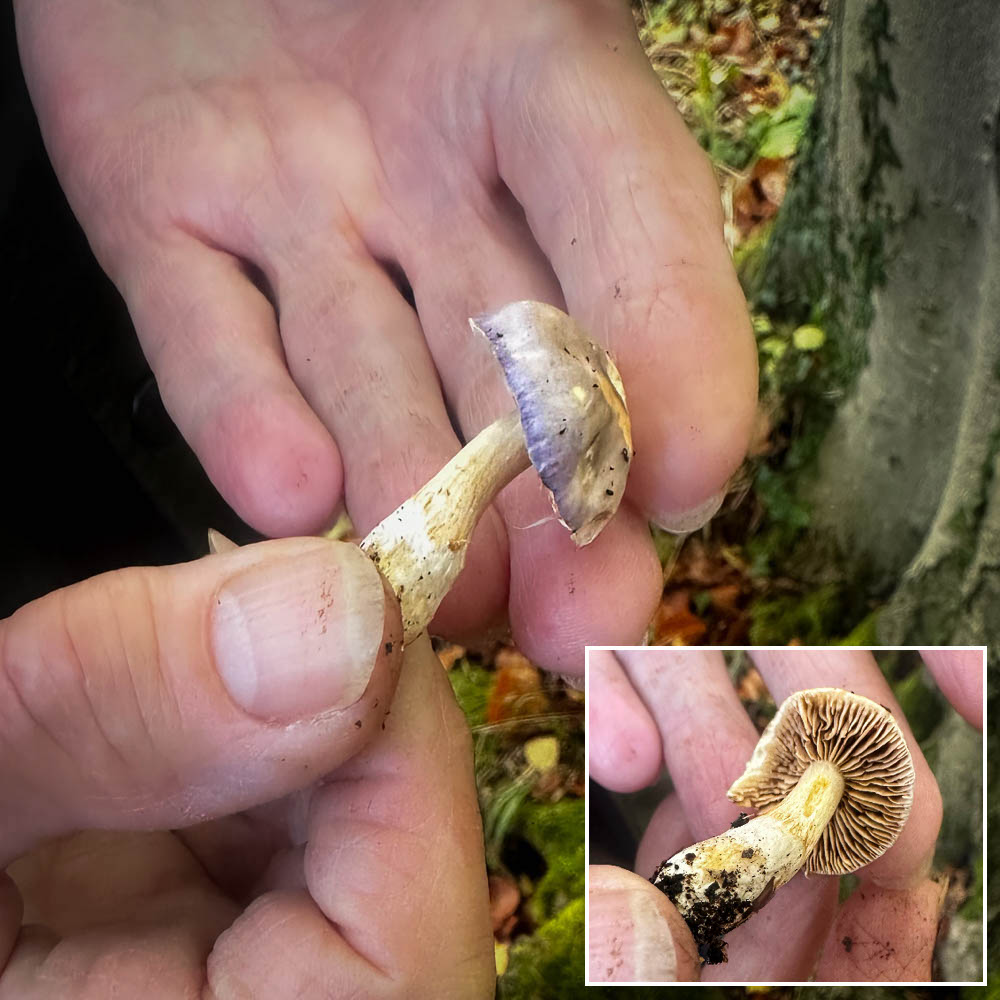
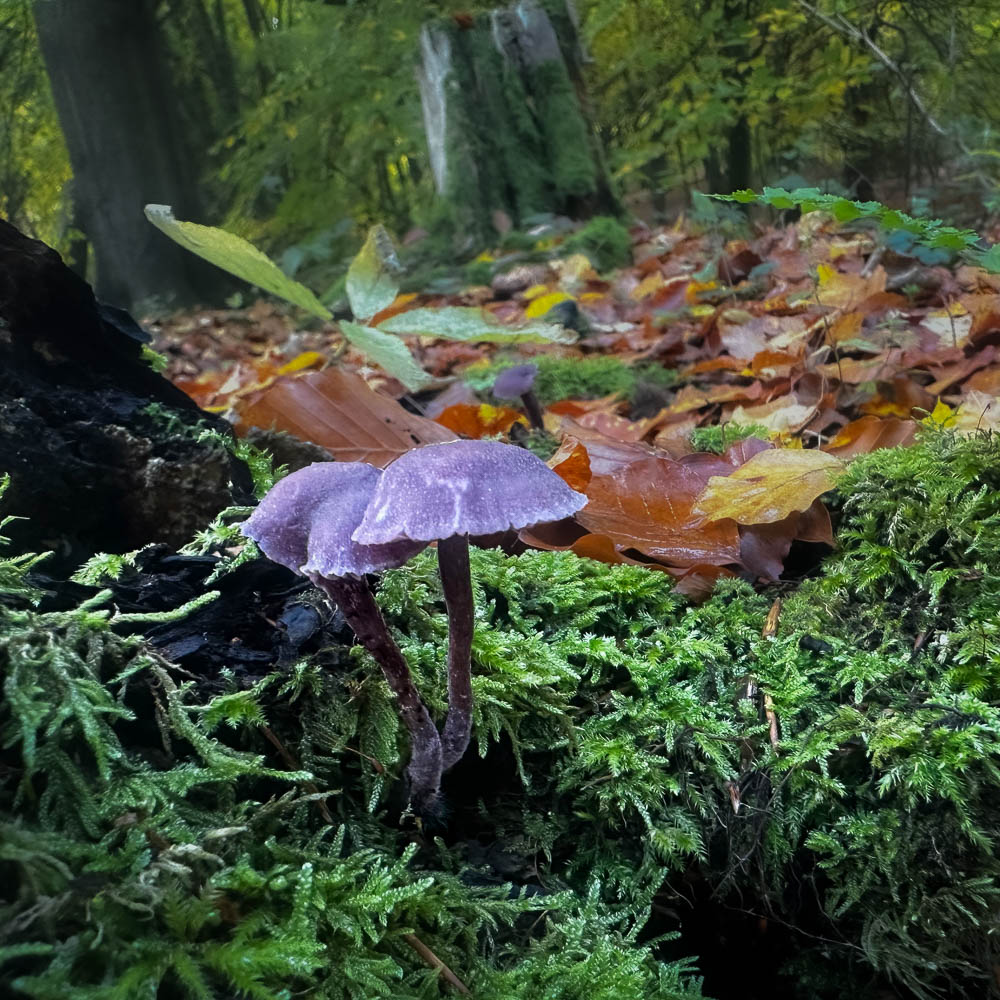
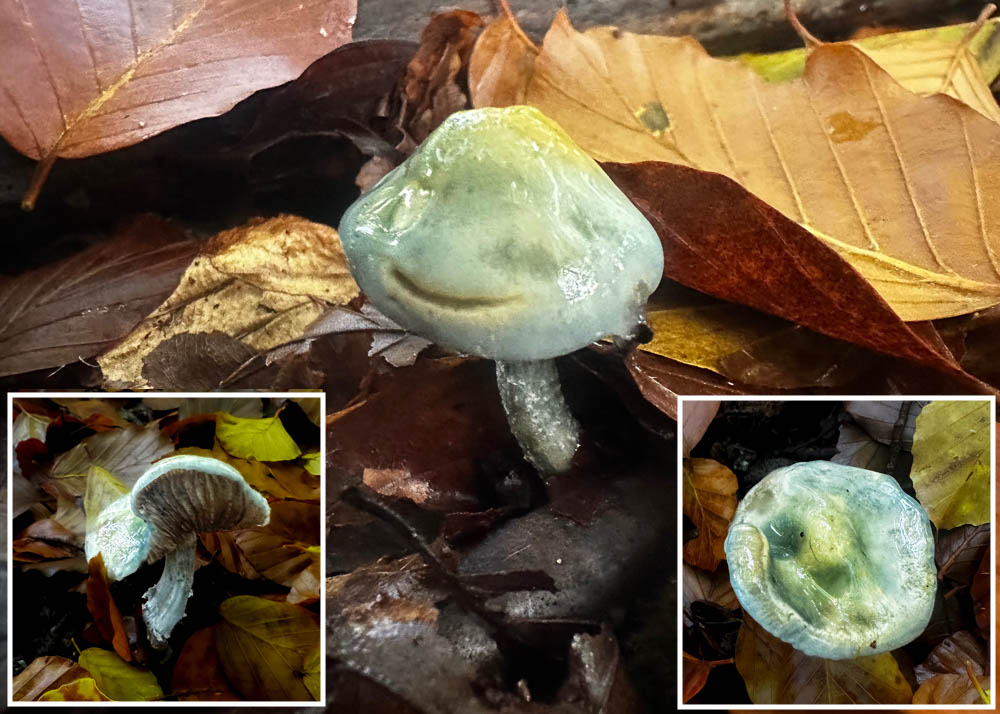
Cortinarius salor — tiny purple and ochre webcap growing close to a Beech
Russula sororia, Sepia Brittlegill
Gymnopilus penetrans, Common Rustgill
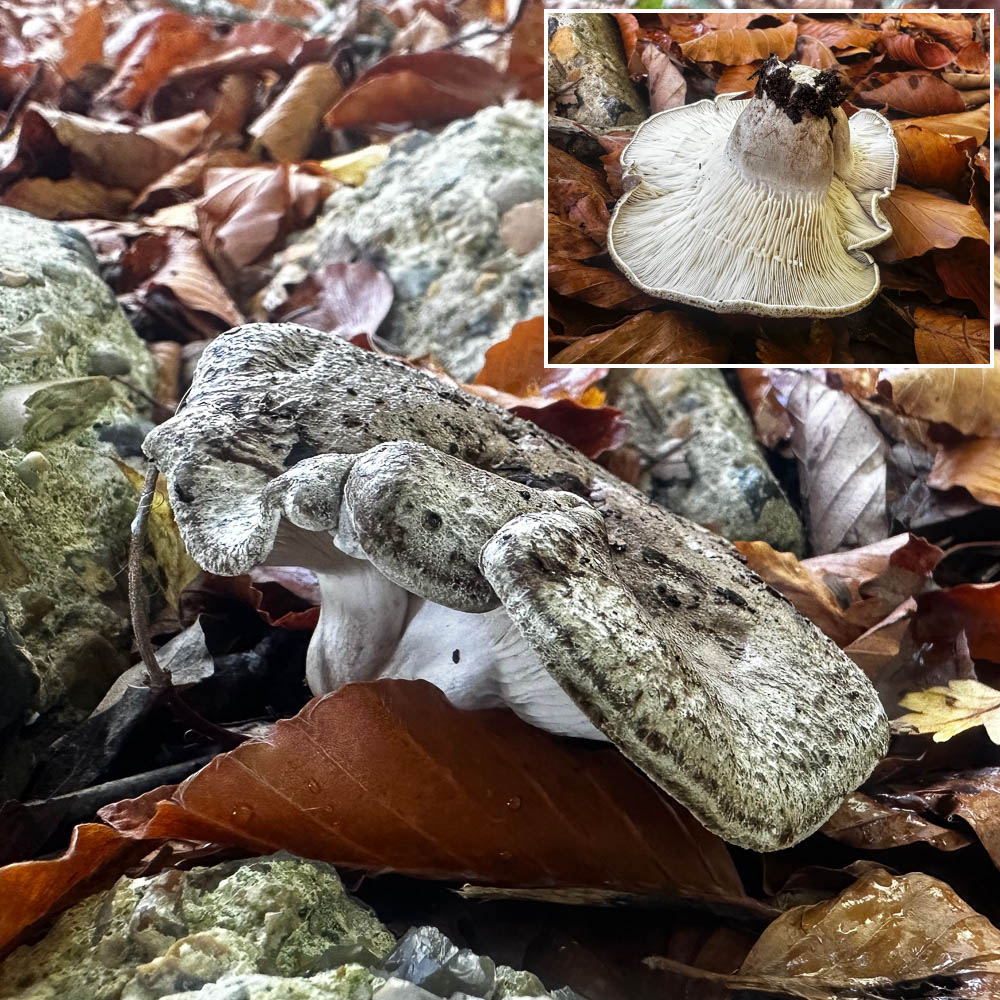
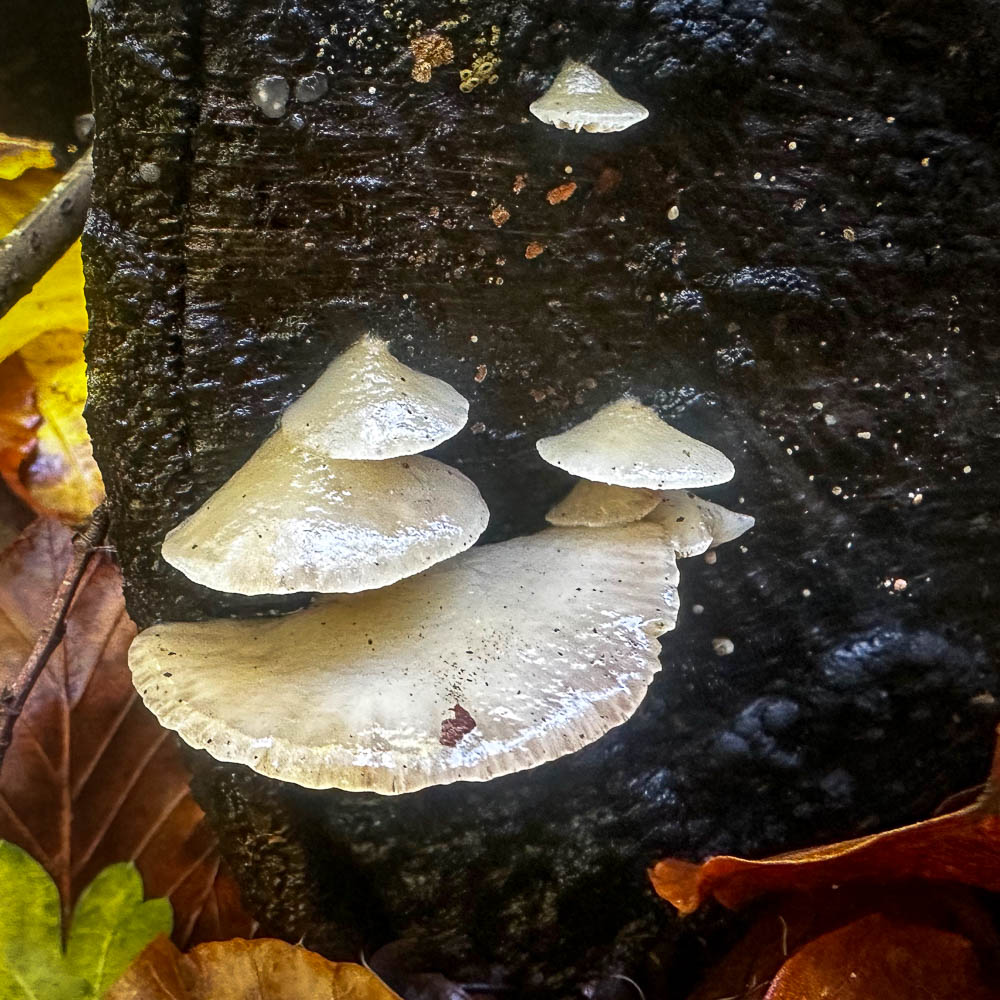
Hohenbuehelia petaloides, Shoehorn Oyster
Pholiota tuberculosa
Cortinarius elegantissimus, (a rather old specimen)
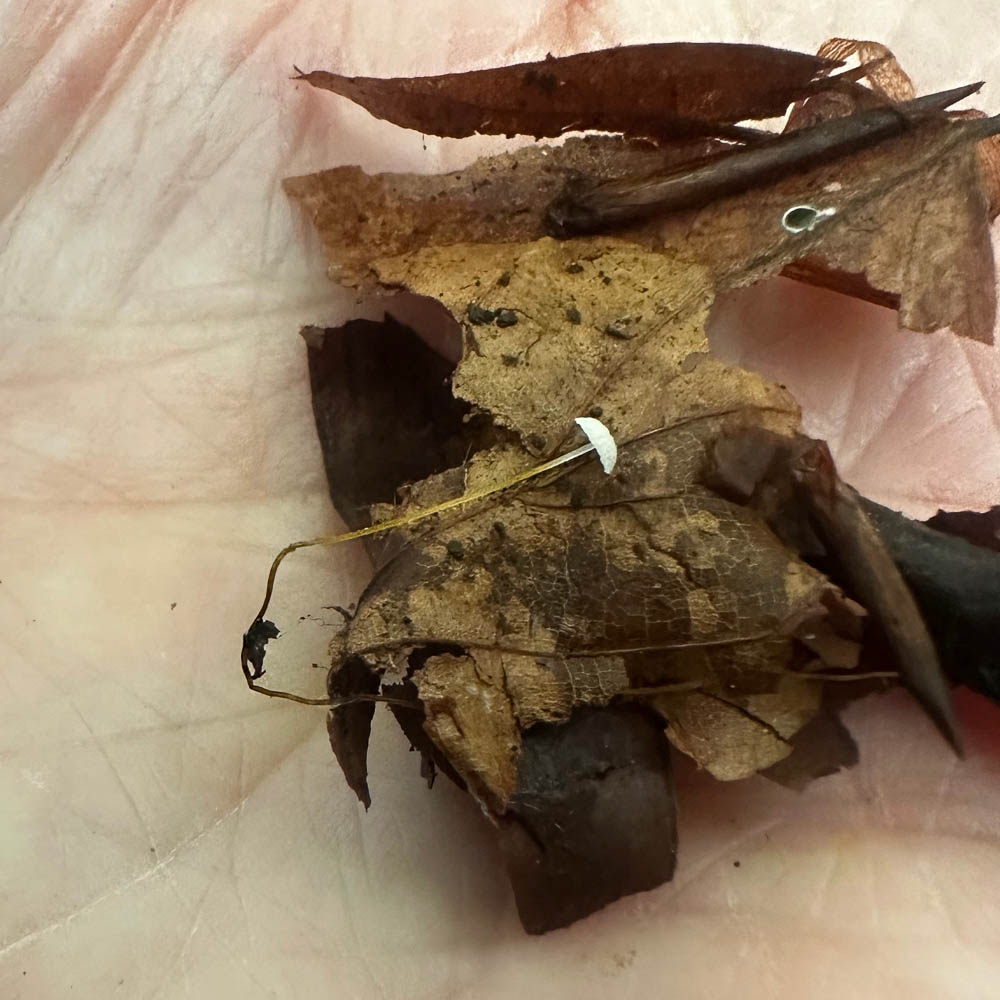
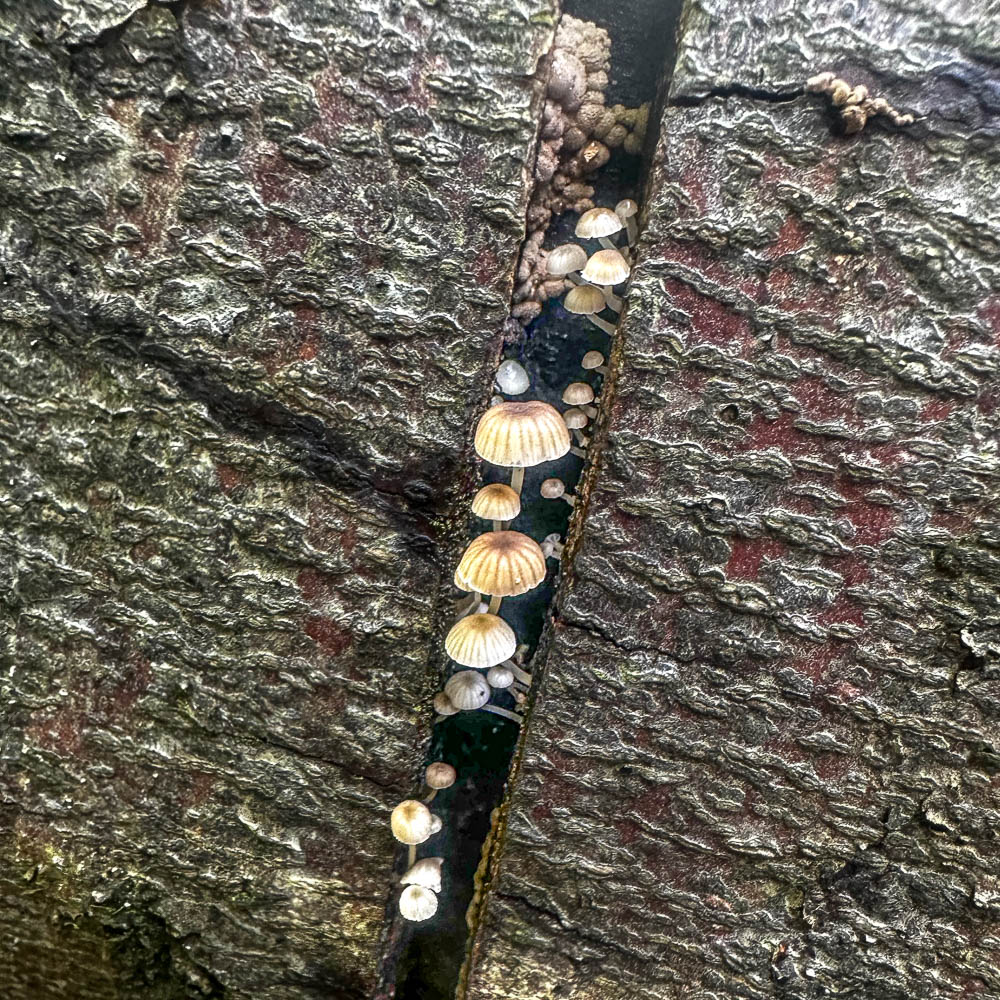
Mycena olida — The little white Mycena growing in moss on tree trunks, on bark and on the roots
Some interesting information from Sara: Hohenbuehelias and Pleurotus (Oyster fungi) species are carnivorous. Apparently they can trap and digest nematode worms which gives them the much needed protein that they can’t get from decayed wood. How do they do it? The hyphae (the filamentous threads that make up mycelium) of the Hohenbuehlia, which grow through the wood, have sticky knobs on them. These attract the nematodes which then get stuck and the hyphae grow through and digest them. Pretty gruesome! Pleurotus are among the species of fungi that make snares or nooses which tighten when the nematodes try to go through them. Even more mind-boggling is the fact that some fungi only build their traps when they detect the pheromones with which the nematodes communicate. “The fungus takes active steps to attract its prey by producing olfactory cues that mimic those used by the worms…..” Wikipedia – Nematophagous fungus.
Sara
Some of my photos of fungi found on the walk
Polyporus durus, Bay Polypore (photo from 24/10/2022)
Lactarius pubescens, Bearded Milkcap (photo from 24/10/2022)
Hypoxylon fragiforme, Beech Woodwart (Photo from 24/10/2022)
Cortinarius elegantissimus (photo from 24/10/2022)
Bisporella citrina, Lemon Disco
Helvella lacunosa, Black Saddle
Clitocybe phaeophthalma, Chickenrun Funnel
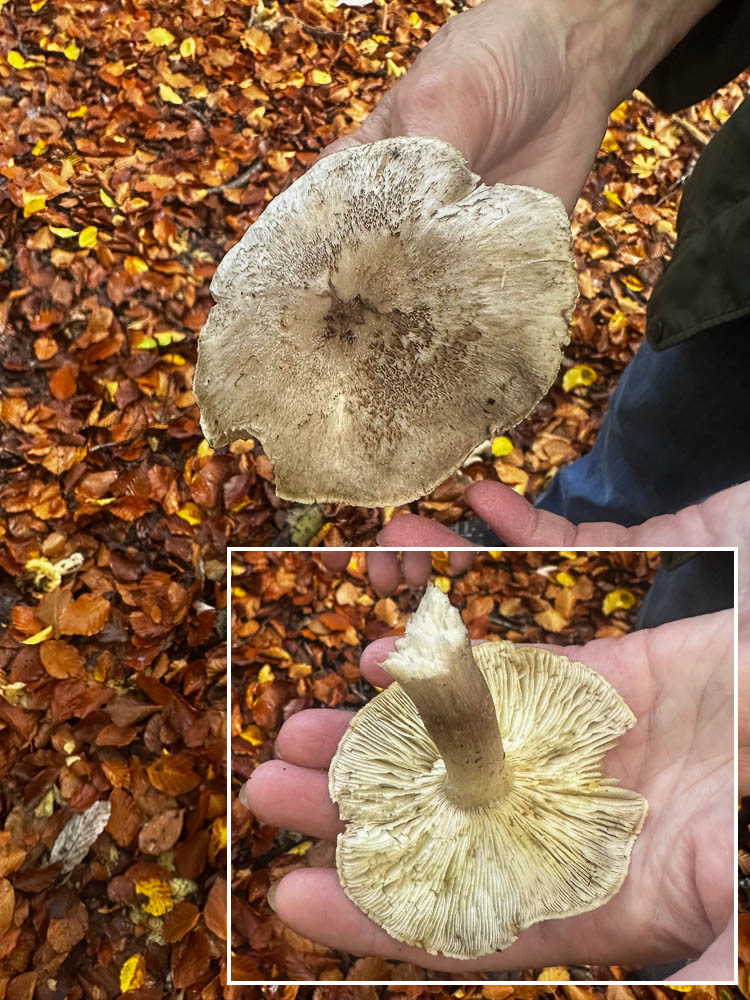
Tricholoma scalpturatum, Yellowing Knight
Coprinellus disseminatus, Fairy Inkcap
Coprinopsis picaceus, Magpie Fungus
Cortinarius salor
Common Rustgill, Gymnopilus penetrans
Gymnopus brassicolens, Cabbage Parachute (smells of cabbage)
Gymnopus confluence, Clustered Toughshank
Gymnopus peronatus, Wood Woollyfoot
Hohenbuehelia petaloides – Shoehorn Oyster
Hohenbuehelia petaloides
Hygrophorus eburneus, Ivory Woodwax (slight smell of mandarin)